
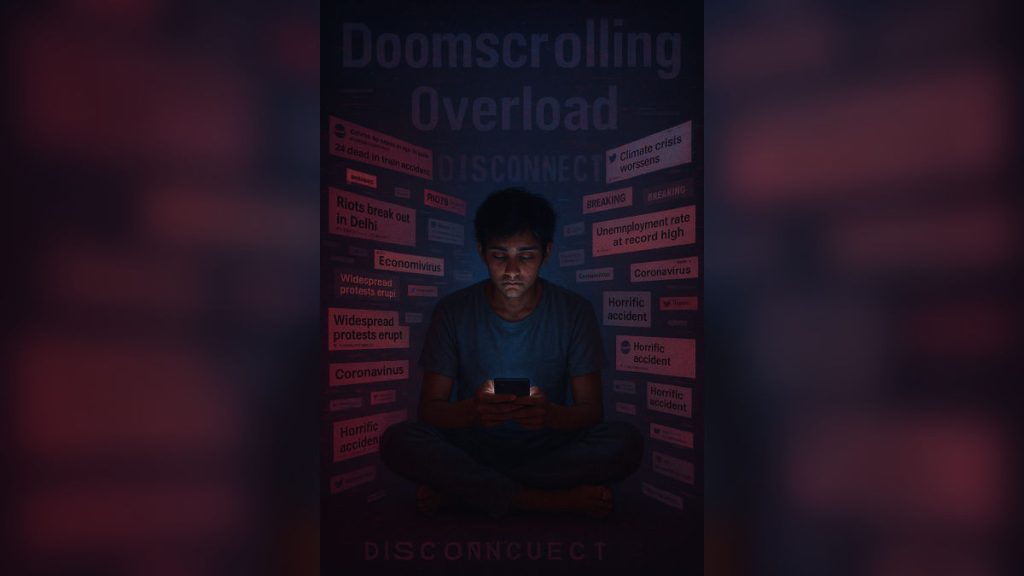
Short answer: Doomscrolling, the compulsive consumption of negative news on social media, is fuelling anxiety, sleep loss and depression among young Indians. A 2021 ICMR study found screen-induced anxiety rose by nearly 35% among young adults during the pandemic, and a 2022 Sleep Foundation India report flagged that over 60% of young Indians have sleep disruptions linked to late-night scrolling. Time limits, feed curation and digital breaks are the way out.
It starts with one notification. Late at night. You open Instagram or X (formerly Twitter) for a quick scroll, and somehow you’re knee-deep in conflicts, disasters, political chaos, celebrity scandals. An hour disappears. Your heart rate is up. Your mind feels heavy. Welcome to doomscrolling, a modern digital trap that’s quietly hurting the mental health of millions of Indians, especially Gen Z and millennials.
What is doomscrolling?
Doomscrolling is the act of continuously scrolling through negative or distressing news on social media or news apps. Staying informed matters. But this compulsive version often leaves users more anxious, more overwhelmed, more emotionally drained than they were before they picked up the phone.
The term sounds dramatic. The effects, though, are very real.
How does doomscrolling affect mental health in India?
1. The anxiety spiral
When you’re constantly consuming bad news (violence, unemployment, climate change, corruption), it activates your body’s fight-or-flight response. Cortisol rises. Sleep frays. You end up jittery and on edge for no obvious reason at all.
A 2021 study by the Indian Council of Medical Research (ICMR) found that screen-induced anxiety increased by nearly 35% among young adults during the pandemic. Most of it was traced to social media overuse and the constant drumbeat of disturbing news.
“I would check Twitter first thing in the morning during COVID, and it ruined my whole day,” says Shruti, a 21-year-old student from Delhi. “Even when I wasn’t reading bad news, I expected something bad to pop up.”
2. Depression and hopelessness
The more negativity you absorb, the more your worldview tilts. Doomscrolling can quietly grow into a deep sense of helplessness. If everything seems to be going wrong all the time, what’s the point of staying hopeful?
This skewed perception, sometimes called mean world syndrome, can slide into depressive symptoms, especially if you’re already vulnerable. And in India, where mental health is still taboo in many circles, that internalised despair often goes unnoticed and untreated. Quietly devastating, that.
3. Sleep? What’s that?
The classic doomscrolling ritual ends with one last phone check before bed. But the blue light from screens disrupts melatonin production, while disturbing content keeps your brain firing.
Result? Poor sleep, late-night anxiety, a restless mind that won’t switch off.
A 2022 Sleep Foundation India report revealed that over 60% of young Indians experience sleep disruptions, and late-night scrolling was one of the top reasons.
4. Pessimism becomes the default
When your digital world is wall-to-wall negativity, it’s harder to spot the good around you. You start expecting the worst, mistrusting people, avoiding optimism altogether. It seeps into your mood, your relationships, even your creativity. You aren’t just consuming the negativity, you’re being shaped by it.
5. Loss of control and existential dread
Doomscrolling exposes you to problems you genuinely cannot fix. Global warming. Wars. Economic downturns. Constant exposure to crises at that scale can trigger existential anxiety, the fear that nothing you do really matters.
For many young Indians already wrestling with academic pressure, job insecurity and family expectations, that powerlessness becomes overwhelming.
Why do we keep scrolling even when it hurts?
1. Negativity bias is wired into us
Our brains are naturally more alert to negative information. It’s a survival mechanism, early humans needed to detect threats to stay alive. Unfortunately, in the age of algorithms, this bias makes us click on headlines that scare or anger us.
2. FOMO: fear of missing out
In India, where major events (elections, Bollywood controversies, floods) dominate every WhatsApp group, the fear of being out of the loop is real. Nobody wants to be the one who didn’t see that viral video or trending hashtag.
3. The addictive scroll design
Apps are built to be addictive. Infinite scrolling, autoplay, push notifications, every feature is engineered to keep you hooked. Instagram and YouTube don’t just show you content, they curate what’s most likely to hold your attention. And negative stories perform well.
4. A false sense of control
In uncertain times, doomscrolling can feel like you’re gaining control. “If I stay informed, I can prepare myself,” you tell yourself. But the habit raises stress without giving you any real tools to act, or actually solve anything.
How do you stop doomscrolling without quitting social media completely?
Let’s be honest, quitting cold turkey is hard. But you can outsmart the habit with a few intentional moves.
1. Set clear time limits
Use your phone’s screen-time settings or apps like Digital Wellbeing or Forest to cap your daily social media use. Start small. Maybe 30 minutes less each day. Then build from there.
2. Curate your feed
Unfollow or mute accounts that thrive on outrage and fear. Replace them with creators who spread positivity, creativity or genuinely useful information. From poetry pages to wildlife photographers, the internet has more beauty in it than your timeline currently shows.
3. Pause and reflect
Before diving into the next news thread, ask yourself: Is this helping me, or just hurting me? A few minutes of mindfulness can reset the impulse to keep scrolling.
4. Replace with positive rituals
Instead of grabbing your phone in moments of boredom or anxiety, try a small alternative. Read a chapter. Stretch for two minutes. Sketch something terrible. Call a friend.
In Indian homes, family bonding and shared meals have always been a kind of therapy. Rekindling those routines can offer the emotional support we now keep outsourcing to screens.
5. Take digital breaks
Try a no-phone Sunday, or switch off social media for a week. It’s not just a detox, it’s a recalibration. Notice how your brain, body and mood respond to less screen time. Chances are, you’ll breathe easier.
6. Seek help if needed
If doomscrolling is wrecking your sleep, eating patterns or emotional well-being, talk to a mental health professional. In India, platforms like iCall, YourDOST and MindPeers offer affordable, accessible help.
Choose what you feed your mind
We may not control every crisis or news headline. But we do control what we consume. Doomscrolling doesn’t make you more aware. It just makes you more anxious. The world is not as dark as your timeline insists.
So the next time your thumb hovers over that screen, ask yourself: Am I feeding my fear, or nurturing my mind?
Break the scroll. Protect your peace. Choose your content, before it chooses your mood.
FAQs about doomscrolling and mental health
What does doomscrolling mean?
Doomscrolling is the compulsive habit of continuously scrolling through negative or distressing news on social media or news apps. It often leaves users feeling more anxious, overwhelmed and emotionally drained than they were before opening the app.
How does doomscrolling affect anxiety levels in young Indians?
Constant exposure to bad news activates the body’s fight-or-flight response and raises cortisol. A 2021 ICMR study found screen-induced anxiety rose by nearly 35% among young adults during the pandemic, with much of it linked to social media overuse.
Does late-night scrolling really hurt sleep?
Yes. Blue light from screens disrupts melatonin production, and the content itself overstimulates the brain. A 2022 Sleep Foundation India report found that over 60% of young Indians experience sleep disruptions, with late-night scrolling among the top causes.
How can I stop doomscrolling without giving up social media?
Set screen-time limits using built-in tools or apps like Digital Wellbeing and Forest. Curate your feed by muting outrage-driven accounts, take regular digital breaks, and replace the impulse with small offline rituals like reading or a quick walk.
Where can young Indians get help for digital anxiety?
If doomscrolling is impacting your sleep, eating or emotional well-being, reach out to a mental health professional. Platforms like iCall, YourDOST and MindPeers offer affordable, accessible support across India.