Short answer: For Indian Gen Z (born roughly 1997-2012), memes are a full-blown language. They function as cultural code, emotional release, social commentary and friendship currency, cutting across Tamil, Bengali, Marathi and Bhojpuri-speaking communities. Memes archive how this generation actually feels about everything from CBSE stress to the 2023 Manipur crisis.
In a world where attention spans are shrinking and digital lives are expanding, communication has gone through a radical shift. For Indian Gen Z (those born roughly between 1997 and 2012), memes aren’t just entertainment. They’re a language. A cultural shorthand. A mirror of emotions, opinions and identity.
To outsiders, memes might look like silly pictures with funny captions. But for Gen Z, they’re nuanced, layered, often deeply personal. In India, where digital youth culture thrives across languages and platforms, meme culture has bloomed into a vibrant mode of expression.
Why are memes Gen Z’s cultural code?
Memes are vessels of shared understanding.
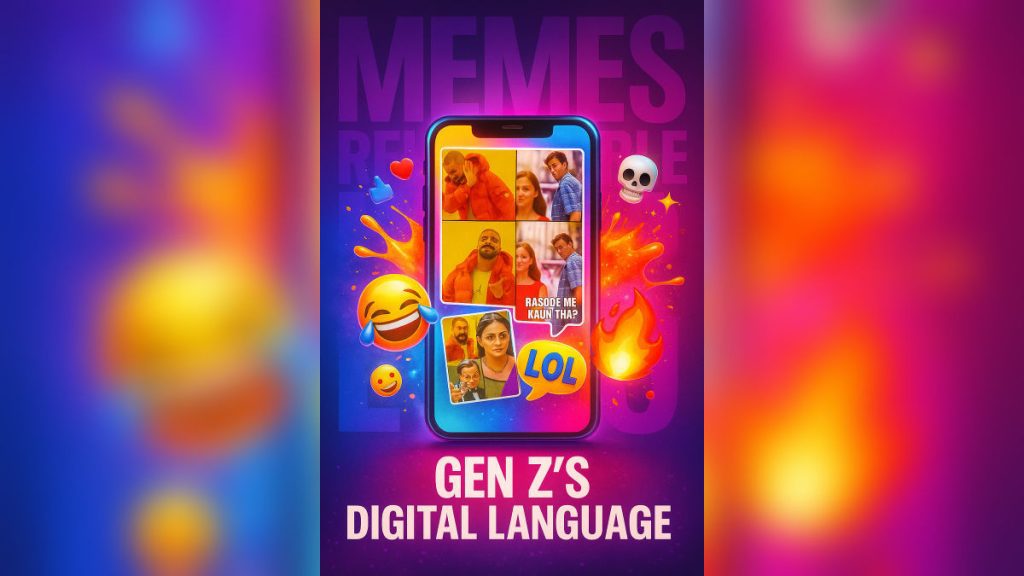
In India, where linguistic diversity is staggering, memes cut across language barriers by blending visuals, slang, emojis and pop culture references. From “Pawri Ho Rahi Hai” to Shaktimaan reaction GIFs, memes are the glue that binds digital conversations. They act like digital dialects, mini languages understood by those “in the know.”
Think of it this way. When a meme drops referencing CBSE exam stress or the latest political gaffe, it taps straight into a collective consciousness. You don’t need paragraphs of explanation, a single meme can say it all.
As camphouse.io puts it, memes are “cultural code.” They’re how Gen Z signals identity, humour, political leanings and emotional states, sometimes all in one post.
How do memes capture emotions in 1080×1080 pixels?
Scrolling through an Instagram meme page often feels like therapy in disguise.
From “sad boi hours” memes to ones about the chaos of online dating, memes work as emotional release valves. They’re compact reflections of what it’s like to be young in today’s India: anxious, ambitious, politically aware, chronically online.
During the pandemic, memes about Zoom fatigue or being “trapped at home with desi parents” exploded across Instagram and Reddit. They didn’t just make people laugh, they validated shared experience, made isolation feel a little less isolating.
I remember coming across a meme that read, “Trying to do WFH in a 2BHK with 5 people and a barking dog.” It wasn’t just funny, it was my exact reality. That’s the magic. Memes say what we’re all thinking, but in a way that makes us laugh instead of cry.
Why do memes work so well for Gen Z?
Gen Z doesn’t have the patience for long rants or complicated explainer videos, unless they’re packaged in a funny way.
Memes, with their bite-sized format and instant impact, fit Gen Z’s content preferences. Whether it’s a 10-second reel or a screenshot of a viral tweet, the format delivers value without demanding time.
What makes memes even more powerful is how they simplify complex topics. Climate change? There’s a meme for that. Class inequality? Yep, a meme. Election results? Flooded timelines. Humour makes heavy topics digestible.
How do Indian Gen Z use memes for social commentary?
Indian Gen Z isn’t afraid to laugh at power, poke fun at authority, or use sarcasm as a political tool. Humour is often how they cope.
Memes about inflation, unemployment, traffic, tuition fees and mental health are rampant. But they’re not just jokes, they’re subtle (and sometimes not-so-subtle) critiques of societal flaws. Instagram meme pages and Twitter threads have become digital town squares where Gen Z expresses dissent and pushes for change.
Take the flood of memes during the 2023 Manipur crisis or the outrage over exam paper leaks. These weren’t just gags, they were protests in pixel form. Funny on the surface, sharp underneath.
How do memes work as friendship currency?
One of the most underrated things about meme culture? It builds community.
Sharing memes is the new way of saying, “I get you.” Whether it’s a forwarded Reel in a best-friends group chat or a meme exchange in DMs, memes spark conversation and create private joke ecosystems.
In fandoms, whether it’s BTS, Marvel or Bigg Boss, memes are the glue that holds communities together. You might not know everyone in a meme thread, but you feel connected by mutual LOLs.
And this is especially true in India, where online subcultures are exploding across ShareChat, Moj and WhatsApp. Meme culture doesn’t just belong to English-speaking urban Gen Z, it’s gone hyperlocal. Memes in Tamil, Bengali, Marathi and Bhojpuri thrive, proving humour transcends language.
Why are memes Gen Z’s most authentic medium?
If there’s one thing Gen Z can’t stand, it’s fake vibes. That’s why memes resonate. They’re raw, unfiltered, honest.
There’s no polished influencer aesthetic here. Memes are messy, weird, chaotic, and that’s what makes them real. They reflect how young Indians actually feel, not how they’re supposed to feel.
Gen Z uses memes to say things they can’t always express out loud, about identity, relationships, stress, ambition. It’s not about going viral. It’s about being seen.
As media scholar Dr. Shweta Kharat noted in a 2022 The Print article, “Memes have become a kind of emotional journaling tool for Indian youth. They archive the everyday realities of young people, blending humor and honesty.”
How has meme culture reshaped modern India?
The rise of meme culture in India isn’t a fluke. It’s a byproduct of deep shifts in technology, media and generational behaviour.
Gen Z has grown up in a country where smartphones are more accessible than libraries, and memes are easier to understand than political debates. In this ecosystem, memes aren’t just part of pop culture, they are pop culture.
From brand marketing to college WhatsApp groups, from political satire to mental health awareness, memes have infiltrated every corner of Indian youth culture.
More than just LOLs
Meme culture isn’t just Gen Z’s form of entertainment, it’s their form of communication, rebellion, therapy and self-definition. In India, where tradition and modernity constantly collide, memes are the middle ground where this generation negotiates identity and builds digital communities.
So the next time you double-tap a meme or tag a friend in a funny post, remember. It’s more than just a joke. It’s language. It’s connection. It’s Gen Z, speaking loud and clear.
FAQs about Gen Z meme culture in India
Why is meme culture so important to Indian Gen Z?
For Indian Gen Z (born 1997-2012), memes work as cultural code, emotional release and friendship currency all at once. They communicate identity, humour and shared experience in a single image, cutting across India’s linguistic diversity.
How do memes function as a language for Gen Z?
Memes blend visuals, slang, emojis and pop culture references into a shared dialect understood by those “in the know.” A reference like “Pawri Ho Rahi Hai” or a Shaktimaan GIF can convey what a paragraph cannot.
What role do memes play in social commentary in India?
Memes serve as protest in pixel form. During the 2023 Manipur crisis and the outrage over exam paper leaks, Indian Gen Z used memes to critique authority and push for change.
Are memes mainly an English-speaking phenomenon in India?
No. Indian meme culture has gone hyperlocal. Tamil, Bengali, Marathi and Bhojpuri memes thrive on ShareChat, Moj and WhatsApp, proving that meme humour transcends language.
Why do memes feel more authentic to Gen Z than other media?
Memes are raw, messy and unfiltered, which matches Gen Z’s resistance to polished influencer aesthetics. As Dr. Shweta Kharat noted in a 2022 The Print article, memes are “a kind of emotional journaling tool” archiving young Indians’ realities.