
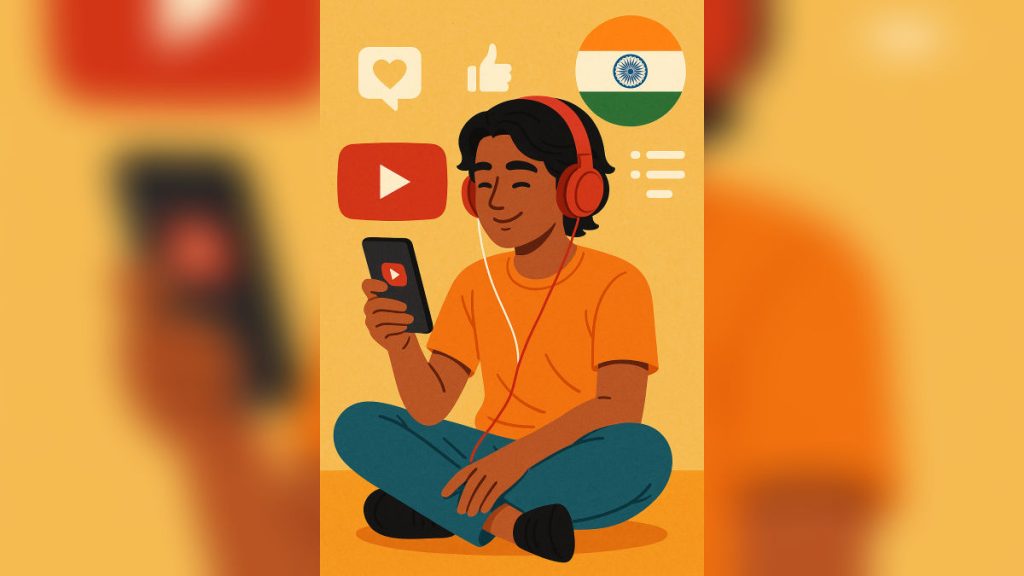
Short answer: YouTube captivates India’s Gen Z because it’s a classroom, cinema, comedy club and confession booth in one app. With over 467 million Indian users in 2025 and Gen Z (18-24) clocking 35-40% of national watch hours, the platform mixes long-form depth, regional creators, Shorts, and a recommendation engine that reads mood, not just trends.
One platform. Four roles. India’s Gen Z treats YouTube like a teacher, a friend, a stage and a pay-cheque, and the numbers back the obsession: over 467 million users in the country, with 35-40% of watch hours coming from the 18-24 bracket. Instagram might be the digital hangout, but YouTube? That’s the main stage.
And here’s the catch. In a world where attention spans get blamed for everything, YouTube’s killer move was refusing to pick a lane. Long-form, short-form, regional, mainstream, smartphone, smart TV, the platform meets young Indians wherever they are and feeds them what they actually want.
Why does YouTube still feel different from Instagram?

Bite-sized content gets the headlines. But YouTube’s long-form format thrives precisely because it offers something the rest don’t: substance.
Young Indians turn to YouTube for everything from:
- Crash courses before board exams
- Deep dives on climate change
- Tutorials for coding, makeup or editing Reels
- Hour-long comedy roasts and stand-up specials
For many urban and semi-urban Gen Zers, YouTube is the #1 learning platform. A 19-year-old student from Nagpur told me, frankly:
“Before every exam, I just binge-watch 3-hour revision marathons. No tuition needed.”
That’s not entertainment. That’s empowerment. And it’s why parents who once side-eyed the platform now quietly let their kids leave it on for hours.
How are regional creators winning the language game?

YouTube’s biggest superpower in India? Language inclusivity. From Hindi and Tamil to Marathi, Bhojpuri and even dialects like Haryanvi, creators are thriving in local tongues, and Gen Z eats it up.
A Bhojpuri rap. A Kannada movie review. A Manipuri vlogger talking about hostel life. YouTube ensures no one is left out of the content revolution. Local language creators saw a 50% YoY growth in subscribers, per about.youtube.com.
The accessibility breaks the English-language dominance still hanging over LinkedIn and Twitter. On YouTube, every dialect is an audience waiting to be tapped.
What makes YouTube creators feel more real?
Authenticity reigns here. The platform gives space for Gen Z to connect with creators who aren’t pretty faces, they’re real, vulnerable and relatable. (Sometimes too vulnerable, but that’s another article.)
From creators discussing their mental health struggles to daily vloggers chronicling college life, the platform nurtures parasocial relationships that Insta-grids can’t match. Viewers feel like they know these creators. And for many young Indians wrestling with loneliness, pressure or identity questions, that’s no small thing.
One 17-year-old from Kolkata shared: “I watched a creator talk about failing an entrance exam. It made me feel like I’m not the only one struggling. That’s why I trust YouTube more than Insta.”
How is Gen Z turning YouTube into a career, not a hobby?

Indian Gen Z doesn’t watch YouTube. They use it as a launchpad. From tech explainers and animation to roasts, reaction videos and spoken word poetry, young creators are building careers here.
The YouTube Partner Program and monetization options, including Super Thanks, memberships and affiliate links, let college students earn their first proper income online. Many start on phones, edit on free apps, hustle their way into a loyal following. No fancy gear required.
And YouTube rewards consistency over aesthetics. That’s the part Gen Z loves most, because polished isn’t always possible when you’re filming between lectures and a part-time job.
How does YouTube juggle Shorts and long videos?

YouTube reads the room. With YouTube Shorts, the platform now competes head-on with Instagram Reels and TikTok. YouTube Shorts has crossed 70 billion daily views globally. It satisfies Gen Z’s need for short bursts of dopamine while still pulling them into longer content when the topic matters.
That flexibility makes YouTube the “everything app” for video:
- Need a laugh in 20 seconds? Shorts.
- Want a full breakdown of the Israel-Palestine conflict? There’s a 30-minute explainer.
- Planning a skincare routine? Watch a 12-minute comparison by a dermatologist.
This depth plus range is unmatched anywhere else. Reels can entertain. They can’t really teach.
Why is the living room the new YouTube screen?

Gen Z doesn’t only watch on phones. With affordable smart TVs and better Wi-Fi reaching even tier-3 cities, living room YouTube is exploding.
Families binge devotional bhajans, kids watch cartoons and teens flip to K-pop compilations, all on the same screen.
That dual-access turns YouTube into a shared experience, not a private one, especially in households where phones get passed between siblings.
Why does the YouTube algorithm feel like a mood mirror?
YouTube’s recommendation engine is notoriously addictive. It’s also deeply intuitive. Unlike Instagram, which thrives on trends, YouTube’s algorithm often surfaces what you need rather than what’s merely viral.
That might be a productivity playlist when you’re in exam mode, or an inspiring vlog when you’re feeling lost. It’s a mood mirror, and Gen Z appreciates the nuance. The algorithm might decide what shows up first, but the audience still decides what stays.
What do the numbers actually say?
- 467 million Indian users on YouTube in 2025 (datareportal.com)
- Gen Z (18-24) comprises 35-40% of watch hours in India
- YouTube Shorts has over 70 billion daily views globally
- Local language creators saw 50% YoY growth in subscribers (about.youtube.com)
- Over 80% of Indian Gen Z report using YouTube to learn new skills or explore side hustles
YouTube vs the rest, at a glance
| Feature | Why Gen Z loves it |
|---|---|
| Long-form videos | In-depth learning, storytelling, deeper connections |
| Shorts | Quick entertainment on the go |
| Regional content | Language inclusivity and cultural familiarity |
| Authentic creators | Vulnerable, real and relatable |
| Monetization tools | Enables side hustles and creator careers |
| Algorithm | Recommends personalised, mood-based content |
| Multi-device access | From mobile to smart TVs, flexible viewing |
| Communities | Fan bases, niche interests and support spaces |
Gen Z’s mirror and megaphone
In India, YouTube isn’t a platform Gen Z visits. It’s where they live, learn, laugh and launch. The platform gives them tools to explore identities, share truths, and build real-world skills, whether they’re students revising for exams, aspiring rappers from rural towns, or creators pushing conversations around mental health.
Instagram may be Gen Z’s moodboard. But YouTube? That’s their main stage.
FAQs about YouTube and Gen Z in India
How many Indians use YouTube in 2025?
YouTube has over 467 million Indian users in 2025 according to DataReportal, making India one of its largest markets globally. Gen Z aged 18-24 alone accounts for 35-40% of total watch hours in the country.
Why do Indian Gen Z prefer YouTube over Instagram for learning?
YouTube’s long-form format allows hour-long tutorials, exam revision marathons and deep-dive explainers that Reels and Stories can’t fit. Many urban and semi-urban Gen Zers treat it as their #1 learning platform, replacing tuition with free creator content.
How big is YouTube Shorts compared to Reels?
YouTube Shorts crosses 70 billion daily views globally, putting it in direct competition with Instagram Reels and TikTok. Indian Gen Z uses Shorts for quick laughs, then jumps into long-form videos on the same app for depth.
Are regional language creators actually growing on YouTube?
Yes. Local language creators in Hindi, Tamil, Marathi, Bhojpuri and even dialects like Haryanvi saw 50% year-on-year growth in subscribers per about.youtube.com. Vernacular content is one of the platform’s fastest-expanding categories in India.
Can college students really make money on YouTube?
The YouTube Partner Program plus tools like Super Thanks, channel memberships and affiliate links let college students earn first incomes from a phone. Many start with free editing apps and grow loyal audiences before upgrading any gear.