
Short answer: TheYouthTalks surveyed 1,000+ Indians aged 18-25 on news habits. Instagram leads, YouTube and meme pages follow, traditional outlets barely register. Only 27% fully trust their main news source, yet over 50% admit to sharing news without verifying. Average overwhelm score: 3.5 out of 5. Gen Z isn’t apathetic, they’re rejecting noise, not news.
Welcome to the age of infinite headlines
Gone are the days when news arrived on your doorstep wrapped in paper or echoed through evening broadcasts. For Gen Z, those born between the mid-1990s and early 2010s, news is no longer a ritual. It’s ambient. It’s everywhere. It scrolls with them, loads with every app, and nudges them even when they’re not looking.
But here’s the twist: Gen Z isn’t just passively consuming the news. They’re reacting to it, remixing it into memes, and resharing it with humour, critique, and sometimes confusion. The news doesn’t inform in a linear fashion anymore. It entertains, shocks, angers, or numbs. So how does Gen Z, the world’s most digitally immersed generation, really engage with it?
TheYouthTalks set out to answer that, not through assumptions but through inquiry. In a survey of 1,000+ young Indians aged 18-25, we discovered not just how Gen Z consumes news, but how they feel about it.
Welcome to their digital newsverse.
Who are the digital decoders?
Our survey respondents were students, creatives, first-jobbers, and freelancers. They represent India’s hyperconnected young adults, the ones who’ve grown up with smartphones in hand and Wi-Fi in the air.
This generation doesn’t only consume content. They curate it. They call out bias. They fact-check, sometimes. And they carry the weight of knowing too much, too fast.
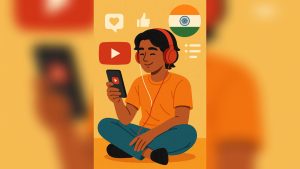
Their world isn’t defined by TV tickers or broadsheets. It’s a blend of Instagram reels, YouTube explainers, Twitter threads, and yes, meme pages.
Where does Gen Z actually get the news?
Scroll first, verify later
A third of respondents said they check news several times a day. For many, news isn’t a standalone activity, it’s baked into their scrolling rituals. Whether they’re catching a bus or brushing their teeth, the headlines are never far away.
Top sources of news?
- Instagram led the pack, especially Stories, carousels, and influencer-led explainer reels.
- YouTube followed close, often through creators who break down current affairs.
- Meme pages came third. An unexpected but telling insight into how Gen Z blends humour and information.
- Traditional news apps and channels? Barely on the radar.
The takeaway? Gen Z doesn’t go to the news. The news comes to them, dressed in algorithms and served with a side of aesthetics.
Why don’t Gen Z trust traditional news sources?
Only 27% of Gen Z said they fully trust their main news sources.
That’s not just a statistic. It’s a crisis of credibility.
Gen Z doesn’t automatically believe what’s said by anchors in suits. Instead, they rely on creators and peers who speak their language. Informally, honestly, without jargon.
And yet, this trust in relatability is a double-edged sword. More than 50% admitted to sharing news without verifying it. The contradiction is clear: they want authenticity, but speed often trumps scrutiny.
Information overload: always online, emotionally exhausted
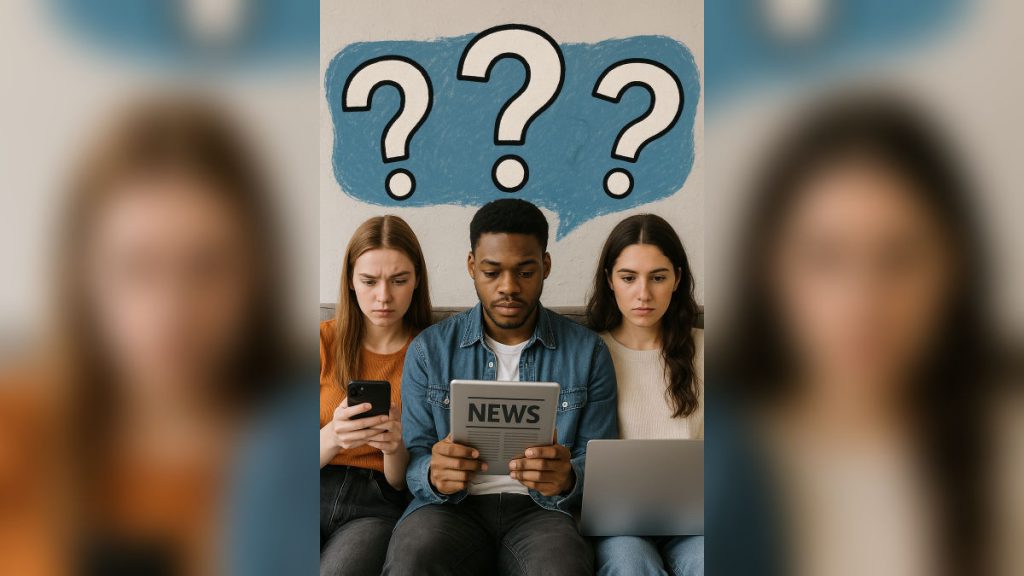
When asked to rate how overwhelmed they feel by the constant barrage of news, the average score landed over 3.5 out of 5.
The number might seem mild. But in qualitative responses, a darker picture emerged.
“I feel helpless sometimes — like I’m watching the world burn from my screen and there’s nothing I can do.” – Aditi, 21, Kolkata
Many respondents said they had to take breaks from news altogether. Not because they didn’t care, but because they cared too much.
In a world riddled with war updates, climate emergencies, economic collapse, and political turmoil, Gen Z isn’t tuning out. They’re checking out for self-preservation.
Where does misinformation spread the fastest?
Platforms under fire
When asked which platforms spread the most misinformation:
- WhatsApp and Facebook topped the list.
- Instagram and YouTube weren’t far behind, largely thanks to misleading short-form videos and out-of-context reels.
Yet ironically, the same platforms were the most used for news. Why? Familiarity. Virality. Speed.
Many respondents admitted they’re more likely to believe information if it’s shared by a content creator they follow. That’s where the danger sits. Trust becomes personality-driven, not evidence-based.
The meme-ification of news
Here’s a fact that surprised even us. Over 60% of Gen Z said they follow meme pages as a way to stay updated on current events.
It’s not because they think memes are always accurate. It’s because memes make heavy topics feel a little lighter.
“I found out about the Ukraine war from a meme first. I didn’t laugh, but it made me click and learn more.” – Pranav, 20, Pune
Memes aren’t mindless. For Gen Z, they’re a coping mechanism, a way to digest trauma, hypocrisy, and headlines that would otherwise feel crushing.
The self-awareness gap
When we asked if they believe they can identify fake news, most respondents said yes.
But earlier, they’d also admitted to sharing unverified news.
The gap reveals an important tension: intent doesn’t always align with behaviour. Gen Z is media-literate in theory, but overwhelmed by the pace of content in practice.
They want to be right. But more often, they want to be first.
What does Gen Z actually want from the news?
We posed one final open-ended question to our respondents:
“What does your ideal news experience look like?”
Here’s what we heard, in their own words:
- “Quick, clear, no drama.”
- “Fact-checked but easy to understand.”
- “Less panic, more perspective.”
- “Content that respects my time and doesn’t talk down to me.”
In short, they’re not rejecting the news. They’re rejecting the noise.
They want truth, served in formats that meet them where they are, emotionally and digitally.
Where do we go from here?
The insights are clear. Gen Z is not apathetic. They’re alert, empathetic, and deeply affected by what they consume. But the current news ecosystem wasn’t built for them, not in format, not in tone, and certainly not in trust.
So what needs to change?
1. Media literacy as a core skill
Schools, colleges, and even workplaces need to treat digital literacy, especially news verification, as essential. Not optional.
2. News that meets Gen Z on their terms
This means reels, memes, explainers, and bite-sized content, without sacrificing accuracy.
3. Collaboration with influencers and creators
Journalists must stop seeing creators as competition. They should partner with them to rebuild trust and simplify narratives.
4. Less sensationalism, more solutions
Gen Z is tired of doomscrolling. They want action, not anxiety. They want to know what now, not just what went wrong.
If you want to matter, you need to listen
This isn’t only about how Gen Z consumes news. It’s about how the news makes them feel. Confused, frustrated, inspired, or sometimes, just numb.
And that emotional undercurrent? It’s what will shape the future of journalism, public discourse, and civic participation.
At TheYouthTalks, we believe that to engage Gen Z, you don’t need louder headlines. You need honest conversations. This research is a call to creators, brands, and institutions: stop assuming. Start asking. The next generation is already listening. Are you?
FAQs about how Gen Z consumes news
Where does Gen Z in India get most of their news?
Instagram leads, mainly through Stories, carousels, and influencer-led explainer reels. YouTube comes second through creators who break down current affairs, and meme pages rank third. Traditional news apps and TV channels barely register in the survey.
How much do Gen Z trust their news sources?
Only 27% of Gen Z said they fully trust their main news sources, according to the TheYouthTalks survey of 1,000+ young Indians. Yet more than 50% admitted to sharing news without verifying it, exposing a clear gap between intent and behaviour.
Which platforms spread the most misinformation among young Indians?
WhatsApp and Facebook topped the list, with Instagram and YouTube close behind because of misleading short-form videos and out-of-context reels. The same platforms that rank highest for news consumption also rank highest for misinformation.
Why do Gen Z follow meme pages for news?
Over 60% of Gen Z follow meme pages to stay updated on current events. Memes don’t replace facts, they make heavy topics like war, politics, and climate feel digestible. For many, a meme is the first click that leads to deeper reading.
How overwhelmed does Gen Z feel by news?
The average overwhelm score in the survey was over 3.5 out of 5. Many respondents said they take deliberate breaks from news, not out of apathy but because they care too much about issues like war, climate, and political turmoil.