
Short answer: Gen Alpha kids feel unstoppable because they were born into a device-first world, their brains have learned rapid task-switching, and social media rewards them for juggling school, hobbies, and content creation. They are not truly multitasking, but their belief that they can “do it all” fuels real confidence.
It is 2025, and the youngest generation, Gen Alpha, is taking the world by storm, one screen tap at a time. Born after 2010 and raised in a world overflowing with devices, digital content, and interactive experiences, these children are wired differently. If you have ever watched an 8-year-old flip between a YouTube video, an online quiz, and a casual chat on WhatsApp without missing a beat, you have probably wondered: How do they do it all at once?
Gen Alpha kids believe they can do everything at once, and honestly, they kind of do, at least in their own way. So what is behind this unshakable confidence?
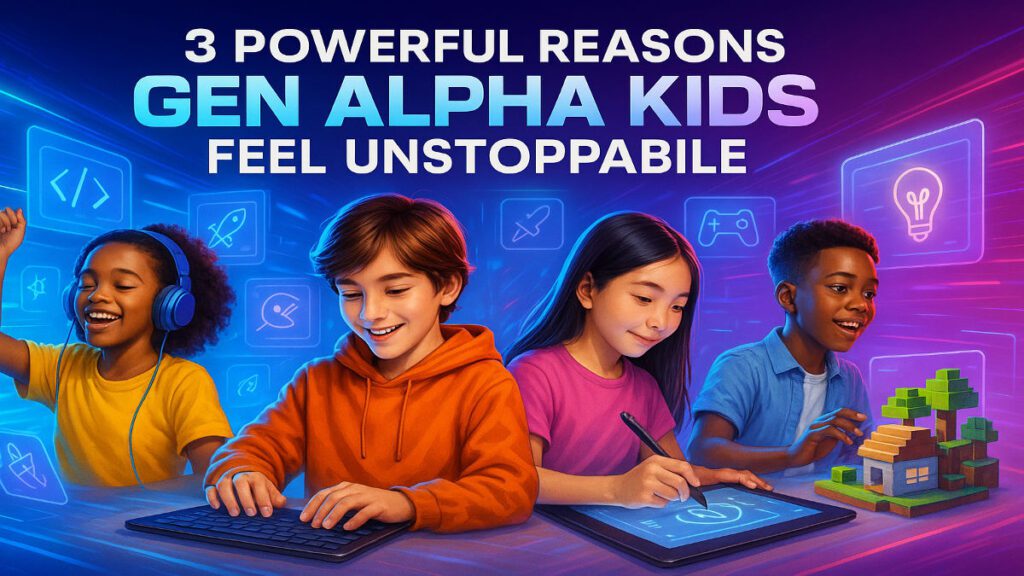
Here is the mindset of this bold, hyper-connected generation and the three big reasons they feel invincible in a multitasking world.
1. Why does a digital jungle shape Gen Alpha kids from day one?
For Gen Alpha, technology isn’t a tool. It is the air they breathe.
These kids never knew a world without smartphones, tablets, or high-speed internet. From the moment they could crawl, they were swiping screens and saying “OK Google” before they could spell their own name. According to blog.emb.global, this fluency across devices has created a comfort with multitasking that feels almost instinctive.
Whether it is watching a Minecraft tutorial while chatting with friends or toggling between an online class and a game of Ludo King, they treat multi-screening as second nature.
Platforms like TikTok and YouTube feed them bite-sized content that flashes across the screen in seconds. This rapid-fire format has trained them to process information quickly and shift focus without hesitation. It is not multitasking in the purest neurological sense, but it sure feels like it.
Take Rhea, a 10-year-old from Mumbai, who confidently says, “I can do homework and listen to BTS at the same time. And I still get good marks.” Her belief isn’t a cute remark. It is a reflection of how her world functions.
2. How are Gen Alpha brains rewired for speed and interaction?
It isn’t only about gadgets. Gen Alpha’s brains are growing up in a landscape full of stimulation, and that is reshaping the way they focus, learn, and respond.
Yes, research warns us about shorter attention spans. But these kids are not distracted. They are filtering. As LinkedIn Learning notes, Gen Alpha thrives in visual and experiential learning environments, where they can see, touch, respond, and create, all at once.
Their brains are adapting to what has been dubbed “cognitive switching.” This doesn’t mean they are processing everything at the same time. They are rapidly flipping between tasks, which gives the illusion of multitasking. In a world where everything is on-demand and interactive, that feels like success.
Arjun, an 11-year-old from Bengaluru, shares, “I was reading a comic, making a meme, and playing BGMI last weekend. I didn’t feel tired, I felt awesome.” His experience is not uncommon. It isn’t chaos for them. It is control.
3. How do peer pressure and social media fuel their confidence?
There is another force at play: validation.
From a young age, Gen Alpha is exposed to online spaces where success is measured by how much you can do and share. Instagram stories showing dance rehearsals, coding certificates, and aesthetic desk setups create a culture where “doing more” means “being better.”
They constantly see their peers juggling school projects, YouTube channels, art accounts, and dance practice, and thriving. This creates a loop of belief: If everyone else is doing everything, I can too.
Social media reinforces the message that competence equals productivity. So it is not surprising that kids feel proud, not overwhelmed, by a full plate.
In the words of Dr. Lisa Damour, child psychologist and author, “Children learn not just from what we teach, but what they observe.” Gen Alpha observes a world where hustle and harmony seem possible, so they believe it is within their reach.
Are Gen Alpha kids really doing it all?
Here is the truth: even Gen Alpha isn’t truly multitasking. As Holistique Training notes, the human brain struggles to perform multiple high-focus tasks at the exact same time without a drop in quality. What these kids are doing is rapid task-switching, powered by their digital agility and emotional buy-in.
Here is what is inspiring though. They believe they can do it all. That belief fuels their confidence, adaptability, and curiosity, three powerful skills for the future.
As adults, educators, and parents, we can guide them toward balancing this digital confidence with mindfulness and deeper focus. Let us also celebrate their sense of capability, because a generation that grows up believing they can do anything may find ways to make it true.
The next time you see a 9-year-old coding, dancing, and vlogging all before lunch, don’t panic. They are not overloaded. They are being Gen Alpha.
FAQs about Gen Alpha kids and multitasking
Who are Gen Alpha kids?
Gen Alpha are children born after 2010, raised on smartphones, tablets, and high-speed internet. In 2025 they are the most device-native generation yet, fluent with apps like YouTube, WhatsApp, Minecraft, and TikTok from a very young age.
Can Gen Alpha kids really multitask?
Not in the strict neurological sense. As Holistique Training notes, high-focus tasks can’t run in parallel without a quality drop. Gen Alpha is doing rapid task-switching, or “cognitive switching,” that looks like multitasking.
Why do Gen Alpha kids feel so confident?
They grow up with constant feedback loops. Digital fluency, visual learning as noted by LinkedIn Learning, and social media validation teach them that juggling tasks is normal and admirable, which fuels belief in their own abilities.
Is social media good or bad for Gen Alpha?
Both. Platforms like Instagram, TikTok, and YouTube reinforce that competence equals productivity, which builds confidence but also pressure. Guiding them toward mindfulness and deeper focus helps balance the upside and downside.
How should parents support Gen Alpha kids?
Parents and educators can celebrate their sense of capability while helping them slow down for deep focus. Encourage hobbies, offline time, and honest conversations about screen habits so confidence doesn’t tip into burnout.