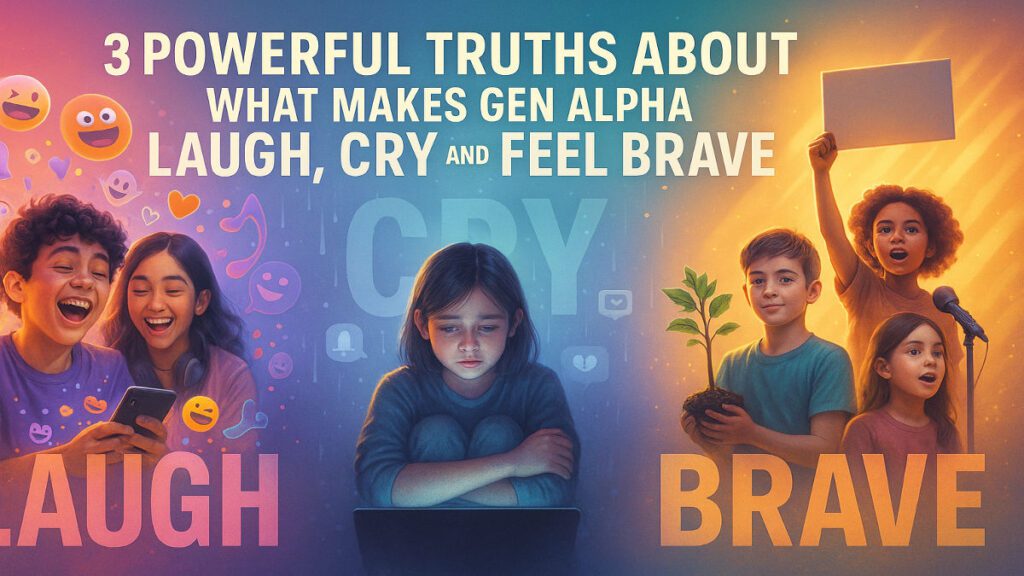
Short answer: Gen Alpha (born from 2010 onwards) laughs at absurd “brain rot” memes and relatable digital humor, cries under academic stress, screen addiction and social comparison, and feels brave when they speak up on climate change, identity and social causes. Their emotional world is shaped by screens, but also by growing emotional intelligence and activism.
In 2025, Generation Alpha, those born from 2010 onwards, is growing up in a world shaped by screens, social media, global uncertainties and digital abundance. Unlike Millennials or Gen Z, Gen Alpha has never known a world without high-speed internet, smart devices and AI assistants. Their emotional universe is complex, influenced by both digital saturation and a fast-changing global environment.
So what brings joy to this youngest generation? What makes them break down in tears or stand up with courage and resilience? The answers reveal how today’s children are rewriting the emotional script.
1. What makes Gen Alpha laugh: the weird, the random, the relatable
If you have ever heard a Gen Alpha child erupt in laughter over a bizarre TikTok sound or a meme with no logical sense, you are not alone. Their humor is chaotic, absurd, surreal and wildly fast-paced.
Absurdist humor and “brain rot” memes
Daniel Dashnaw describes Gen Alpha’s comedy as rooted in randomness: talking bananas, distorted sound effects, AI-generated gibberish. This style, often labelled “brain rot” humor, can puzzle older generations, but for Alpha kids it is a cathartic escape from the over-structured world around them.
Consider the explosion of absurd animations on YouTube Shorts, or TikTok clips that repeat the same catchphrase until it becomes hysterical. Nonsensical on the surface, but a moment of pure emotional release.
Memes that mirror their world
Humor also comes from relatable digital content. Memes about online school, screen time limits or awkward Zoom moments land because they reflect Gen Alpha’s lived experience. As The Wred Feather points out, humor that references tech-savvy kid life, like trying to crack a parent’s phone password or battling auto-correct, travels widely in peer groups.
Eleven-year-old Zoya, from Hyderabad, says, “I laugh the most when memes show things that happen to me. Like when I open 30 tabs for homework but end up on YouTube!”
Trends that travel fast
Gen Alpha thrives on viral, bite-sized content. A funny dance, an animal filter gone wrong or a sped-up remix can become the next big thing in under 24 hours. Platforms like TikTok and YouTube Shorts have turned humor into a fast-moving language this generation speaks fluently.
2. Why does Gen Alpha cry? Digital pressure and emotional overload
Behind the laughter sits an undercurrent of anxiety, loneliness and exhaustion. Gen Alpha may be hyper-connected, but they are also more vulnerable to mental-health challenges than any generation before them.
Mental health in the age of filters
A recent LinkedIn article points to academic stress, screen addiction and online comparisons as major drivers of Gen Alpha’s rising emotional stress. Scrolling through filtered perfection can leave children feeling they are not enough: too slow, too average, too “uncool.”
IJFMR reports that a growing number of Gen Alpha kids tie their self-worth to social-media validation. Likes, comments and follower counts have become emotional currency.
Isolation in a connected world
The more connected they are, the lonelier they can feel. Despite chatting daily on messaging apps, many children report a lack of meaningful face-to-face friendships. Open Hearts Counseling explains that the absence of offline social interaction can foster social anxiety, especially in children who struggle with in-person communication.
Reyansh, a 10-year-old in Delhi, admits, “Sometimes I feel sad after playing online for hours. Like, I’m with people, but not really.”
Tired eyes and tired minds
Too much screen time affects physical and emotional well-being. OnlyMyHealth warns of digital eye strain, disrupted sleep patterns and reduced outdoor activity, all contributing to growing exhaustion. Without breaks, their brains stay stimulated, leading to burnout at a very young age.
The anxiety of uncertainty
Psychologists at Psychology Today describe Gen Alpha as growing up in an era of “certainty parenting” but uncertain realities: climate anxiety, wars, AI fears and a global pandemic legacy. Many children are emotionally unprepared for life’s unpredictability, leading to increased dependence on parents or digital escapes.
3. What makes Gen Alpha feel brave? Authenticity, awareness, emotional strength
In the midst of these challenges, something about Generation Alpha is deeply inspiring. They are not afraid to question the world, speak their truth, and stand for causes they believe in.
Speaking up and pushing back
According to Parents Magazine, Gen Alpha is increasingly confident in challenging authority and asking questions. From classroom rules to global politics, they want to understand, and if something feels unfair, they say so.
When 12-year-old Tia from Bengaluru saw a local bakery wasting food, she wrote to them with a plan to donate leftovers to a shelter. “I just felt I had to say something,” she says.
Little activists in the making
Research from C Space shows Gen Alpha is highly socially aware. Many engage with global issues like climate change, animal rights and gender equality. They consume news (often through short videos), talk to friends about it, and use social media to amplify their voices.
A class of 5th graders in Mumbai created a campaign against plastic waste, presenting it at a local community meeting. These acts of courage may seem small, but they are seeds of real change.
Brave in their own skin
More than anything, Gen Alpha is learning to embrace who they are, quirks and all. They are growing up in a world where mental health is talked about more openly, diversity is celebrated and identity is not confined to binary boxes.
That self-expression takes bravery. Whether it’s wearing what they love, exploring gender identity or saying “I need help,” these kids are rewriting what bravery looks like.
Emotional intelligence as a superpower
Schools and parents are starting to prioritise emotional learning. Sanskriti The School reports that programmes focused on empathy, self-awareness and relationship skills are giving kids the tools to manage their feelings with confidence.
When children feel seen, understood and capable of managing their emotions, they feel powerful, not in a superhero way, but in a quietly strong, emotionally intelligent way.
The bold, emotional generation shaping the future
Generation Alpha’s emotional world is vibrant and layered. They laugh at memes that seem meaningless to others, cry under the weight of unseen pressures, and rise with remarkable courage when given the chance.
In 2025, helping Gen Alpha thrive means meeting them where they are: on their screens, in their struggles and in their moments of bravery. As adults, educators and peers, we must offer them not just protection but understanding, not just advice but listening ears.
If we nurture their laughter, hold space for their tears and fuel their courage, we will empower a generation not just to survive, but to reimagine the world with empathy, creativity and fearless authenticity.
Let’s not just guide Gen Alpha, let’s walk beside them.
FAQs about Gen Alpha emotions
Who is Gen Alpha and how are they different from Gen Z?
Gen Alpha includes children born from 2010 onwards. Unlike Gen Z, they have never known a world without high-speed internet, smart devices or AI assistants, so their emotional lives are shaped by digital saturation from birth.
What kind of humor does Gen Alpha enjoy?
Gen Alpha loves absurdist, fast-paced “brain rot” humor: talking bananas, distorted sounds, AI-generated gibberish and surreal TikTok and YouTube Shorts clips. They also laugh at relatable memes about online school, screen-time limits and Zoom mishaps.
Why is Gen Alpha struggling with mental health?
Academic stress, screen addiction, online comparison and tying self-worth to likes and follower counts all drive rising emotional stress. Digital eye strain, poor sleep and less outdoor time add physical fatigue, while climate anxiety and global uncertainty deepen the pressure.
How is Gen Alpha showing bravery?
Gen Alpha speaks up on unfairness, climate change, animal rights and gender equality. Examples include 12-year-old Tia in Bengaluru asking a bakery to donate leftovers to a shelter, and a class of 5th graders in Mumbai running an anti-plastic campaign.
What can parents and teachers do to support Gen Alpha?
Prioritise emotional learning at home and school, including empathy, self-awareness and relationship skills. Offer listening over lectures, protect offline time and take their activism and identity exploration seriously. Programmes like those at Sanskriti The School show the pattern.