
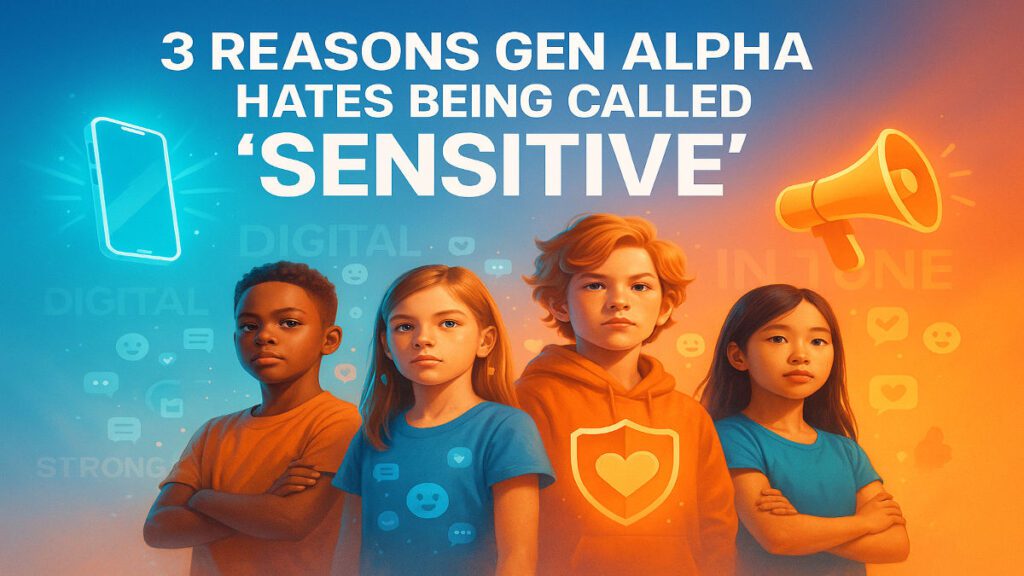
Short answer: Gen Alpha kids born after 2010 resent the “sensitive” label because it misreads their digital emotional language, clashes with the pressure to perform online, and undermines the resilience they’re building against pandemics, climate stress, and constant change.
In a world shaped by digital interaction, emotional awareness, and global uncertainty, words matter more than ever. For Generation Alpha — those born after 2010 — being labelled “sensitive” isn’t always a compliment. The word can suggest compassion, empathy, or emotional depth. More often, it’s used as a subtle jab that implies weakness, fragility, or an inability to cope. In 2025, the label can feel more like a limitation than a recognition of emotional intelligence.
Here’s why Gen Alpha may resent being called “sensitive,” and why we should think twice before using the term.
Why does calling Gen Alpha “sensitive” misread their digital emotions?
Unlike any generation before, Gen Alpha was swiping screens before they could walk. Their first friendships formed on multiplayer gaming platforms. Their early milestones — first laughs, first steps — were often recorded for a digital audience. This deep relationship with technology has altered how they experience the world, and how they express emotions.
Tech opens new ways to connect. A child in Mumbai might bond with a peer in Melbourne over Minecraft. Constant screen time can also blunt emotional responsiveness. According to Open Hearts Counseling, prolonged digital immersion can hinder real-world social skills and lead to emotional detachment or loneliness.
When adults interpret Gen Alpha’s digital behaviours as “cold” or “sensitive,” they may be misreading a new emotional language. These kids aren’t devoid of feeling. They process it differently, often privately or through emojis and memes rather than face-to-face tears or outbursts.
“Gen Alpha expresses emotion through the lens of technology, not despite it,” says child psychologist Dr. Aniket Srivastava. “Calling them ‘sensitive’ overlooks their ability to adapt to this complex digital-emotional hybrid world.”
How has online validation redefined vulnerability for Gen Alpha?
Gen Alpha lives in a curated culture where every post, story, or comment is part of a personal brand. The fear of appearing too emotional, too reactive, or too “sensitive” online can be paralysing. A moment of vulnerability — crying in a YouTube vlog, ranting on TikTok — can invite ridicule, trolling, or social invisibility.
“Perfection is the new normal,” notes Open Hearts Counseling. “Kids are pressured to be smart, funny, good-looking, but not too emotional. Sensitivity, unfortunately, doesn’t make the highlight reel.”
That’s why many Gen Alpha kids hide their emotional struggles behind filters or silence. They may laugh at “sad meme” humour while quietly battling stress, anxiety, or the weight of expectations. The label “sensitive” in this context feels dismissive and dangerous. It threatens their carefully crafted image of strength and self-assurance.
Many are deeply empathetic. They care about climate change, injustice, and the wellbeing of others. Their emotional maturity is often misjudged because it doesn’t conform to adult expectations.
Why is Gen Alpha already fighting to be strong?
Gen Alpha is growing up in an era of pandemics, climate emergencies, wars, and constant change. The world feels unstable, and many children today are hyper-aware of it. They overhear adult anxieties, witness global tragedies on YouTube, and absorb the stress of a society in flux.
In this atmosphere, resilience becomes a necessity, not a luxury.
Parents, educators, and counsellors are working to help Gen Alpha develop coping skills — from mindfulness practices to emotional check-ins at school. Open Hearts Counseling says resilience-building is essential for this generation. When society slaps the word “sensitive” onto their emotional responses, it undermines those efforts.
“Calling a child ‘sensitive’ can feel like you’re telling them their feelings are a flaw,” Dr. Srivastava adds. “We should be validating their emotions while guiding them toward resilience — not shaming them for feeling deeply.”
Let’s rethink the label
In 2025, emotional intelligence isn’t just a buzzword. It’s a life skill. Gen Alpha is learning to navigate feelings amid screens, societal shifts, and soaring expectations. Labelling them “sensitive” dismisses the complexity of their experiences and reduces their emotional range to a one-dimensional stereotype.
Instead of calling them “too sensitive,” what if we said they’re “thoughtful,” “in tune,” or “emotionally aware”? What if we admired their ability to feel deeply while facing the chaos of their world?
The next time a child cries over a news story or expresses fear before a school presentation, don’t brush it off. Recognise it as bravery, not weakness, in a generation still learning how to be human in a digital-first world.
FAQs about Gen Alpha and the “sensitive” label
Who is Gen Alpha?
Gen Alpha is the generation born after 2010. They are the first true digital natives, swiping screens before they could walk.
Why does Gen Alpha dislike being called “sensitive”?
The word often implies weakness or an inability to cope. Gen Alpha sees it as dismissing their emotional intelligence and the pressure they face online and offline.
How does Gen Alpha express emotions?
They often express feelings through emojis, memes, private messages, and digital interactions rather than face-to-face tears. Dr. Aniket Srivastava calls it a digital-emotional hybrid language.
What should we call Gen Alpha instead of sensitive?
Better words include “thoughtful,” “in tune,” or “emotionally aware” — terms that honour their emotional depth without implying fragility.
How is Gen Alpha building resilience?
Through mindfulness, emotional check-ins at school, parental support, and counsellor-led coping skills. Open Hearts Counseling says resilience-building is essential for this generation.