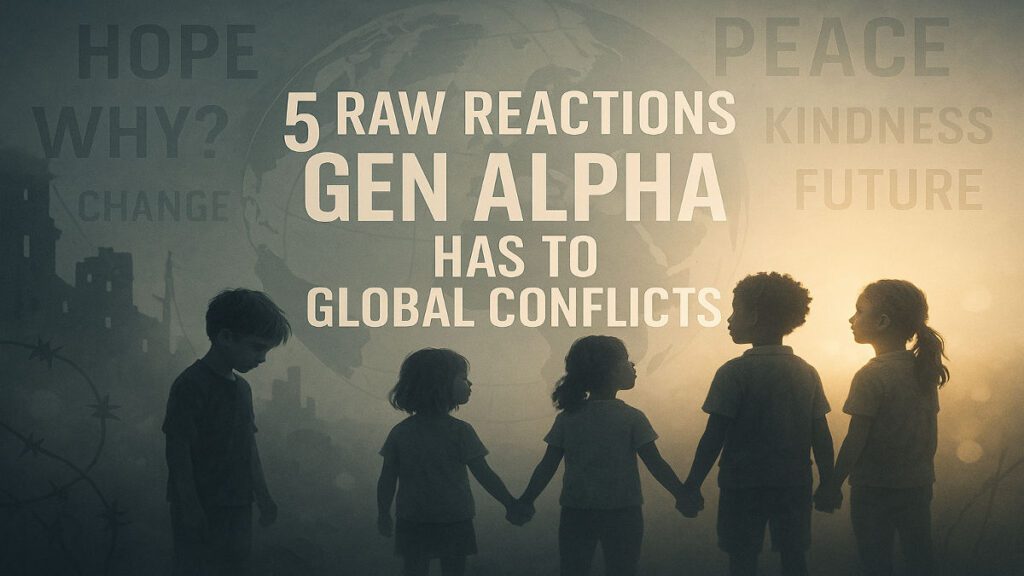
Short answer: Gen Alpha kids (born after 2010) experience global conflicts as live notifications and viral reels, not history lessons. Their reactions mix fear, confusion, empathy, and a strong urge to act. They want adults to listen, explain, and give them safe spaces to talk.
Ask an 11-year-old today what they think about war, and you won’t hear political jargon. You’ll hear something honest.
Generation Alpha — born after 2010 — is growing up while global conflicts stream live, get tweeted in real time, and land algorithmically in their feeds. In 2025, war isn’t a history chapter. It’s something they see happening right now, often without warning or context.
1. Why does war feel so immediate to Gen Alpha?
For Gen Alpha, conflict isn’t distant. It’s a live notification, a viral video, a reel shared by a classmate. That immediacy creates unease and fear. They watch footage from war zones, hear about airstrikes, and read headlines about kids their own age running from violence.
I remember my 10-year-old cousin pausing mid-video game to ask, “Why are those kids running from tanks on YouTube?” That raw moment of confusion and fear reflects a broader truth: these children experience the world’s pain in real time, with very little filter.
Constant exposure fuels anxiety, especially when no adult is around to help them process it.
2. Why can’t people be nice to each other?
There’s something heartbreakingly sincere in this question. Gen Alpha grew up in classrooms that teach empathy, with parents who value inclusivity. When they see bombs, hatred, and displacement, it clashes hard with their belief system.
They may not grasp political causes, but they understand fairness. They know what bullying looks like. War, to them, is the worst form of injustice.
In a 2024 survey by Common Sense Media, 72% of Gen Alpha respondents aged 8–13 said kindness is the most important value people should have. Their reaction to war isn’t apathy. It’s confusion mixed with a deep longing for peace.
3. What can Gen Alpha do about conflict?
Unlike past generations who watched from the sidelines, many Gen Alpha kids want to be part of the solution.
They make bracelets to raise funds for humanitarian aid. They start online petitions. They join school peace clubs and contribute to classroom discussions on global issues.
One 12-year-old student in Pune created a Minecraft simulation to teach his peers about diplomacy and conflict resolution. “I didn’t want to just read about war. I wanted to build peace,” he said.
They aren’t only consuming digital content. They’re creating awareness, and their instinct is to connect and contribute.
4. How does information overload shape their views?
With smartphones in hand, Gen Alpha has access to more information than any generation before them. But that access comes with chaos. One minute they’re watching a video about refugees. The next, they’re stuck in a thread full of misinformation and biased narratives.
A 2023 study by the American Enterprise Institute found that only 38% of 10–13-year-olds could accurately spot misinformation online without adult help.
Their reactions get shaped by fragmented content and unverified claims, leaving them emotionally charged but mentally confused. They need context, clarity, and mentors to guide them through it.
5. How can adults make conversations about war feel safe?
Unlike generations before them, these kids want to talk about war, fear, and injustice. They need the right environment.
They do better when adults give them room to express, question, and reflect without judgment. Schools, families, and communities have a real opportunity to build emotionally safe dialogue around global events.
According to Open Hearts Counseling India, consistent routines, regular screen breaks, and empathy-based discussions significantly reduce anxiety among children navigating world events.
Listening is our greatest responsibility
Gen Alpha’s reactions to global conflict aren’t naive. They’re human. They may lack political vocabulary, but they’re fluent in empathy, fairness, and hope. They may not vote yet, but they already shape how their families think and care.
Their words — “Why can’t people just be kind?” — sound simple. That’s the kind of simplicity the world desperately needs.
Our role isn’t to shield them from the world. It’s to walk beside them, help them process what they see, and support the peacemakers they’re already becoming.
FAQs about Gen Alpha and global conflicts
Who is Gen Alpha?
Gen Alpha refers to the cohort born entirely after 2010. In 2025, they are roughly 0–15 years old. They are the first generation growing up with smartphones, social media, and AI from birth.
How does Gen Alpha learn about wars and global conflicts?
Most Gen Alpha kids first encounter conflict through live social media feeds, viral reels, YouTube videos, and classmates sharing clips — not through textbooks or news broadcasts. This real-time exposure shapes their emotional response.
Are Gen Alpha kids more anxious about the world than earlier generations?
Constant exposure to unfiltered war footage and misinformation does drive higher anxiety. A 2023 American Enterprise Institute study found only 38% of 10–13-year-olds could spot misinformation online without adult help, which adds to their confusion.
How can parents talk to Gen Alpha about war?
Open Hearts Counseling India recommends consistent routines, regular screen breaks, and empathy-based conversations. Make space for questions, avoid oversimplifying, and listen without judgment so kids can process what they’re seeing.
What values matter most to Gen Alpha?
In a 2024 Common Sense Media survey, 72% of Gen Alpha respondents aged 8–13 said kindness is the most important value people should have. Fairness, empathy, and wanting to help drive their reactions to global events.