
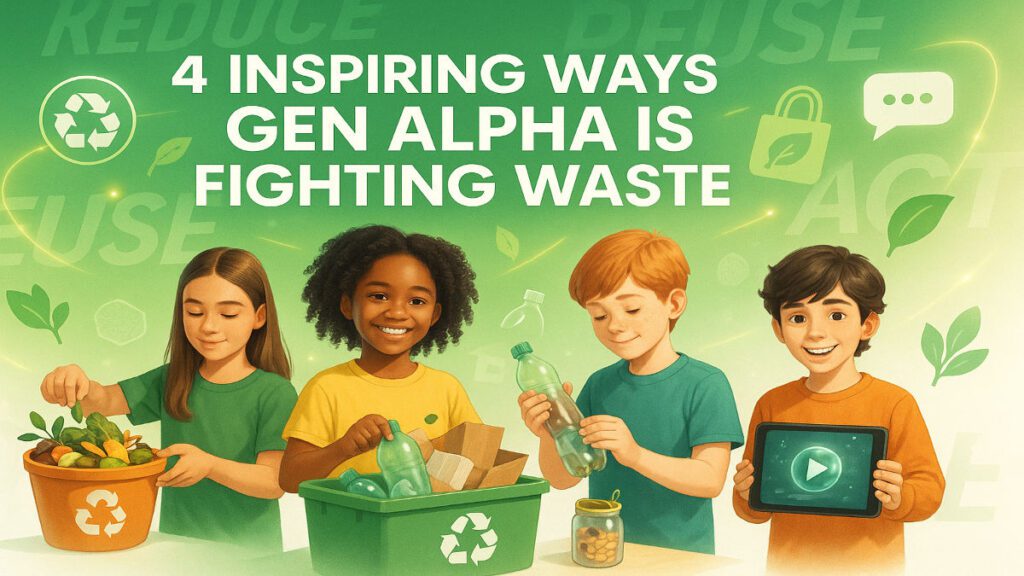
Short answer: Gen Alpha (born 2010 to 2024) is fighting waste through eco-friendly home choices, school-led sustainability, digital activism on Instagram, YouTube and TikTok, and support for circular economy brands. Studies show 62% of kids aged 9–14 back honest eco-brands, and 40% of tweens prefer take-back or repair programs.
In 2025, the youngest generation is leading the push for a cleaner, greener world. Gen Alpha, born between 2010 and 2024, is growing up in an era where environmental awareness feels urgent. They are weaving sustainability into daily life with creativity and conviction.
From composting kitchen scraps to asking brands for eco-transparency, Gen Alpha is not only talking about change. They are making it happen.
How do Gen Alpha kids shape eco-friendly choices at home?
Before hitting their teenage years, Gen Alpha is influencing whole households as mini environmentalists.
They think twice before buying something new, often nudging parents toward brands with recycled packaging or ethical sourcing. Kitchen cabinets now hold reusable steel straws, school bags carry bamboo lunch boxes, and shopping trips end with eco-friendly swaps instead of plastic-heavy hauls.
A mother of an 8-year-old in Pune shared, “My son refuses to let me buy anything with too much plastic. He even checks labels to see if it’s recyclable. Honestly, he’s holding me accountable!”
It is not only preferences. Gen Alpha is demanding transparency. They are skeptical of greenwashing and will research a brand’s carbon footprint or labour practices. A 2024 Globescan youth study found that 62% of kids aged 9 to 14 say they are more likely to support companies that are honest about their environmental impact.
What sustainability habits are Gen Alpha learning at school?
Through school eco-clubs and family routines, Gen Alpha is learning to cut waste in hands-on ways.
They have taken on the “Three Rs”—Reduce, Reuse, Recycle—not as a slogan but as a way of life. At home, they rinse bottles for recycling, turn cardboard into toys, and explain the difference between compostable and non-biodegradable waste.
In schools, many join plastic segregation drives, DIY upcycling workshops and classroom composting bins. Teachers are moving from environmental science lessons to daily action. Some kids turn cereal boxes into pencil holders or make garden planters out of old soda bottles.
A 12-year-old named Zoya recently shared in a school interview, “I made a bird feeder using an old milk carton. My friends and I started a ‘no-waste challenge’ and now we’re trying to reduce our lunch waste every day.”
This peer-to-peer influence turns sustainability into a movement, not a lesson.
How is Gen Alpha using social media for activism?
Gen Alpha may be young, yet they are not staying silent.
Many join environmental campaigns, clean-up drives and school-led tree-planting missions. Their passion is visible and powerful.
On YouTube, Instagram and TikTok, they raise awareness in fresh ways. Short videos on ditching single-use plastics, joining the #PlasticFreeChallenge, or growing balcony gardens are gaining traction.
They look up to youth activists who stepped forward in global movements like Fridays for Future. Those voices push them to act in their own communities.
Their activism may be small in scale, yet their voices are loud, and adults are listening.
Why does Gen Alpha support the circular economy?
One of Gen Alpha’s most forward-thinking traits is their openness to circularity. Instead of buying new, many are happy to rent, swap or repair items.
According to a 2025 Fibre2Fashion report, more than 40% of tweens said they prefer brands that offer take-back or repair programs. That marks a shift away from the traditional “use-and-throw” mindset.
Some are fascinated by biodegradable materials like mycelium (mushroom-based) packaging or plant-based plastics. Their curiosity drives innovation, and they gravitate toward brands with purpose-driven missions and eco-tech solutions.
They are not only asking for greener products. They are asking for innovation, and they will back the brands that deliver.
What does a Gen Alpha greener future look like?
Gen Alpha is showing that age is no barrier to action. Through mindful shopping, creative upcycling, active advocacy and a strong sense of responsibility, they are building a future where waste is the exception, not the norm.
They remind us that cutting waste is not about grand gestures. It is about choosing to reuse a cloth bag, turn a box into art, or question where things come from.
FAQs about Gen Alpha sustainability
What years define Gen Alpha?
Gen Alpha includes kids born between 2010 and 2024. In 2025 most are still in primary and middle school.
Do Gen Alpha kids really care about greenwashing?
Yes. A 2024 Globescan youth study found 62% of kids aged 9 to 14 say they are more likely to support companies that are honest about their environmental impact.
How popular are take-back and repair programs with Gen Alpha?
A 2025 Fibre2Fashion report found more than 40% of tweens prefer brands that offer take-back or repair programs.
Which platforms does Gen Alpha use for climate activism?
They use YouTube, Instagram and TikTok to share short videos on plastic-free living, the #PlasticFreeChallenge and balcony gardening.
What is mycelium packaging?
Mycelium packaging is made from mushroom roots and is biodegradable. Gen Alpha kids are showing early interest in this kind of eco-tech material along with plant-based plastics.