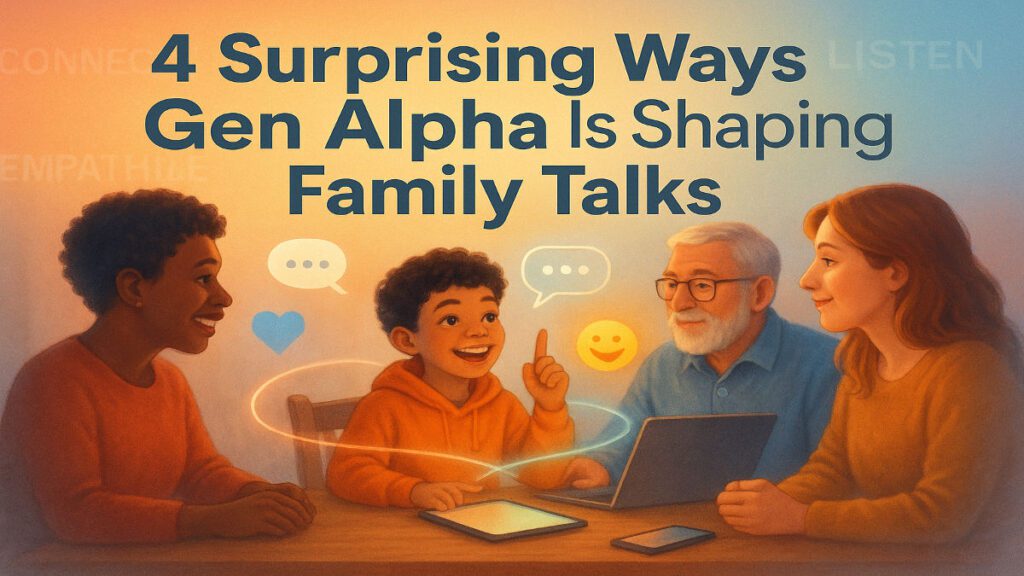
Short answer: Gen Alpha kids born after 2010 are reshaping family conversations in four ways: participating in decisions, raising hard topics like mental health, teaching adults tech skills, and changing how families communicate through memes and short-form content.
Family conversations used to revolve around “how was school today?” and “finish your vegetables.” In 2025, things are shifting fast. Generation Alpha — the cohort born after 2010 — is reshaping dinner table dialogue and everyday decision-making. These kids aren’t just adapting to a digital world. They’re changing how families think, speak, and connect.
Here are four powerful ways Gen Alpha is transforming family conversations, and why it’s worth paying attention.
How is Gen Alpha part of family decision-making?
If you’ve ever had an 8-year-old veto your vacation plans or suggest a better grocery store based on a YouTube ad, you’re not alone. Gen Alpha kids are raised by millennials who lean into collaborative parenting. That means more democratic conversations at home, where even the youngest voices carry weight.
From choosing dinner to weighing in on which streaming subscription the family should renew, Gen Alpha gets a seat at the table. It’s not only about giving kids power. It prepares them for a world where choices come with consequences.
I remember my niece, barely 10, convincing her parents to cancel a long-standing family tradition of going to a theme park in favour of a nature-focused retreat. Her reason? “Because it’s better for the planet.” That’s the kind of influence Gen Alpha holds, rooted in opinion, exposure, and a surprising depth of awareness.
Why does Gen Alpha talk about hard topics at home?
Past generations often pushed sensitive topics aside. Gen Alpha is growing up in a culture of openness. Parents are more willing to talk about mental health, emotional wellbeing, and social issues, and their kids are listening.
Thanks to exposure to global events via YouTube, Instagram, and school discussions, Gen Alpha isn’t only aware of climate change, inequality, or mental health. They’re asking questions about them. They want to know why things are the way they are and what they can do to help.
Psychology Today notes that this shift fosters emotionally safe homes. Families now sit together and talk about anxiety, bullying, or even gender identity — topics once considered too heavy for young ears.
The beauty? These conversations build trust. When kids feel safe expressing fears or frustrations without judgment, family bonds grow stronger.
Why are Gen Alpha kids the tech experts at home?
Forget “ask your dad.” In many homes today, it’s “ask your kid.”
Gen Alpha grew up with voice assistants, touchscreens, and AI-powered apps. They’re the de facto tech experts at home. From helping a grandparent set up Zoom to teaching mom how to use Instagram Reels, these digital natives are flipping traditional family dynamics.
This reversal doesn’t only build skills. It nurtures empathy and patience. Kids feel valued, and adults stay in the loop. It also opens the door to deeper conversations about the responsibilities that come with digital access: privacy, screen time, cyberbullying, and digital etiquette.
According to Common Sense Media, over 60% of parents say their children have helped them navigate a digital task in the past year. That statistic alone shows how much tech literacy is shaping modern family dynamics.
How is Gen Alpha changing family communication styles?
Gen Alpha speaks a different language.
Between memes, social media trends, abbreviations like “GOAT” and “sus,” and emoji-heavy texting, older generations can feel like outsiders at home. Instead of dismissing it, many parents are engaging with this new form of expression.
This isn’t only about slang. It’s a shift in how information is consumed and shared. Gen Alpha prefers bite-sized content, visuals over text, and quick responses. Family conversations are adapting to these habits — shorter discussions, visual aids like a shared Google Calendar or digital to-do list, and more casual formats.
When my friend’s 11-year-old daughter sent a meme to apologise for missing a chore, it sparked laughter and curiosity. Her mom asked, “Where’s that from?” and it led to a half-hour conversation about Gen Z and Alpha humour. That’s the beauty of these new styles — they invite connection.
A new era of family connection
In 2025, Gen Alpha isn’t only listening in on family conversations. They’re helping lead them. Their comfort with technology, exposure to global issues, and emotional fluency are creating a new kind of dialogue: more collaborative, more open, and more adaptable.
This evolution might feel unfamiliar to older generations, but it’s rich with opportunity. If we listen, learn, and occasionally decode a meme, we’ll find Gen Alpha has a lot to teach us — not just about TikTok or trending games, but about empathy, awareness, and the kind of future they want to build.
The takeaway: Talk to them. Ask questions. Be curious. Gen Alpha isn’t only changing the conversation. They’re inviting us to have better ones.
FAQs about Gen Alpha family conversations
When was Gen Alpha born?
Gen Alpha is the cohort born after 2010. They are the children of many millennial parents and follow Gen Z.
Do parents really let Gen Alpha kids help make decisions?
Yes. Millennial parents tend to use collaborative parenting, giving Gen Alpha kids input on vacations, streaming subscriptions, dinners, and more.
What hard topics does Gen Alpha discuss with family?
Common topics include mental health, anxiety, climate change, inequality, bullying, and gender identity. Psychology Today says this openness builds emotionally safer homes.
How often do Gen Alpha kids help parents with technology?
According to Common Sense Media, over 60% of parents say their kids have helped them with a digital task in the past year.
How does Gen Alpha prefer to communicate?
They prefer bite-sized content, memes, emojis, short-form video, and quick visual responses — often using shared digital calendars or to-do lists.