
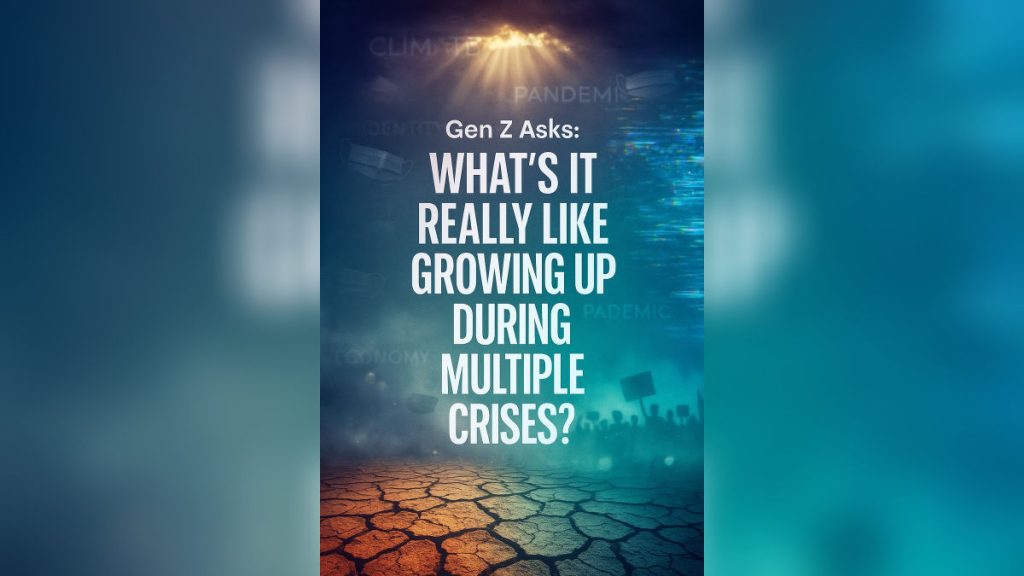
Short answer: Gen Z is coming of age inside overlapping crises, climate, economic, geopolitical, mental health, and it shows up as record stress levels alongside record activism. They’re more anxious than older generations, more open about mental health, and more likely to turn personal pain into public organising.
For many of Gen Z, growing up hasn’t just meant homework and relationships and career choices. It’s meant doing all that, and more, while the world around them seems to be permanently on fire. Climate change. Economic instability. Global conflict. A mental health emergency that nobody’s quite caught up to. Gun violence in the places where childhoods are supposed to live. The result? A generation that’s stressed, switched on, and somehow still astonishingly resilient.
This is the lived reality of coming of age amid multiple, overlapping crises, and how it’s shaping Gen Z’s outlook, identity and quiet, stubborn determination.
Why does Gen Z feel constantly on alert?
Anxiety is the new normal
If there’s one word that defines the Gen Z experience, it’s anxiety. A 2022 American Psychological Association study found Gen Z reports higher levels of stress than any other generation alive today. And while anxiety is a universal emotion, what makes it different for Gen Z is the frequency, the triggers, and the speed at which social media amplifies all of it.
Take climate change. It isn’t a “future threat” anymore, it’s visible right now. From extreme floods in Northeast India to heatwaves in Europe and forest fires in Australia, environmental collapse is a daily headline. “Eco-anxiety” isn’t a buzzword, it’s a lived experience. Many Gen Zers find themselves quietly questioning whether it’s even ethical to have children or commit to long-term plans on a warming planet.
Then there’s the economy. Imagine graduating into a world where job markets are unpredictable, rent is sky-high, and student loans are choking entire generations. In India, over 60% of Gen Z worry they won’t have enough financial security to support themselves in the next five years, according to a 2023 report by Deloitte. Sixty percent. That’s not a fringe concern, that’s the room.
And let’s not forget the constant hum of geopolitical tension, wars, civil unrest and polarisation have all become normal background noise. Gen Z grew up watching conflicts unfold live on their screens, from the Ukraine war to protests in Hong Kong and the global reckoning on racial injustice. Conflict, mediated by an algorithm.
Why is violence so personal for Gen Z?
For many in Gen Z, safety isn’t a distant concept, it’s deeply personal. In countries like the U.S., growing up with school shooting drills and hearing about mass violence has reshaped how kids relate to public spaces. In other parts of the world, like South Asia and the Middle East, threats like terrorism, communal violence and political instability shape daily routines and choices.
Even in India, while the form differs, the feeling stays. Increasing reports of gender-based violence, hate crimes and regional unrest contribute to a general sense of hyper-vigilance. Safety, both physical and psychological, has become a top priority, reflected in everything from the apps Gen Z downloads to the places they’re willing to be.
How is Gen Z redefining values and life goals?
Money still matters, but meaning matters more
Growing up amid turmoil has forced Gen Z to rethink what success even looks like. Financial stability still matters, of course it does, especially given the economic mess. But this generation is increasingly drawn to careers and lifestyles that prioritise meaning, flexibility and well-being over a polished LinkedIn ladder.
For example, a friend of mine, Neha, left a high-paying consulting job in Mumbai after two years of burnout. She now runs a small sustainable fashion brand online. “I just didn’t want to be part of a system that drained me,” she said. “Even if I earn less, at least I’m doing something that aligns with who I am.”
This pursuit of purpose over paycheck is echoed in global trends. Gen Z is more likely to support brands with ethical values, advocate for diversity and inclusion at work, and push companies to take real public stances. They aren’t shy about holding institutions accountable, and they remember the receipts.
How is Gen Z reshaping the mental health conversation?
Normalising the conversation
Unlike older generations who often swept mental health under the rug, Gen Z has dragged it onto the dining table. Therapy memes, wellness podcasts, anxiety check-ins, none of it is taboo anymore. They’re tools for survival, used the way earlier generations used self-help books.
Yet, while the openness is commendable, the struggle is very real. Studies globally and in India have shown a surge in depression, anxiety and burnout among young people, especially since the COVID-19 pandemic. Social media, while offering connection, often feeds the comparison spiral and worsens feelings of inadequacy.
Access to quality mental healthcare is still a huge issue, particularly in rural or underserved areas. Digital therapy platforms, mental health influencers and university-based wellness programmes are slowly filling the gap, though slowly is the operative word.
Why is Gen Z fighting back through activism?
The most digitally mobilised generation yet
Despite the challenges, or perhaps because of them, Gen Z isn’t sitting quietly. This is a generation that’s turned pain into purpose, leveraging digital tools to organise, educate and push for change.
From Fridays for Future protests led by youth to social media campaigns demanding justice, Gen Z has proved that activism is in their DNA. According to a 2023 Pew Research report, over 70% of Gen Z have engaged in some form of civic or political activity in the last year, more than any previous generation at their age.
In India, we’ve seen young voices lead environmental movements, campaign against exam stress, and use satire to challenge political norms when straightforward critique gets shut down. This blend of digital savvy and moral conviction makes Gen Z a powerful force for transformation, and a tricky one to dismiss.
Learning to pivot
Resilience isn’t only about bouncing back, it’s about adapting. And if Gen Z excels at one thing, it’s adaptation. The pandemic forced students into online learning, professionals into hybrid models, and entire industries to rethink how work even gets done. Gen Z absorbed it all in stride.
They’re starting side hustles, learning new skills on YouTube, coding apps from dorm rooms, and creating jobs that didn’t exist five years ago. Flexibility isn’t just a trait. It’s a lifestyle, baked in.
We grew up watching the world burn, now we’re learning to rebuild it
To grow up during multiple crises is to carry both fear and fire. Gen Z knows what it’s like to wake up anxious, scroll through dystopia, and wonder if the future will ever feel safe. But they also know how to speak up, how to organise, how to innovate, and how to dream bigger than the chaos around them.
Yes, the world has handed Gen Z a messy deck of cards, but this generation is learning how to reshuffle it.
If you’re Gen Z, know this. You’re not alone in your overwhelm, nor in your hope. Keep asking tough questions. Keep creating new paths. Keep showing up for each other.
And for the rest of the world, parents, teachers, employers, policymakers, it’s time to listen. Not just to the pain, but also to the vision. Because Gen Z isn’t just surviving crises, they’re reimagining what comes next.
The future isn’t just uncertain. It’s still unwritten. And Gen Z holds the pen.
FAQs about Gen Z growing up during multiple crises
What does growing up during multiple crises actually mean for Gen Z?
It means coming of age while climate change, economic instability, geopolitical conflict, mass violence and a mental health emergency all run in parallel, with social media amplifying every headline. The result is a generation that’s the most stressed on record, but also among the most aware and politically active.
How stressed is Gen Z compared to other generations?
According to a 2022 American Psychological Association study, Gen Z reports higher levels of stress than any other generation alive today. The triggers and frequency, fed by climate news, financial pressure and social media, are what set this generation apart.
What does the 2023 Deloitte report say about Gen Z and money in India?
The 2023 Deloitte report found over 60% of Gen Z in India worry they won’t have enough financial security to support themselves in the next five years. That makes economic anxiety a defining feature of how this generation thinks about its future.
How active is Gen Z in civic and political life?
Very. A 2023 Pew Research report found over 70% of Gen Z engaged in some form of civic or political activity in the last year, a higher rate than any previous generation at the same age. From climate protests to online campaigns, activism shows up across formats.
How is Gen Z handling mental health differently?
Gen Z talks about it openly, through therapy memes, wellness podcasts and anxiety check-ins, instead of hiding it. Depression, anxiety and burnout have surged since the COVID-19 pandemic, but digital therapy platforms and university-based wellness programmes are slowly closing the access gap.