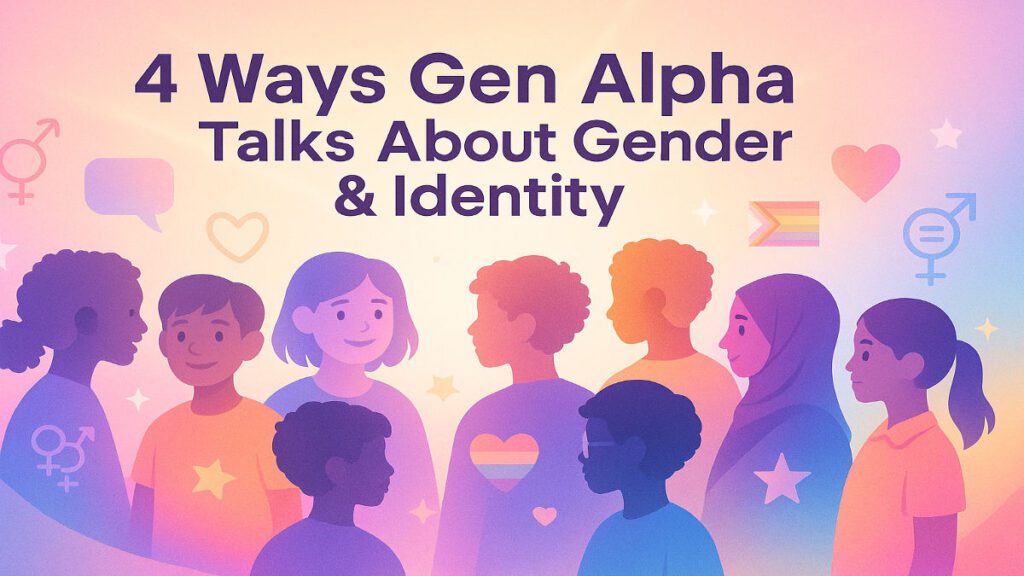
Short answer: Gen Alpha (born 2010 onwards) treats gender as a spectrum rather than a fixed box. Growing up around inclusive language, K-pop, Taylor Swift and global internet culture, these kids challenge binary norms at home and in classrooms, and pick authenticity over approval.
Conversations around identity are more nuanced than ever, and one generation is quietly transforming the narrative: Generation Alpha. Born from 2010 onwards, these digital natives grow up immersed in diversity, fluidity and global interconnectedness. While adults scramble to catch up with changing language around gender, Gen Alpha is already speaking with clarity, compassion and confidence.
Their worldview is shaped by social movements, inclusive media and youth-led conversations. They are not just participants in the gender conversation; they are leading it. Here are four ways Gen Alpha is reshaping how we talk about gender and identity in 2025.
How does Gen Alpha redefine what gender means?
For many Gen Alpha kids, gender is no longer a fixed box. It is a spectrum, a personal journey and a matter of authenticity. Growing up around open conversations about pronouns, fluid identities and inclusive language, they question traditional norms on instinct.
Whether it is pushing back on “boys don’t cry” or asking why girls’ clothes have no pockets, they challenge outdated assumptions.
In a recent classroom discussion, an 8-year-old shared, “I don’t like pink or blue—I like yellow. It’s for everyone.” The sentiment reflects a rejection of binary thinking. Gen Alpha is teaching us that color, fashion, toys and emotions aren’t gendered—they’re human.
How is Gen Alpha changing gender roles at home?
One of the most visible shifts is happening inside families. Feminist values are no longer taught only to daughters; they shape sons too. Thanks to role models like Meghan Markle and media that champions strong, compassionate women, young boys are raised to value equality, express emotions and embrace vulnerability.
Boys today might be baking with their sisters, doing yoga with their moms, or crying openly during a sad movie. Nobody is batting an eye.
Even chores are being redistributed. As one 11-year-old boy said, “Why should only mom do the dishes? We all eat.” Statements like these reflect a deeper change: Gen Alpha is reimagining what fairness looks like inside households and across society.
What media shapes Gen Alpha’s views on identity?
Gen Alpha’s conversations around identity are deeply influenced by the media they consume. K-pop groups like BTS, with their expressive fashion and emotionally open lyrics, have become unexpected guides in redefining masculinity. Artists like Taylor Swift and public figures like Meghan Markle speak openly about gender roles, feminism and equality.
The internet is their playground for exploration. Through YouTube videos, social media and online communities, they hear voices from across the globe discussing non-binary identities, gender dysphoria and lived experiences with warmth and honesty.
According to a 2023 Iberdrola study, nearly 60% of Gen Alpha kids under 13 had heard terms like “non-binary,” “cisgender” and “genderfluid” and understood what they meant. That level of awareness in primary school was unheard of a generation ago.
Why does Gen Alpha pick authenticity over approval?
Perhaps the most powerful trait of Gen Alpha’s approach to identity is this: they prioritise being real over being accepted. They don’t want to fit in if it means pretending. Instead, they champion self-expression through bold fashion choices, creative pronouns, or rejecting labels altogether.
A mother shared how her 10-year-old daughter once said, “I’m still figuring out who I am—and that’s okay.” That emotional honesty is the heart of this generation. They’re not in a rush to define themselves, but they’re fiercely protective of their right to explore.
This mindset is creating safer spaces where being different isn’t tolerated, it’s celebrated.
Gen Alpha Is Rewriting the Rules
The way Gen Alpha talks about gender and identity isn’t polished. It is real, raw and rooted in empathy. They’re unlearning what we assumed was unchangeable. They’re questioning rules we thought were natural. They’re replacing judgment with curiosity, rigidity with fluidity and shame with pride.
In 2025, the most useful thing adults can do is listen. Listen to their questions, their language, their lived experiences. Let them guide us because they’re brave enough to ask the questions we didn’t know we could.
When it comes to gender and identity, Gen Alpha isn’t changing the conversation—they’re humanising it.
FAQs about Gen Alpha and gender identity
What years define Gen Alpha?
Gen Alpha refers to children born from 2010 onwards, following Gen Z. They are the first generation growing up fully with smartphones, social media and inclusive language around gender from primary school age.
Do Gen Alpha kids use pronouns differently?
Yes. Many Gen Alpha kids use and accept pronouns like they/them alongside he/him and she/her without treating it as unusual. They learn the language through school, social media and YouTube, and expect adults to ask rather than assume.
How many Gen Alpha kids understand terms like non-binary?
A 2023 Iberdrola study found that nearly 60% of Gen Alpha kids under 13 had heard and understood terms like “non-binary,” “cisgender” and “genderfluid.” A generation ago, that awareness at primary-school age was unheard of.
Which celebrities shape Gen Alpha’s views on gender?
BTS, Taylor Swift and Meghan Markle come up most often. BTS reshapes ideas of masculinity through fashion and lyrics, while Swift and Markle openly discuss feminism, gender roles and equality in ways that reach young audiences in India.
How can parents support Gen Alpha on gender and identity?
Listen without judgment, respect chosen pronouns, redistribute chores fairly at home, and treat emotions as signals rather than weaknesses. Follow the child’s lead instead of forcing labels, and keep the conversation open as their understanding evolves.