
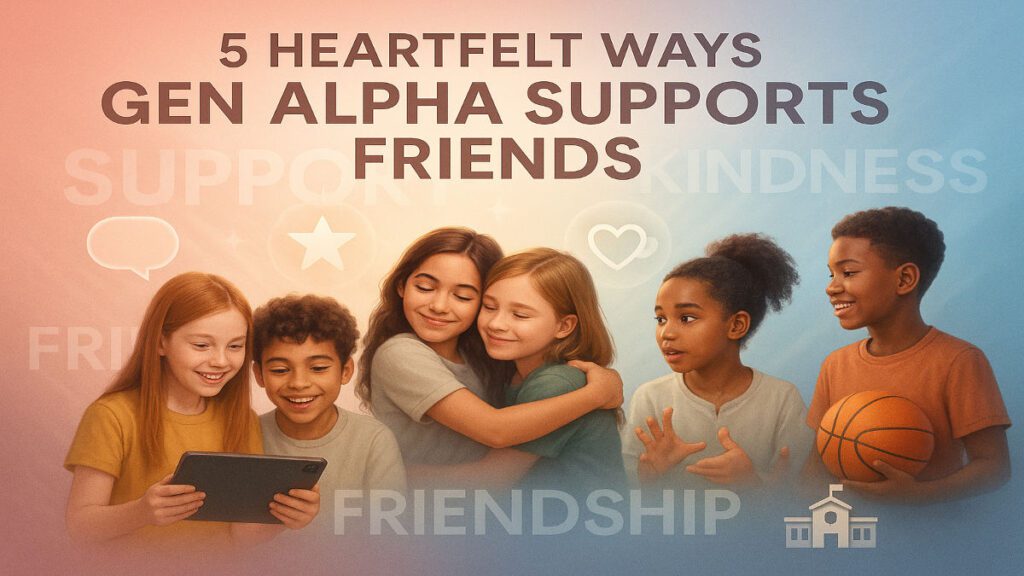
Short answer: Gen Alpha (born 2010–2024) supports friends through a mix of digital check-ins on platforms like Roblox, Minecraft and Fortnite, empathy learned from influencers, school-taught active listening, real-world hangouts and stronger adult support systems. Their friendship style blends digital fluency with deep emotional intelligence.
In 2025, friendship looks different thanks to Generation Alpha. These digital-savvy, emotionally aware kids, born between 2010 and 2024, are growing up in a world where mental health is openly discussed, empathy is taught in classrooms, and connection exists both behind screens and face-to-face.
When their friends are hurting, Gen Alpha knows how to show up. Whether through a comforting message sent from across the world or a heartfelt conversation after school, their methods are sincere and surprisingly mature.
How do Gen Alpha kids use digital tools to show they care?
As digital natives, Gen Alpha turns to technology to stay close to friends even when miles apart. From late-night video calls to emotional check-ins over text, they use digital platforms to express care in meaningful ways.
Games like Roblox, Minecraft and Fortnite are more than play spaces. They are support zones. Within these virtual worlds, children build, collaborate and open up emotionally while doing something they enjoy.
“I talk to my best friend while we build houses in Minecraft,” says 11-year-old Maya. “If she’s sad, I can tell, even if she doesn’t say it. Then we just hang out longer, and I keep her company.”
These platforms offer a comforting blend of distraction and emotional presence, helping kids bond without the pressure of formal conversations.
Why do influencers matter for Gen Alpha friendships?
Many Gen Alpha kids learn kindness, vulnerability and strength from influencers who share openly about their mental health journeys. TikTokers and YouTubers discussing anxiety, bullying and grief help normalise these struggles.
A 2023 report by Common Sense Media found that over 45% of Gen Alpha tweens follow influencers who speak about emotional wellbeing. These online figures often become role models for how to offer support by listening, validating and showing up.
By watching their favourite creators talk about “bad days,” Gen Alpha kids feel empowered to be that safe space for a friend.
How is Gen Alpha learning emotional intelligence so young?
This generation is emotionally tuned in. Schools today teach mindfulness, kindness and active listening alongside traditional subjects. Children are encouraged to name their feelings, recognise them in others and respond with empathy.
“I learned how to listen without interrupting in class,” says 10-year-old Rishabh. “Now when my friend is upset, I just stay quiet and let them talk.”
It’s a simple gesture, but a powerful one. Active listening is among the most important skills for supporting someone through tough times, and Gen Alpha is being taught this early.
Their heightened social awareness also means they are more likely to notice when a friend is withdrawing or behaving differently, and to gently check in.
Why is Gen Alpha returning to offline connection?
Although raised with devices in hand, Gen Alpha is rediscovering the value of in-person connection. After years of online schooling and pandemic-induced isolation, these kids want to put down their screens and spend real-world time with peers.
Whether it is joining a friend’s basketball game, crafting together or walking and talking, these moments create safe, comforting spaces.
In many families and schools, conversations around mental health are no longer taboo. This cultural shift helps kids offer and ask for help more openly. They are not afraid to say things like “It’s okay to cry” or “Want me to come over?”—phrases that once felt awkward and now feel natural.
What support systems stand behind Gen Alpha?
Behind every Gen Alpha kid offering a hug or a sweet message is a village. Parents, teachers, coaches and school counsellors are placing stronger emphasis on building resilient, kind individuals.
Programmes teaching social-emotional learning, peer mentoring and age-appropriate therapy access are becoming more common in schools across India and globally. When support is modelled by adults and embedded into daily life, children are more likely to reflect it in their friendships.
Encouraged to volunteer, collaborate and engage in group discussions, they are building empathy and the confidence to act on it.
A kinder future in the making
Generation Alpha isn’t just coping with a complex world. They are reshaping it with kindness. Their ability to combine digital fluency with emotional intelligence is powerful.
They are proving, day by day, that being a good friend means more than saying the right thing. It is about being present—in a game, a text, a hug or a shared silence.
FAQs about Gen Alpha friendship
Who is Generation Alpha?
Generation Alpha refers to kids born between 2010 and 2024. They are true digital natives growing up with smartphones, social media and open conversations about mental health.
How does Gen Alpha support friends online?
They stay connected through video calls, texts and shared play on platforms like Roblox, Minecraft and Fortnite, where they can check in emotionally while doing something fun together.
Do Gen Alpha kids follow mental health influencers?
Yes. A 2023 Common Sense Media report found over 45% of Gen Alpha tweens follow influencers who openly discuss emotional wellbeing, anxiety, bullying and grief.
What makes Gen Alpha emotionally intelligent?
Schools now teach mindfulness, kindness and active listening alongside traditional subjects, so children learn to name feelings, recognise them in others and respond with empathy from an early age.
Is Gen Alpha more offline than older digital generations?
Increasingly yes. After pandemic isolation, many Gen Alpha kids are choosing in-person hangouts, sports and real-world activities over constant screen time to strengthen their friendships.