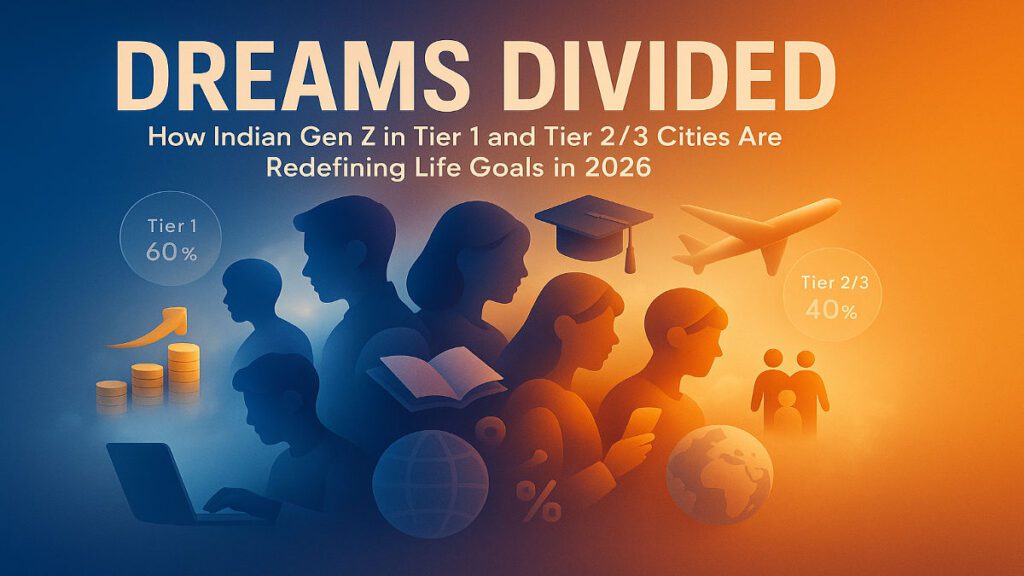
Short answer: Indian Gen Z life goals split along city lines. Tier 1 youth chase FIRE, startups, global degrees, therapy, and delayed marriage. Tier 2/3 youth lean on stable salaries, government jobs, UPSC/JEE/NEET exams, home ownership, and family. Both want independence and security, but the routes differ.
A generation at the crossroads
Every generation has its defining dreams. For Baby Boomers in India, it was job security in government service. For Millennials, it was upward mobility in corporate and IT jobs. For Gen Z — those born between the late 1990s and early 2010s — the story is far more nuanced.
As 2026 unfolds, India’s Gen Z is stepping firmly into adulthood. They are shaping workplaces, driving consumer choices, and rewriting cultural narratives. Yet their life goals are not uniform. A young professional in Bangalore or Mumbai dreams differently from a student in Patna or Indore. Urban metros nurture global ambitions, while smaller towns balance tradition with rising aspirations. Together, these contrasts reveal a layered portrait of India’s youth: restless, ambitious, and deeply rooted.
How does financial independence look in Tier 1 vs Tier 2/3 cities?

For Gen Z, money is not only currency. It is freedom. The approach to financial independence differs sharply by city tier.
- Tier 1: In metros, financial independence means investments, side hustles, and FIRE (Financial Independence, Retire Early) movements. Young Indians track stock markets, dabble in crypto, and take risks chasing early wealth.
- Tier 2/3: Outside metros, stability wins over experimentation. The dream is still to earn and save, but through stable salaries, gold, fixed deposits, and insurance. Risk-taking is less common, and family expectations often guide financial decisions.
Example: A 24-year-old engineer in Gurgaon invests in mutual funds and dreams of retiring at 40. Her counterpart in Kanpur prioritises saving enough for a home and supporting parents.
What careers does Indian Gen Z pursue: tradition or tech?
Career aspirations among Indian Gen Z highlight how diverse the country is.
- Tier 1: Youngsters here thrive on tech-driven opportunities — AI, product design, data science, and the creator economy. Networking, global internships, and personal branding feel essential.
- Tier 2/3: Safe, traditional careers dominate — government jobs, engineering, medicine, and IT services. These remain symbols of prestige and security, though YouTube and online communities are widening horizons.
Recent surveys suggest over 60% of Tier 2/3 students still see competitive exams as their ticket to success, compared with less than 30% in metros.
How does Gen Z approach mental health in metros vs small towns?
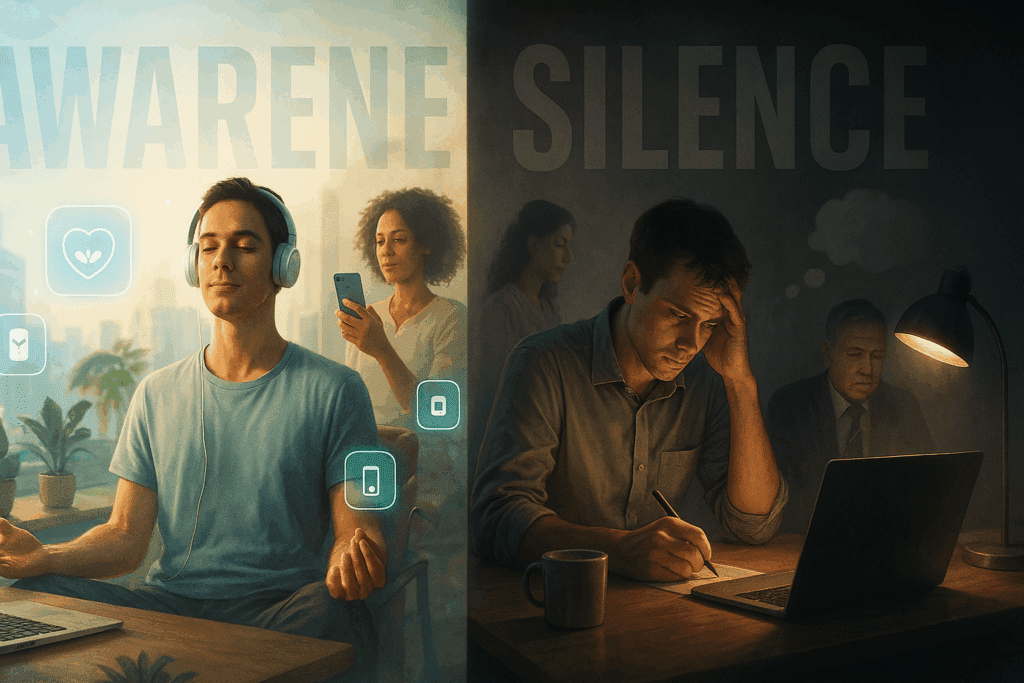
The mental health conversation is another dividing line.
- Tier 1: Awareness of burnout, therapy, and mindfulness is widespread. Wellbeing is considered as important as salary, and job-hopping for balance is normal. Mental health apps and therapy subscriptions are going mainstream.
- Tier 2/3: Stigma stays strong. Many young people avoid discussing anxiety or depression, fearing judgement. Work–life balance is often sacrificed for family obligations or financial needs.
The gap shows how urban exposure and access to resources directly shape priorities.
How bold is Gen Z entrepreneurship in each city tier?
Gen Z’s entrepreneurial streak is real, but its expression varies.
- Tier 1: Startups, freelancing, and the creator economy (YouTube, podcasts, design studios) are embraced. The mantra is “Build something of my own.”
- Tier 2/3: Entrepreneurship often takes the form of family businesses, coaching institutes, or small-scale ventures. Influencer culture has fuelled dreams of content creation and gaming as alternative careers.
A striking example is the rise of small-town YouTubers who now command millions of followers despite lacking metro resources.
Education: global degrees or Indian exams?
Education remains a cornerstone of Indian life goals, but aspirations differ.
- Tier 1: Many dream of international degrees in the US, UK, or Canada. Online upskilling in AI, coding, or design adds another layer of ambition.
- Tier 2/3: The focus is on affordable Indian degrees and clearing high-stakes exams like UPSC, JEE, or NEET. Education is seen less as exploration and more as a route to respectability and stability.
The divide reflects access and affordability gaps across India.
Travel: global wanderlust vs local exploration
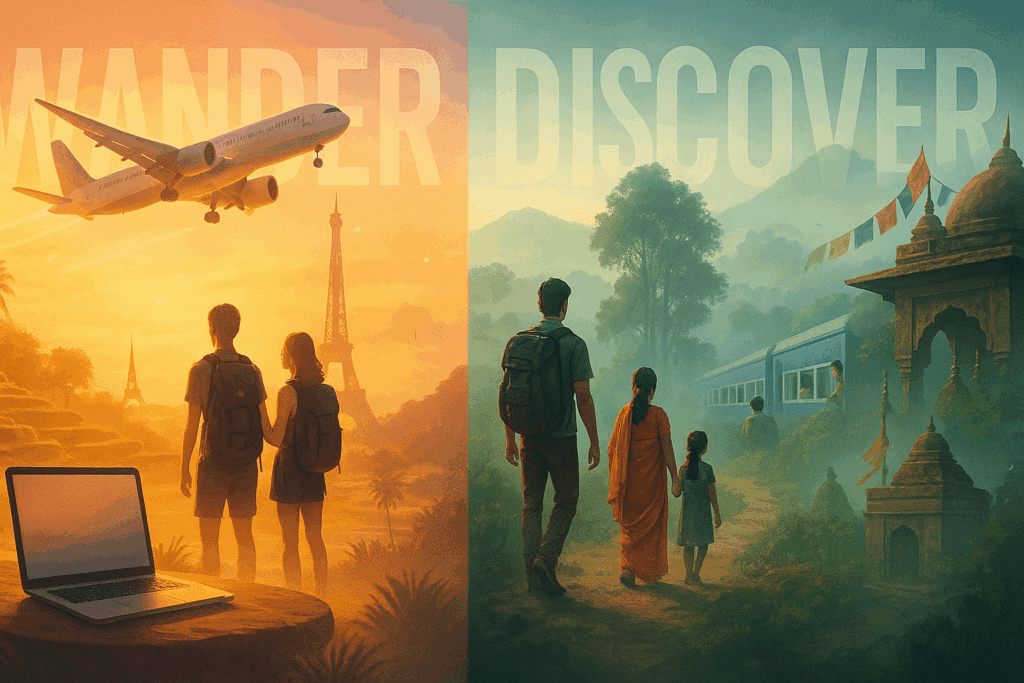
The hunger for experiences defines this generation, but the scope varies.
- Tier 1: International travel, music festivals, and the “digital nomad lifestyle” are aspirational. Young professionals dream of working remotely from Bali or Berlin.
- Tier 2/3: Domestic travel holds charm — pilgrimages, hill stations, or a first flight experience. For many, travelling abroad remains a distant goal.
Home ownership: status or strategy?
Owning a home remains a major aspiration, but its meaning differs.
- Tier 1: With sky-high real estate prices, home ownership is often delayed. Renting is normalised, and investments flow into stocks or startups instead.
- Tier 2/3: Home ownership remains a symbol of pride and family status. Land and gold carry emotional and financial weight.
Sustainability: idealism vs pragmatism
Sustainability is another marker of the urban–rural divide.
- Tier 1: Youth here are drawn to eco-friendly brands, electric vehicles, reusable products, and plant-based diets.
- Tier 2/3: Awareness is growing, but sustainability is often seen through the lens of cost-saving and frugality rather than environmental activism.
Small-town thrift often achieves the same outcomes as conscious eco-living in metros.
Relationships: individual choice vs community
Personal life goals mirror India’s cultural diversity.
- Tier 1: Delayed marriage, dating apps, and “chosen families” (friend circles) dominate. Independence in relationships is valued.
- Tier 2/3: Marriage and family remain primary life goals. Social reputation and community approval shape personal choices.
Authenticity and purpose: self vs society
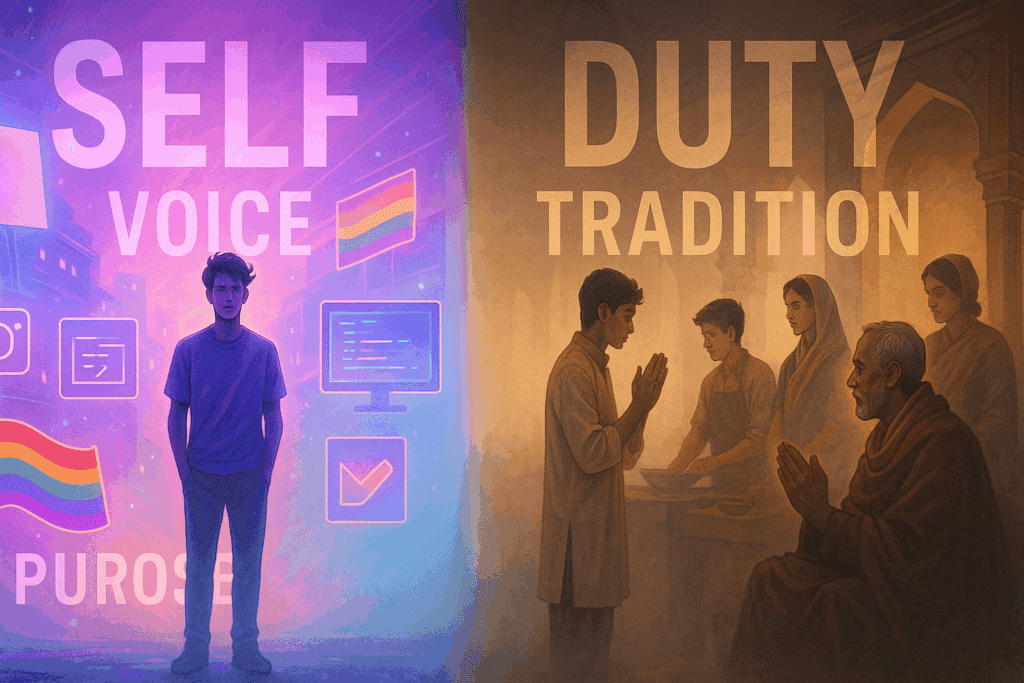
Perhaps the sharpest contrast sits here.
- Tier 1: Gen Z values authenticity, identity exploration, activism, and purpose-driven careers. Living on one’s own terms is seen as success.
- Tier 2/3: Purpose is often defined by duty — supporting family, upholding traditions, contributing to the community.
A shared horizon, different roads
India’s Gen Z is not a single story. It is millions of stories woven together. In 2026, a coder in Bangalore and an aspiring civil servant in Lucknow may have different goals, but the underlying desire for independence, security, and meaning is the same.
The divide between Tier 1 and Tier 2/3 cities points to socio-economic contrasts, but it also shows resilience. Whether chasing global careers or preparing for government exams, Gen Z is united by ambition.
As this generation matures, one thing is clear. They are not waiting for change. They are creating it in startups, classrooms, family businesses, and their own definitions of success.
For educators, policymakers, and brands, the message is simple: listen to Gen Z, in all their diversity. Their goals are the blueprint of India’s future.
FAQs on Indian Gen Z life goals
Who counts as Gen Z in India?
Gen Z in India refers to those born between the late 1990s and early 2010s. In 2026, they are entering adulthood and starting to shape workplaces, consumer markets, and cultural narratives.
What is FIRE and why does it matter to Tier 1 Indian Gen Z?
FIRE stands for Financial Independence, Retire Early. In Tier 1 cities, young Indians use investments, side hustles, stock markets, and crypto to chase early wealth creation, aiming to retire well before traditional retirement age.
Do Tier 2/3 Indian Gen Z still prefer government jobs?
Yes. Recent surveys suggest more than 60% of Tier 2/3 students still see competitive exams like UPSC, JEE, and NEET as their ticket to success, compared with less than 30% in metros. Government jobs, engineering, medicine, and IT services remain symbols of prestige and stability.
How does Gen Z in small-town India view mental health?
Stigma remains strong in Tier 2/3 cities. Many young people avoid discussing anxiety or depression, fearing judgement, and work–life balance is often sacrificed for family or financial reasons. In metros, therapy, mindfulness, and mental health apps are becoming mainstream.
Is home ownership still a dream for Indian Gen Z?
Yes, but the meaning changes by city. In Tier 1 metros, sky-high real estate prices delay home ownership and renting is normalised. In Tier 2/3 cities, owning a home remains a symbol of pride and family status, with land and gold holding strong emotional weight.