Short answer: In 2025, teachers are becoming Gen Alpha’s trusted influencers on YouTube, TikTok and Instagram because this generation learns where it already hangs out. A 2022 Annie E. Casey Foundation report found Gen Alpha trusts influencers nearly as much as family, so teachers who post bite-sized, relatable content extend classroom learning into the scroll.
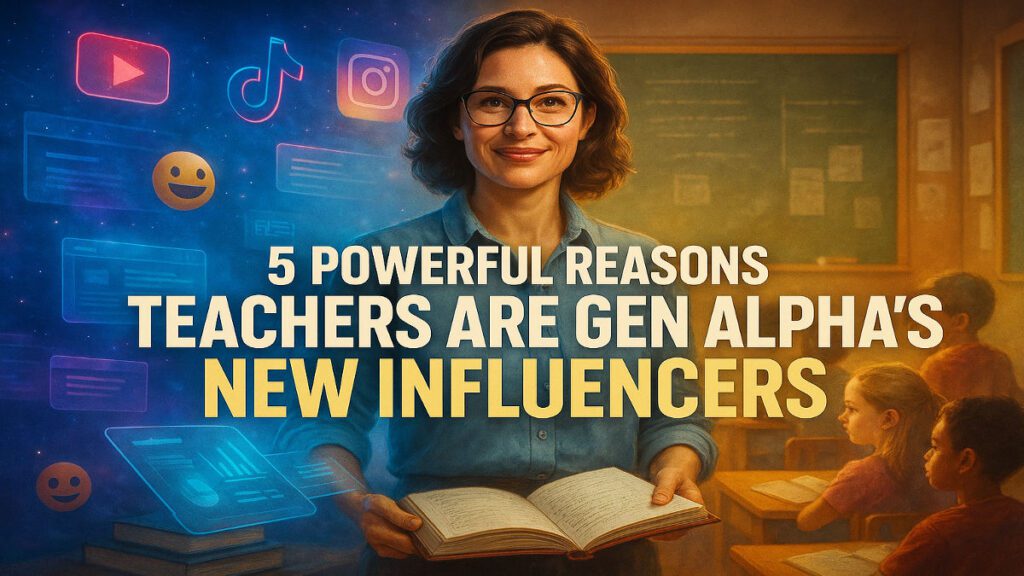
In 2025, the concept of “teacher” has a new dimension. No longer confined to four classroom walls, many educators are stepping into social media, creating content, building communities, and influencing. This is a response to the needs and habits of a new generation: Generation Alpha.
Born after 2010, Gen Alpha is growing up where education, entertainment, and social interaction mix. Learning does not stop at the bell. It continues through YouTube videos, Instagram reels, educational TikToks, and interactive apps. And who leads them through this content-rich maze? Often, their teachers.
Here are five reasons teachers are becoming influencers for Gen Alpha, and why this shift might be the best thing to happen to modern education.
1. Digital Fluency Meets the Digital Native
Gen Alpha does not remember a world before Wi-Fi, smartphones, or streaming. According to ResearchGate, this generation is entirely at home in the digital world, often turning to platforms like YouTube or TikTok for quick tutorials, explanations, or moral advice.
Teachers who meet students on these platforms gain credibility. A 2022 report by the Annie E. Casey Foundation revealed that Gen Alpha trusts influencers nearly as much as they do family members. When a teacher posts short videos explaining algebra or shares life advice through Instagram Stories, they become trusted companions in learning.
2. How Does Engagement Go Beyond the Chalkboard?
Forget hour-long lectures. Gen Alpha thrives on quick, stimulating, interactive content. According to Holistique Training, bite-sized videos, gamified quizzes, and colourful infographics are more effective than traditional formats.
Social media lets teachers create these experiences in ways that are entertaining and educational. One middle school science teacher on TikTok regularly turns complex biology concepts into catchy songs, and his student followers love it. They are not just watching. They are commenting, sharing, and remixing the content. That level of engagement is transformative.
3. Teachers as Relatable, Real-Life Role Models
There is a unique power in seeing your teacher laugh at a meme, share a book recommendation, or post a behind-the-scenes peek at their lesson planning. It humanizes them.
Instagram and YouTube have let teachers break down the formality barrier. They are no longer only the authority figure in the classroom. They are relatable humans with hobbies, opinions, and a sense of humour. This builds stronger bonds with students, who feel more comfortable seeking help or participating actively.
As one student commented under their teacher’s reel: “I used to be scared of asking questions. Now I feel like I know you.”
4. Encouraging Self-Directed Learning and Growth
Where curiosity is one Google search away, Gen Alpha is wired for self-directed learning. Teachers who post content online extend their influence beyond class hours, recommending books, sharing tutorials, or guiding students through real-world applications of academic topics.
A math teacher might post a breakdown of how percentages apply in online shopping. An English teacher could share tips on public speaking or resume writing. These efforts add practical relevance and let students explore subjects at their own pace.
5. Inspiring Values That Go Beyond Academics
The most powerful impact of teacher-influencers lies in shaping values. Beyond the curriculum, teachers on social media influence how Gen Alpha views the world.
They model digital etiquette, kindness, resilience, and the importance of lifelong learning. A teacher posting about mental health awareness or showing how to deal with failure sends a message: education is not only about grades. It is about growing as a person.
As Holistique Training points out, the role of a modern educator increasingly involves social-emotional learning. In this model, teachers are not only instructors. They are guiding lights in a confusing digital world.
The Teacher’s Role Is Evolving, and That Is a Good Thing
In a world saturated with content, the influence of a thoughtful, educated adult can be profound. Teachers becoming influencers is not about chasing likes. It is about expanding impact. For Gen Alpha, these educators are trusted voices who bridge the gap between knowledge and relevance.
This new frontier has responsibilities. Educators must navigate boundaries, respect privacy, and keep their online presence rooted in their primary role: teaching with integrity.
The potential is enormous. Teachers who embrace this dual identity, educator and influencer, are not only changing how Gen Alpha learns. They are redefining what it means to lead, guide, and inspire in a hyper-connected age.
Here is the call to action. If you are a teacher, do not fear the camera. Embrace it. Your voice might be the one that changes a life, one scroll at a time.
FAQs on Teachers as Gen Alpha Influencers
Why do teachers become influencers for Gen Alpha?
Because Gen Alpha lives on YouTube, TikTok, and Instagram. Teachers who post there meet students where they already are and extend learning beyond class hours with short videos, tutorials, and life advice.
Do Gen Alpha students actually trust online creators?
Yes. A 2022 report by the Annie E. Casey Foundation found Gen Alpha trusts influencers nearly as much as family members, which is why a teacher with a social presence carries real weight.
What kind of content works for Gen Alpha learners?
Per Holistique Training, bite-sized videos, gamified quizzes, and colourful infographics outperform traditional formats. One TikTok science teacher turns biology into catchy songs that students remix and share.
What boundaries should teacher influencers follow?
Respect student privacy, avoid blurring personal and classroom lines inappropriately, and keep the online presence rooted in teaching with integrity rather than chasing likes.
How does this shift help mental health and values?
Teachers posting about mental health awareness, failure, digital etiquette, kindness, and resilience reinforce social-emotional learning. The message Gen Alpha takes away is that education is about growing as a person, not only scoring grades.