
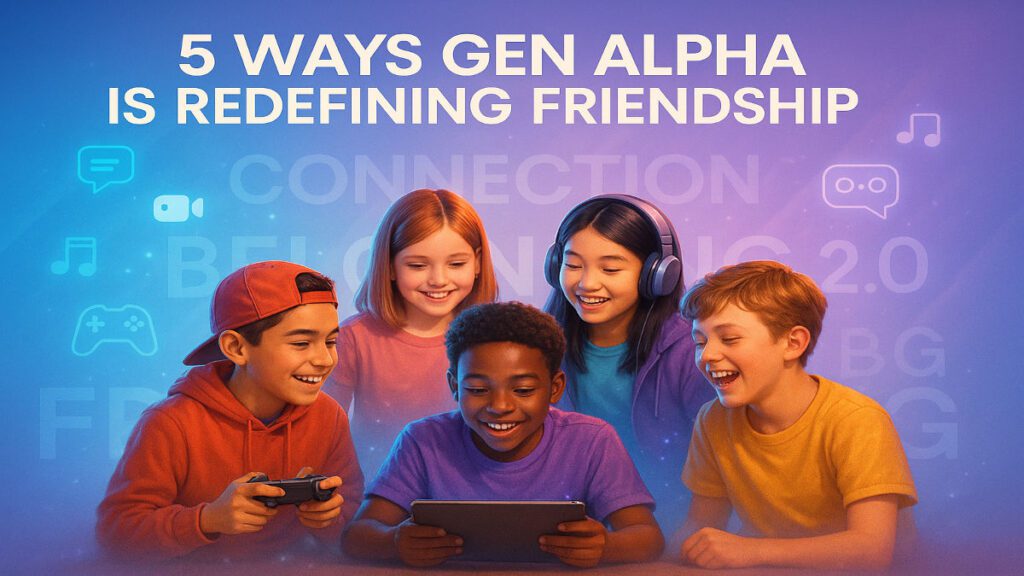
Short answer: Gen Alpha (born 2010 to 2025) treats friendship as both digital and in-person. They meet on Roblox and Minecraft, keep streaks on Snapchat and Instagram, and still share lunch with school friends. The bond still rests on trust, shared laughs and support.
In 2025, friendship looks a little different for Generation Alpha, the cohort born between 2010 and 2025. For these digital natives, friendships often move between real-world laughter and late-night gaming sessions online. They grew up with smartphones and social platforms shaping how they connect. Instead of replacing closeness, many blend technology and face-to-face time in nuanced ways.
How does Gen Alpha define friendship today?
Unlike earlier generations, Gen Alpha did not have to learn digital communication. Platforms like Roblox, Minecraft and Instagram are as much a part of their social toolkit as the playground or classroom.
For 11-year-old Arnav, a student in Pune, his best friend lives three cities away. “We met on a Minecraft server,” he explains. “Now we talk every day—even during exams.”
Online spaces are not only for scrolling. According to EMB Blogs, Gen Alpha uses digital tools from a young age to form bonds that feel as real as in-person ones. These platforms open a playground where friendships grow beyond borders.
Do online and offline friendships coexist for Gen Alpha?
A common myth says digital friendships push out real-life ones. For Gen Alpha, it is both, not either.
They hang out in the schoolyard and share memes in a group chat. A 2024 report by New Narrative found that 72% of tweens prefer a balance between online and offline interactions, using each medium for a different purpose in their friendships.
Online spaces often extend the real world. Gaming together, making digital art, or joining challenges are shared experiences that deepen emotional ties. When meetups are not possible, FaceTime calls and messages fill the gap.
Why is social media friendship fuel for Gen Alpha?
Older generations may view social media with suspicion. Gen Alpha sees it as a friendship enhancer. Apps like Snapchat, Instagram and BeReal let them stay in touch through stories, streaks and direct messages.
“Even if I can’t meet my cousins every week, I see what they’re up to every day,” says 10-year-old Alisha from Bengaluru. “We send funny Reels and talk about it later.”
According to Frontiers in Psychology, steady online communication strengthens real-world friendships. Social media helps Gen Alpha build micro-communities around shared interests, hobbies and fandoms. That creates belonging and emotional intimacy, even among kids who have never met in person.
What are the challenges of constant connection?
It is not all sunshine and selfies. Despite their fluency with digital platforms, Gen Alpha faces new social pressure. Constant exposure to curated online personas can lead to comparison, anxiety and isolation.
A 2023 survey by Common Sense Media found that nearly 1 in 4 Gen Alpha kids reported feelings of loneliness, even while in constant contact with friends online.
Parents often raise concerns about screen time replacing face-to-face skill development. “I worry sometimes that my daughter doesn’t know how to have a real conversation without emojis,” says Shruti, a mother from Hyderabad.
It is a valid fear. It points to the need for mindful digital use and open family talks about emotional well-being.
How is Gen Alpha keeping friendship rooted in connection?
At heart, Gen Alpha’s friendship still runs on what has always mattered: trust, laughter, shared experiences and support. Technology adds new ways for those bonds to form.
This generation builds closeness through many touchpoints: voice notes, video chats, multiplayer games, in-person hangouts and collaborative playlists.
Their friendships are fluid, flexible and often cross-cultural, shaped by digital fluency and a strong need to belong. The tools will keep changing, but the core stays the same: someone who gets you, whether they live next door or three time zones away.
A generation that connects differently, but deeply.
As 2025 unfolds, Gen Alpha is not losing the meaning of friendship. They are expanding it. By blending digital and personal spaces, they are building a social landscape that values inclusion, shared creativity and emotional closeness.
The way to support them is not to cut screens. Teach digital empathy, encourage meaningful interactions, and make room for in-person experiences.
When technology and human connection work together, friendship does not fade. It grows.
FAQs about Gen Alpha friendship
Who is Gen Alpha?
Gen Alpha is the generation born between 2010 and 2025. They are the first cohort to grow up entirely with smartphones and social platforms.
Are Gen Alpha friendships mostly online?
No. A 2024 New Narrative report found 72% of tweens prefer a balance between online and offline interaction. They use each medium for a different purpose.
Which apps do Gen Alpha use with friends?
They commonly use Roblox and Minecraft for shared play, and Snapchat, Instagram and BeReal for everyday chat, stories and streaks.
Is Gen Alpha lonely despite being always online?
A 2023 Common Sense Media survey found nearly 1 in 4 Gen Alpha kids reported loneliness even while in constant contact with friends online.
How can parents support healthy Gen Alpha friendships?
Teach digital empathy, keep family conversations open about emotional well-being, and encourage time offline with friends and family.