
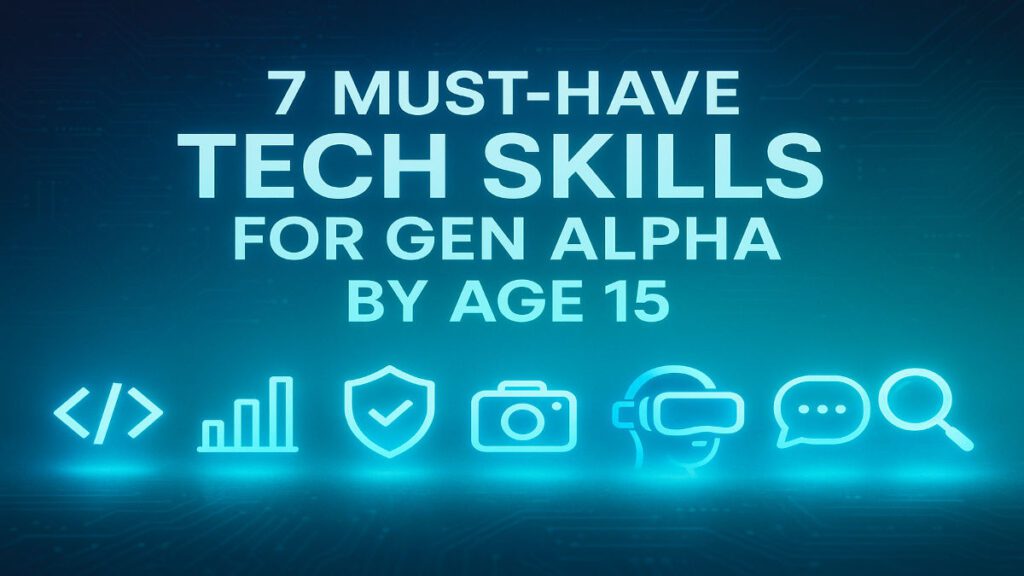
Short answer: By age 15, Gen Alpha should master seven tech skills: coding and computational thinking, digital literacy, data literacy, content creation, cybersecurity, collaboration tools and basic AR/VR. These go beyond screen time and build the confidence to create, verify information and stay safe online.
In 2025, Generation Alpha (those born from 2010 onward) are no strangers to technology. Many were tapping screens before they could walk and asking voice assistants for bedtime stories before they could read. Growing up in a hyper-digital world, the question is not whether they are familiar with tech; it is how deeply they understand and use it.
By age 15, Gen Alpha will need more than digital fluency. They need a strategic set of tech skills for education, creativity, safety and future careers. Here are the seven every child should master by the time they hit high school.
Why should Gen Alpha learn coding by age 15?
Coding is not only about becoming a software engineer. It is a language of logic that teaches kids to think clearly, solve problems creatively and understand how the digital world is built.
Starting with block-based tools like Scratch and moving to text-based languages like Python, children can learn about algorithms, loops, variables and conditions. That foundation paves the way for more advanced topics, including basic AI and machine learning concepts.
“When my 12-year-old created a chatbot using Python, he didn’t just learn code, he learned patience, structure, and how to handle failure,” shared Divya, a parent from Chennai.
How does digital literacy protect teens from misinformation?
In an era of deepfakes and viral misinformation, digital literacy is no longer optional. By 15, kids must know how to search smartly, verify sources and analyse online media with a critical eye. They should be able to tell fact from fiction, spot biased messaging and understand how digital content is crafted to influence.
Add digital citizenship to that: behaving responsibly online, respecting intellectual property and contributing ethically to digital communities. Together, those skills form a solid ethical framework for the internet.
What is data literacy for teens?
Data is everywhere, from the steps in a fitness app to YouTube view counts to school project stats. Children should learn how to read graphs, interpret trends and make informed decisions using data.
Equally important is data privacy. Teens must know what personal data they are sharing, how it is stored and the consequences of that. As the saying goes, if it is free, you are the product.
How do kids go from content consumers to creators?
Generation Alpha are natural content consumers. By 15 they should be confident creators too, editing videos, designing presentations, recording podcasts and animating stories.
Tools like Canva, iMovie, Tinkercad and Roblox Studio open doors to multimedia storytelling, 3D modelling and creative expression. These are not hobbies; they are future job skills in a content-driven economy.
A 2024 survey by Common Sense Media found that 68% of teens aged 13 to 17 had created some form of digital content, from fan art to podcasts. Creation is the new communication.
What cybersecurity skills should a 15-year-old have?
Cybersecurity is not only an IT concern; it is a life skill. By 15, Gen Alpha should know how to:
- Create strong, unique passwords
- Recognise phishing scams and suspicious links
- Adjust privacy settings across devices and platforms
- Report cyberbullying or inappropriate content
More than that, they should understand their digital footprint, that everything they post or click can follow them into adulthood. One ill-advised comment can have long-term consequences.
Why does collaboration software matter at school?
Whether it is Google Docs, Microsoft Teams or Miro boards, virtual collaboration is a staple of academic and professional life.
By 15, Gen Alpha should feel at ease in cloud-based environments, co-authoring documents, organising tasks and presenting ideas through video calls or email. Communicating respectfully and clearly online matters as much as knowing how to format a spreadsheet.
How should teens approach AR, VR and the metaverse?
Virtual and augmented reality are no longer sci-fi. They are in classrooms, museums and therapy sessions. Gen Alpha should have basic exposure to AR/VR platforms, understanding how they work and where they can be used.
As metaverse platforms evolve, teens must also learn to navigate digital worlds safely, respecting boundaries and understanding risks. Just like real life, virtual spaces require ethics, consent and situational awareness.
More than screen time
Tech skills in 2025 are not about more screen time. They are about smart, purposeful use of technology to explore, create, solve and connect.
By age 15, Gen Alpha does not need to be tech geniuses. They should be confident, critical and capable digital citizens, ready to thrive in a future where tech touches every part of life.
Parents, educators and communities must nurture these skills through exposure, encouragement and guided exploration, not pressure. The tools we give today’s teens will shape tomorrow’s world.
FAQs about tech skills for Gen Alpha
At what age should kids start coding?
Children can start with block-based tools like Scratch as early as age 7 or 8. By the time they are 11 or 12, many can transition to text-based languages like Python and explore basic AI concepts from there.
What is the single most important tech skill for a teen today?
Digital literacy. In an era of deepfakes and viral misinformation, the ability to verify sources, spot bias and think critically about online content is the foundation every other tech skill relies on.
Which tools should teens use to create digital content?
Canva works well for graphics and presentations, iMovie for video editing, Tinkercad for 3D modelling and Roblox Studio for game creation. They are beginner-friendly and teach real production skills.
How do I help my teen build a safe digital footprint?
Teach strong passwords, how to spot phishing, and how to tune privacy settings on every device and platform. Talk openly about cyberbullying reporting tools and about the fact that posts and clicks can follow them into adulthood.
Is AR and VR worth exposing teens to now?
Yes. AR and VR already appear in classrooms, museums and therapy. Basic exposure helps teens understand how these platforms work, where they are useful, and how to stay safe in emerging metaverse spaces.