Short answer: The Gen Alpha classroom in 2025 swaps rigid desks and chalkboards for movable furniture, integrated tech, collaborative zones, wellness-first design, and personalised learning stations. Schools in Bengaluru, Delhi and beyond are already seeing sharper engagement, higher focus and lower anxiety once these five shifts are made.
Walk into a classroom today and you may still find chalkboards, rigid rows of desks and flickering tube lights. For Generation Alpha — kids born into touchscreens, smart homes and real-time content — that version of school feels ancient.
Their idea of learning isn’t only about books and tests. It is about choice, comfort and connection. These digital natives are growing up in a hyper-connected world, and they expect their learning spaces to match.
So what does Gen Alpha actually want from their classrooms in 2025? Here are five features that define their dream learning space.
Why does flexible furniture matter in a Gen Alpha classroom?
If you have ever watched a Gen Alpha child fidget in a traditional chair, you know why static furniture no longer works. These students want flexibility, physically and mentally.
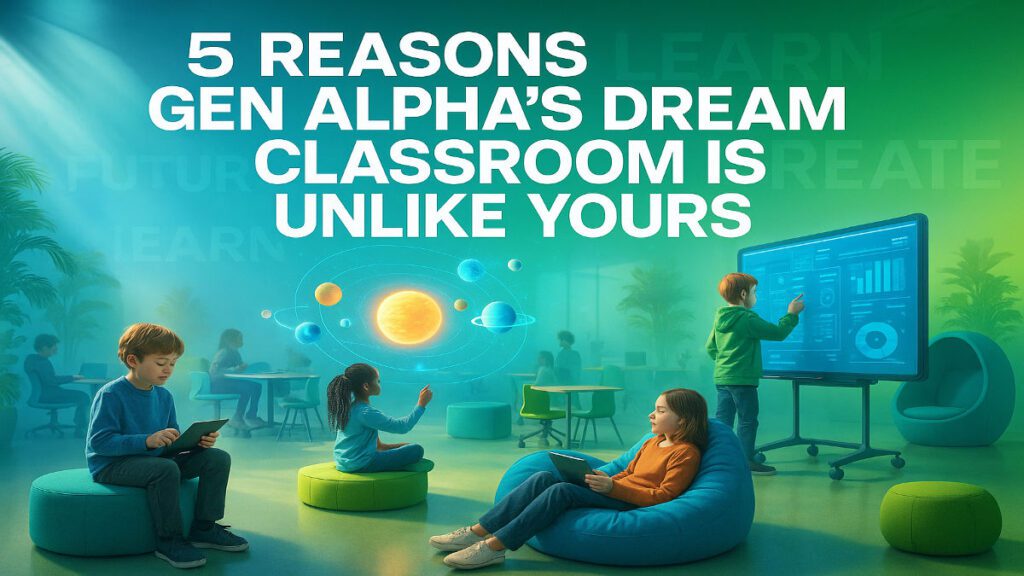
That means lightweight desks on wheels, beanbags in the reading corner and adjustable standing desks. Kids can work in cosy floor pods for a group discussion and then roll their desks into a circle for a debate, all in one lesson.
In one Bengaluru school, teachers reported a 20% improvement in student engagement after introducing movable desks and diverse seating. The reason is simple: students had agency, and agency breeds attention.
“When I sit on a beanbag, I feel more free to think,” said Tara, a fifth-grader. “It’s like I’m in my own brain space.”
How does technology fit into a Gen Alpha classroom?
Gen Alpha doesn’t use tech, they live it. Tablets, apps, virtual tours and coding kits are part of their language. They expect the classroom to mirror the outside world, where digital tools extend their thinking.
High-speed Wi-Fi is the baseline. What really excites them:
- Interactive whiteboards that respond to touch and support multimedia learning
- AR/VR tools for immersive lessons, such as exploring the solar system from their desk
- Always-on charging stations so their devices stay alive, just like their curiosity
A teacher in Delhi shared how her students “lit up” when exploring ancient Rome through a VR headset. “They remembered more from that one session than weeks of textbook reading,” she said.
What collaborative spaces spark ideas for Gen Alpha?
Forget being stuck at one desk all day. Gen Alpha works best in environments built for teamwork, movement and spontaneity.
Their dream classroom includes:
- Zones for group projects with large, writable surfaces
- Pods with soft seating for brainstorming
- Display areas to showcase their work
These spaces build more than academic skill. They nurture confidence, communication and creative problem-solving. In schools using collaborative designs, students report feeling “more heard” and “less afraid to share”.
Why is wellness central to Gen Alpha classroom design?
Mental well-being matters more than ever, and Gen Alpha knows it. They have watched conversations about stress, anxiety and mindfulness play out on YouTube and Instagram.
Their dream classroom reflects that through:
- Natural light, indoor plants, and calming blues and greens
- Acoustic rugs and wall panels that reduce noise fatigue
- Quiet corners for downtime and decompression
A Finnish study from 2024 found that natural light and greenery in classrooms improved focus by 23% and reduced anxiety-related behaviour by 18%. A calm space equals a calm mind.
How does personalised and inclusive learning work for Gen Alpha?
More than any generation before, Gen Alpha expects learning to adapt to them, not the other way around.
That means:
- Reading nooks for introverts, makerspaces for tinkerers
- Learning stations that support different paces and abilities
- Classrooms built on Universal Design for Learning (UDL) principles, accessible to every student
As one teacher put it, “Gen Alpha doesn’t see ‘different’ as strange. They see it as normal. Our classrooms should reflect that.”
A classroom that feels like theirs
Gen Alpha’s dream classroom isn’t about upgrading hardware. It is about rethinking the whole learning experience: a space that moves, tech that connects, and a vibe that feels human.
If we want to raise creative, thoughtful leaders, we have to give them environments that match their imagination. Build classrooms that make Gen Alpha feel seen and supported, and they don’t only learn — they soar.
FAQs about the Gen Alpha classroom
What is a Gen Alpha classroom?
A Gen Alpha classroom is a flexible, tech-integrated learning space designed for children born after 2010. It uses movable furniture, digital tools like interactive whiteboards and VR, collaborative zones, wellness-focused design and personalised learning stations built on Universal Design for Learning principles.
Why do Gen Alpha students prefer flexible seating?
Flexible seating gives students agency over how and where they work, which increases attention. A Bengaluru school reported a 20% rise in student engagement after switching to movable desks, beanbags and standing desks.
How does classroom design affect student mental health?
Design choices like natural light, indoor plants, acoustic panels and quiet corners directly affect focus and stress. A 2024 Finnish study found natural light and greenery improved focus by 23% and reduced anxiety-related behaviour by 18%.
What technology should a Gen Alpha classroom have?
At minimum, high-speed Wi-Fi, interactive whiteboards, AR/VR headsets for immersive lessons, charging stations and access to tablets or coding kits. The goal is to make digital tools feel like a natural extension of how students already think.
What is Universal Design for Learning (UDL)?
Universal Design for Learning is a framework for building classrooms and lessons that work for every student regardless of background, pace or ability. In Gen Alpha classrooms, it shows up as varied seating, multiple ways to access information and learning stations that match different paces.