
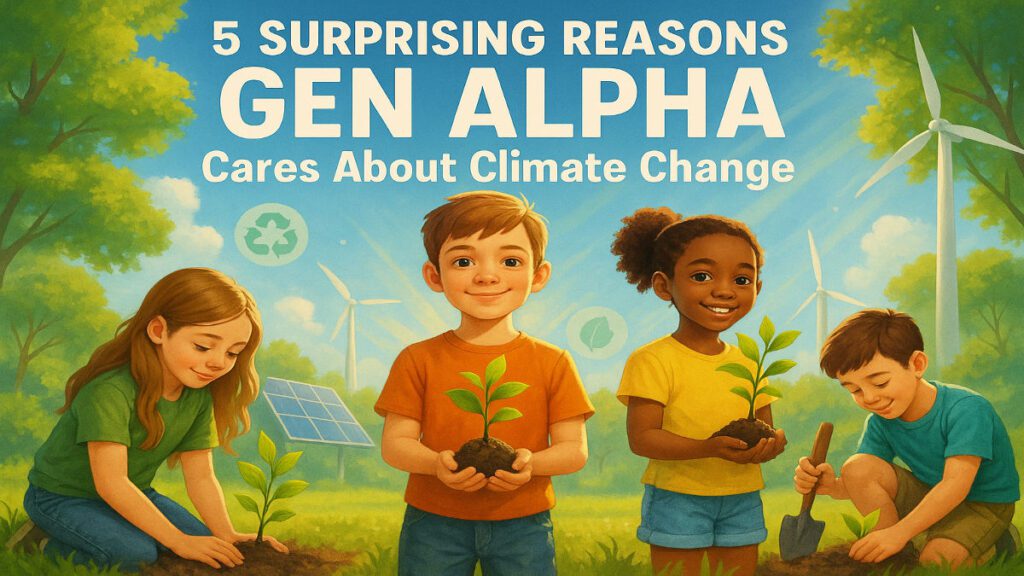
Short answer: Gen Alpha, born between 2010 and 2025, is growing up inside the climate crisis. They see its effects directly, inherit eco-conscious habits from Millennial parents, learn about it across classrooms and YouTube, believe technology can fix it, and reinforce each other through peer influence. That combination is turning them into the most engaged climate generation yet.
In 2025, a quiet revolution is unfolding. Not in the halls of power or corporate boardrooms, but in school cafeterias, family living rooms, and YouTube comment sections. Generation Alpha, the children born between 2010 and 2025, are barely out of elementary school, yet many are deeply concerned about climate change.
You might expect teenagers or adults to lead this conversation. But 10-year-olds are already asking big questions, making sustainable choices, and rallying their friends and parents to do better for the planet. Why? Because for Gen Alpha, climate change isn’t a topic in science class. It is the reality they are growing up in.
Here are five reasons Gen Alpha cares so deeply about the planet, even before they hit middle school.
1. Why is Gen Alpha growing up in a warming world?
Unlike previous generations who first learned about climate change in textbooks, Gen Alpha is living it.
They have seen floods close their schools, wildfires dominate the news, and heatwaves disrupt their routines. These events are no longer faraway problems. They are happening here and now. A 2023 UNICEF report noted that over 1 billion children globally are at “extremely high risk” of climate-related disasters, and Gen Alpha knows it.
My niece, who is 10, recently asked, “Why can’t we go to the beach this summer?” When I explained the rising sea levels and coastal damage, her response was chilling: “So we just watch the world sink?” Her awareness is not rare. It is the norm.
This generation is not alarmed because it is trendy. They are alarmed because it is personal.
2. How did eco-conscious family values shape Gen Alpha?
Many members of Gen Alpha are being raised by Millennial parents, a generation that matured alongside the rise of sustainability culture. These parents recycle religiously, use metal straws, and talk openly about global warming at the dinner table.
According to Pew Research, Millennials are more likely than previous generations to say climate change should be a top policy priority. That worldview trickles down to their children, who grow up surrounded by phrases like “carbon footprint” and “plant-based diet.”
Whether it is composting kitchen waste or biking to school instead of driving, these habits become second nature for Gen Alpha.
3. Where is Gen Alpha learning about climate change?
Education no longer lives only in classrooms. Gen Alpha picks up knowledge through digital platforms like YouTube, Netflix, and kid-friendly podcasts, where environmental topics are addressed consistently.
Shows like Octonauts incorporate ocean conservation themes, while games like Minecraft feature sustainability-based challenges. Education blends with entertainment, so climate literacy begins early.
In schools, environmental education is becoming more robust. According to the National Education Association, over 80% of teachers in the U.S. believe climate change should be taught, and similar trends are emerging in countries like India, Australia, and the UK.
This constant exposure means Gen Alpha is not just aware. They are well-informed.
4. Why does Gen Alpha believe they can change the world?
Unlike many older generations who may feel paralysed by the complexity of climate issues, Gen Alpha feels empowered.
Growing up with access to AI, 3D printing, and green tech apps, they believe technology can and should fix what’s broken. Whether it is designing a solar-powered Lego city or starting a school campaign to ban plastic bottles, they believe solutions are within reach.
Ten-year-olds today might not be voting yet, but they are making noise, taking action, and holding adults accountable. It is not just Greta Thunberg anymore. Millions of mini-activists are rising.
One classroom in Bangalore, India, started a “green guardians” club where students track their school’s energy use and suggest ways to cut waste. Their motto? “We’re small, but our planet isn’t.”
5. How does peer influence spread climate awareness?
Peer influence shapes young minds, and climate change has become a topic of genuine conversation among kids. Whether it is sharing tips for eco-friendly crafts or watching documentaries together, climate awareness is becoming a shared value.
When children see others care, it reinforces their own beliefs. Classroom projects, nature clubs, and eco-influencers on TikTok create a ripple effect, encouraging collective responsibility from an early age.
In this generation, it is cool to care, and that might be the biggest shift of all.
Gen Alpha: the most hopeful generation yet
In a world often dominated by climate anxiety and political inaction, Generation Alpha is a breath of fresh air. Their curiosity, compassion, and commitment to a cleaner planet are shaping how families, schools, and companies think about sustainability.
They may be 10 years old, but they are not waiting for permission to care or to act.
So the next time your child reminds you to turn off the lights, questions a single-use plastic wrapper, or chooses a tree-planting birthday over a party, listen. That spark of concern could be the beginning of real, lasting change.
Because if Gen Alpha can care this much before they are even teenagers, imagine what they will do when they grow up.
FAQs about Gen Alpha and climate change
Who is Gen Alpha?
Generation Alpha refers to children born between 2010 and 2025. They are the children of many Millennials and are still in elementary or middle school in 2025. They are growing up with smartphones, AI tools, and direct exposure to climate change from a young age.
Why does Gen Alpha care about climate change so much?
They are living through its effects. Floods close their schools, wildfires dominate the news, and heatwaves disrupt their routines. A 2023 UNICEF report flagged over 1 billion children globally as being at “extremely high risk” of climate-related disasters.
How is climate change being taught to Gen Alpha?
Classrooms, YouTube, Netflix, podcasts, and even games like Minecraft are all sources. According to the National Education Association, over 80% of U.S. teachers believe climate change should be taught, and India, Australia, and the UK are showing similar trends.
What actions is Gen Alpha taking on climate?
Kids are designing solar-powered Lego cities, campaigning to ban plastic bottles at school, and forming clubs like the “green guardians” in Bangalore, India, where students track their school’s energy use. Many are also influenced by activists like Greta Thunberg.
How does peer influence shape Gen Alpha’s climate beliefs?
When children see their friends care, it reinforces their own beliefs. Classroom projects, nature clubs, and eco-influencers on TikTok create a ripple effect. For Gen Alpha, caring about the planet has become a shared social value, not a niche interest.