
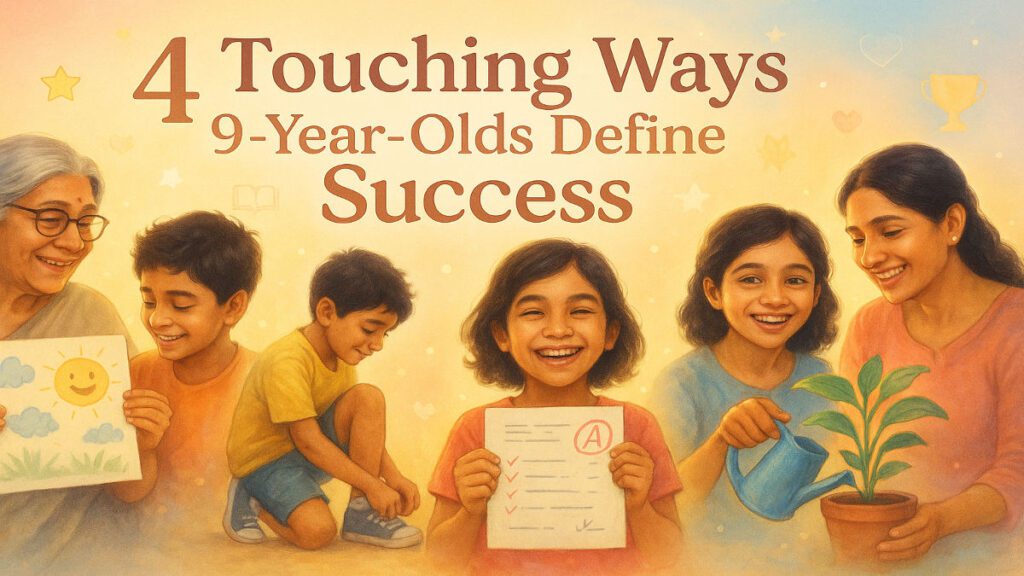
Short answer: For Indian 9-year-olds in 2025, success is not about salary or status. It is about small wins like finishing an EVS project, making a new friend, feeling safe at home, and being kind to others. Their version of success is emotional, everyday, and deeply human.
What does success mean to a 9-year-old in India today? It is not about a six-figure salary, a luxury car, or climbing the corporate ladder. For these young hearts and minds, success is far more personal, immediate, and heartwarming.
Whether it is getting a gold star in class, making a new best friend, or finally riding a bicycle without falling, their definition of success is rooted in everyday victories and emotional fulfilment. In 2025, as India’s classrooms and homes evolve with technology and changing family dynamics, it becomes even more important to listen to what children consider their proudest moments.
Here are four emotional and insightful ways a 9-year-old measures success in today’s world.
1. How do small wins shape a 9-year-old’s sense of success?
Ask any 9-year-old about their biggest recent achievement, and chances are it will be something like “I finished my EVS project all by myself!” or “I scored 9 out of 10 in my maths test!” For kids, success often comes in tangible, immediate milestones.
Whether it is finally tying their shoelaces without help or getting selected for the school play, these accomplishments fuel their confidence and spark pride in themselves and their families.
Take Aarav from Lucknow. “I practiced for three weeks to learn the tabla. When I played it in front of my nani, and she clapped and smiled, that was success for me,” he beams.
Success, in their eyes, is about growth, not perfection. Every “I did it!” moment is a reminder of how achievement starts young.
2. Why does making friends feel like social success?
In the world of a 9-year-old, friendships hold immense emotional weight. From lunchtime giggles to after-school playdates, the bonds they form are more than fun. They are markers of social success.
Feeling included in a group, being picked for a team game during PT, or having someone to share secrets with at school brings them immense happiness. As child development expert Katie Martin notes, children around this age begin to equate being liked and being understood with being “good enough.”
Nine-year-old Meher from Pune says, “When I sat alone in class, I felt sad. But then I made a drawing for Sneha and now we eat lunch together every day. I feel happy now.”
Social success at this age isn’t about popularity. It is about belonging. When children feel welcomed and supported by their peers, their sense of self-worth blossoms.
3. How do feeling happy, heard, and safe define success?
For many Indian 9-year-olds, success is also about feeling good on the inside. Enjoying a favourite hobby like painting Ganesha murals, reading Amar Chitra Katha, or playing mobile games with cousins makes their day feel full and fulfilling.
Family support plays a key role too. When a child feels secure, loved, and emotionally heard at home, their self-esteem soars. According to Quora parenting discussions, Indian kids often tie their emotional success to how much time and encouragement they receive from their parents and grandparents.
Take Priyanshi, a fourth grader from Jaipur: “When I was scared of the dark, my papa slept next to me for a week. Now I’m not scared. I feel very strong.”
Facing a fear, trying something new, or getting through a tough day. These are quiet but powerful victories that shape a child’s inner world.
4. Why do kindness and empathy count as success too?
For many 9-year-olds, being successful doesn’t always mean being first. It can mean being helpful, empathetic, and kind.
Helping amma water the tulsi plant, taking care of a younger sibling, or sharing lunch with a classmate who forgot theirs. These acts of kindness make them feel responsible and important. That, in itself, is a form of success.
In Indian homes, where values like seva (service), sanskars (values), and shraddha (respect) are often passed down early, children who are praised for helping or being polite internalise those actions as achievements.
As Dr. Steve Silvestro, a pediatrician and parenting coach, notes: “Children feel proud not just when they win, but when they feel like they matter.”
Why should we celebrate the little wins?
In the fast-paced, hyper-competitive world we live in, adults often measure success with big milestones like marksheets, job titles, or social media likes. Through the eyes of a 9-year-old, success is far simpler and sweeter.
It is about being brave enough to try, being kind enough to care, and being happy enough to dance to your favourite song without a reason.
As parents, educators, and caregivers, let us cherish and celebrate these definitions of success. Because when a child feels successful in their own small world, they grow up believing they can make a difference in the big one.
Let us applaud not only their report cards but also their resilience, their empathy, and their boundless curiosity. These are the true building blocks of a meaningful life.
Maybe it is time we let the 9-year-olds teach us what success really looks like.
FAQs on how 9-year-olds define success
How do Indian 9-year-olds define success in 2025?
Indian 9-year-olds define success through small wins, friendships, emotional safety, and kindness. Finishing a school project, making a new friend, or helping a sibling often feels bigger to them than any external milestone.
Why are friendships so important for a 9-year-old’s confidence?
At this age, children link being liked and understood with being “good enough.” Child development expert Katie Martin notes that belonging, not popularity, drives their self-worth, which is why small acts like being picked for a team game feel huge.
How does family support shape emotional success at age 9?
When a child feels secure, loved, and emotionally heard at home, their self-esteem grows. Quora parenting discussions point out that Indian kids often tie emotional success to time and encouragement from parents and grandparents.
Do Indian values influence how kids see success?
Yes. Values like seva (service), sanskars (values), and shraddha (respect) are passed down early. Children praised for helping or being polite learn to treat kindness and responsibility as real achievements.
How can parents celebrate a 9-year-old’s version of success?
Notice and praise everyday victories: finishing homework alone, facing a fear, being kind to a friend. Pediatrician Dr. Steve Silvestro says children feel proud not just when they win, but when they feel like they matter.