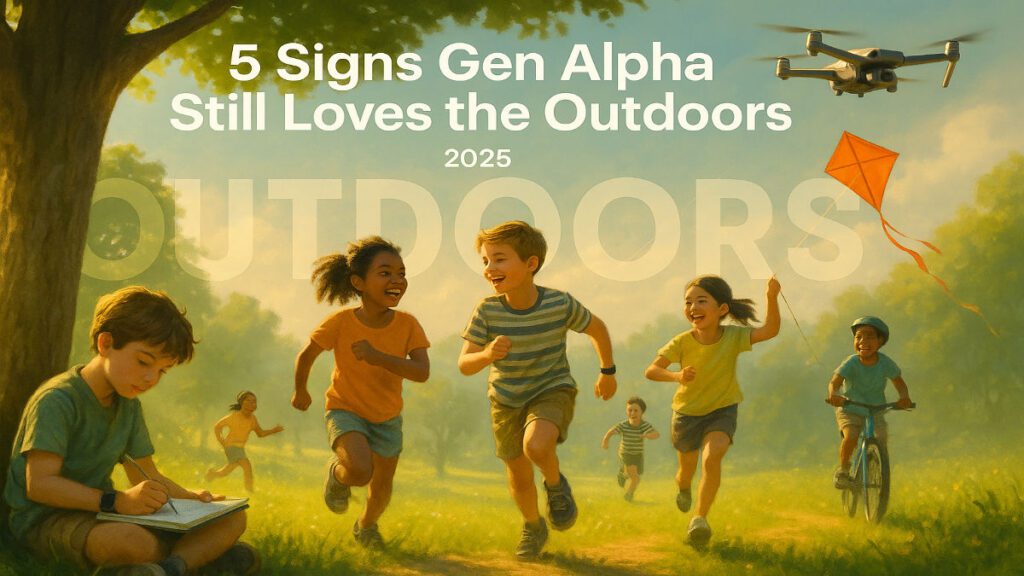
Short answer: Yes, Gen Alpha still loves the outdoors. Since early 2023, kids aged 8–15 meeting friends after school is up 12%, while after-school video gaming is down 6%. And 74% of Gen Alpha kids say they step outside or unplug to manage their emotional well-being.
When people picture Generation Alpha, the first fully digital generation, they imagine kids glued to tablets, Roblox lobbies, and short-form video feeds. That part is real. The twist is what lives alongside it: Gen Alpha still plays outside, and often more than adults give them credit for.
The “screen-addicted child” image is closer to myth than fact. In 2025, a quiet shift is underway — a return to fresh air, scraped knees, and unstructured play.
Is offline play actually making a comeback?
Yes, and the numbers say so. Since early 2023, the number of children aged 8–15 meeting friends after school has risen by 12%. Over the same period, after-school video gaming dropped 6%. That is a realignment, not a blip.
Kids themselves are driving it. Mental health is now openly discussed even in primary-school classrooms. 74% of Gen Alpha kids say they go outside or unplug from tech to manage their emotional well-being. That is a generation thinking about balance and self-care before the teen years.
Why does outdoor play still matter for Gen Alpha?
For the mind: mental clarity and calm
Outdoor play is not only fun, it is therapeutic. Sunlight and open space help kids regulate emotions, spark creativity, and reduce stress. 75% of kids aged 8–10 already think about mental health and understand the need to step away from screens once in a while.
Swinging on a jungle gym, riding a bike down the street, or collecting bugs in the park — each of those is a mental reset.
For the body: stronger, fitter, healthier
Physical play strengthens muscles, improves coordination, and builds stamina. Climbing, running, and jumping around the yard support bone health and push back against childhood obesity.
Screen-based activity often means prolonged sitting. Outdoor play keeps bodies moving, and childhood habits usually carry into adulthood.
For the soul: social confidence
The park is a social laboratory. No tutorials, no walkthroughs, no cheat codes. Just conversation, compromise, and creativity.
Outdoor environments force kids to communicate, collaborate, and adapt. A round of tag or hide-and-seek teaches negotiation, leadership, and empathy. These are the soft skills screens struggle to replicate.
How does Gen Alpha balance digital and dirt?
There is no need to romanticise pre-digital childhood or vilify technology. Gen Alpha does not pick between pixels and playtime. They blend both.
Plenty of parents encourage this hybrid life. Weekend screen-free zones, after-school nature walks, and tech-free dinners are becoming the norm. Early education now covers digital wellness, helping kids make mindful choices about screen time.
Take my niece, age nine. Textbook Gen Alpha. She codes in Scratch, plays Minecraft with her school friends, and still insists on an hour of “backyard time” every evening. Some days she climbs the tree outside to draw the birds she sees. “Screens are cool,” she says, “but real life is more colourful.”
What role do parents and educators play?
The return to outdoor play is not accidental. Parents, teachers, and caregivers are driving much of the shift.
By limiting passive screen use and encouraging active outdoor exploration, adults help kids rediscover the real world. Nature scavenger hunts, enrolling kids in sports, or modelling screen-free behaviour all count.
The point is not to restrict tech. It is to reclaim balance.
What does the future of play look like?
Gen Alpha still plays outside, and in some ways more mindfully than earlier generations. They switch between worlds, mastering the digital without losing touch with the tangible.
This generation may be teaching us something useful: balance is not about cutting one thing out, it is about holding both.
If you are a parent, a teacher, or someone who cares about how children grow up, look for ways to nudge outdoor time today. Join them outside, plant a small garden, go on a tech-free walk, or just open the door and let curiosity take over.
FAQs on Gen Alpha and outdoor play
What percentage of Gen Alpha kids unplug for their mental health?
74% of Gen Alpha kids say they go outside or unplug from tech to manage their emotional well-being, and 75% of kids aged 8–10 actively think about mental health.
Is Gen Alpha really less active than earlier generations?
Not as much as the stereotype suggests. Since early 2023, kids aged 8–15 meeting friends after school is up 12%, while after-school video gaming has dropped 6%.
How much outdoor time should Gen Alpha kids get?
There is no single fixed number, but a daily block of active outdoor time — around an hour of unstructured play on top of any school sport — supports physical health, emotional regulation, and social skills.
How can parents encourage outdoor play without banning screens?
Set weekend screen-free zones, add after-school nature walks, keep dinners tech-free, and model screen-free behaviour yourself. Nature scavenger hunts and sports clubs also help without framing tech as the enemy.
What outdoor activities do Gen Alpha kids enjoy most?
Classic play still wins: swinging on jungle gyms, cycling, climbing trees, collecting bugs, tag, and hide-and-seek. Many also blend it with digital hobbies, like drawing birds they spot outside or filming short clips.