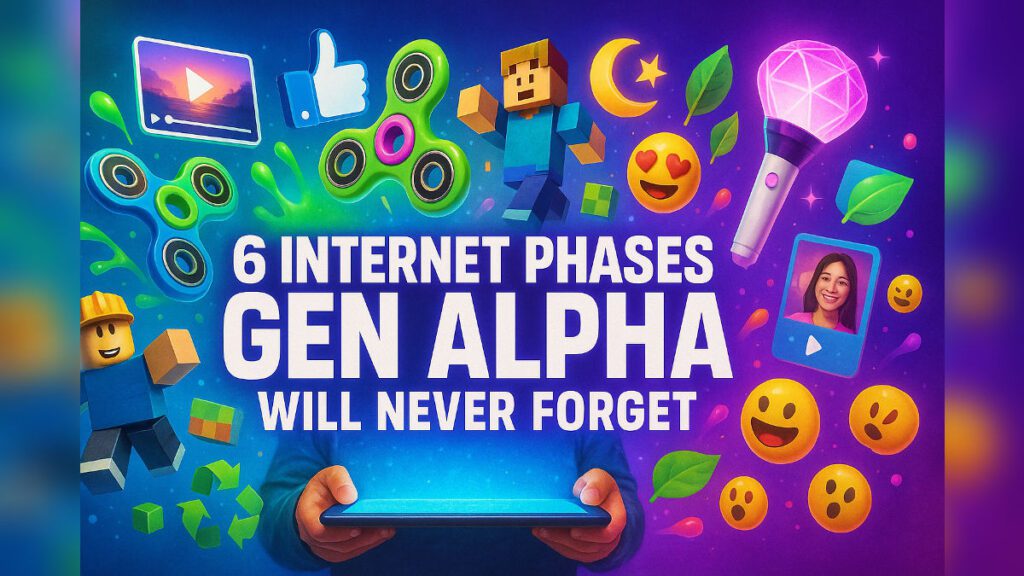
Short answer: Gen Alpha (born 2010 to 2025) grew up through six defining internet phases: the rise of the iPad kid, viral toy crazes like fidget spinners and Squishmallows, gaming as social life on Roblox and Minecraft, fandoms like K-pop and Harry Potter, short-form fame led by kidfluencers like Ryan Kaji, and a growing push for offline balance and digital consciousness.
From sensory toys to K-pop stans, these trends shaped their world.
Born between 2010 and 2025, Generation Alpha has never known a world without the internet. While older generations remember the crackle of dial-up or their first flip phone, Gen Alpha has been swiping screens since before they could read. These kids aren’t just tech-savvy. They’re digital natives through and through.
As of 2025, this generation is still growing up, but they’ve already moved through distinct online phases that shaped how they play, learn, connect, and express themselves. Here’s a walk through the biggest internet trends Gen Alpha grew up with, and why they matter.
1. Why is Gen Alpha called the “iPad kid” generation?
For Gen Alpha, screens weren’t introduced. They were always there.
Many had access to tablets by age two, and platforms like YouTube Kids, Netflix, and Disney+ replaced traditional Saturday morning cartoons. These weren’t passive viewing experiences either. Kids learned to navigate menus, swipe between videos, and even command Alexa before they learned cursive.
The term “iPad kid” quickly entered pop culture, describing toddlers clutching tablets in restaurants, shopping malls, and on road trips. While it sparked concerns about screen time, it also introduced a generation to interactive, personalised content consumption from day one.
2. How did fidget toys, slime, and viral obsessions take over?
Remember when fidget spinners were everywhere? For Gen Alpha, those weren’t just toys. They were internet sensations.
What started as classroom novelties exploded into global trends thanks to viral YouTube videos and TikTok challenges. From Squishmallows to Pop-Its, kids weren’t just buying toys. They were watching unboxing videos, reviewing collections, and filming ASMR-style content showing off their squishy hauls.
These moments blended the tactile with the digital, showing how offline trends often gained momentum online.
3. Why is gaming more than gaming for Gen Alpha?
Gen Alpha doesn’t separate gaming from socialising. For them, platforms like Roblox and Minecraft are more than games. They’re digital playgrounds.
In these worlds, kids build houses, adopt pets, design outfits, and throw virtual parties, often while chatting with friends through text or voice. According to Greenbook.org, these games are central to their creative expression and social bonding.
They’re not only playing. They’re creating. From developing games within Roblox to crafting cinematic stories in Minecraft, Gen Alpha blurs the line between player and producer.
4. How did fandoms become their friend groups?
While Millennials once plastered their rooms with posters of bands and movie stars, Gen Alpha finds community in online fandoms.
Whether it’s K-pop, anime, or Harry Potter, fandoms serve as identity markers. Kids proudly declare their Hogwarts House, favourite BTS member, or anime ship. It doesn’t stop at consumption. They’re drawing fan art, writing fanfiction, and starting fan pages before they hit high school.
“My 11-year-old writes Blackpink fanfiction and shares it on Wattpad,” says Neha, a parent from Pune. “She found a whole group of friends who read and comment on each other’s work.”
According to LinkedIn’s research, Gen Alpha rates their fandoms as highly influential to their identity and social life.
5. How did kidfluencers and short-form fame shape Gen Alpha?
Despite being too young for platforms like TikTok officially, Gen Alpha is still very aware of what’s trending.
Whether through older siblings or family-shared content, they’re watching short-form videos and discovering new obsessions. Viral dances, slime recipes, and influencer reviews shape what they ask for at birthdays and how they view the world.
Child influencers like Ryan Kaji (Ryan’s World) and educational creators known as “edutainers” blend learning with entertainment. These figures feel more relatable than traditional celebrities and hold massive sway over Gen Alpha’s preferences.
6. Why is Gen Alpha also going offline and getting conscious?
The same generation raised online is starting to lean into offline balance.
Data from GWI shows a growing trend among Gen Alpha families toward limiting screen time and encouraging real-world play. At the same time, mental health awareness has grown, with kids learning terms like “mindfulness” and “digital detox” earlier than ever.
There’s also a visible social consciousness brewing. Influenced by global events and movements online, Gen Alpha tends to support brands and causes that reflect values like diversity, sustainability, and inclusion.
“My son asked me why our snacks didn’t have the eco-label,” shared Ramesh, a father of two. “He saw a video about plastic waste on YouTube and it really stuck with him.”
A generation of creators, not just consumers
From fidget spinners to fanfiction, and from TikTok dances to digital activism, Gen Alpha isn’t just shaped by the internet. They’re shaping it in return.
This generation doesn’t view the online world as separate from real life. For them, it’s all connected: play, learning, creativity, friendship, and expression.
As we look ahead, one thing is clear. Gen Alpha isn’t following trends. They’re leading them.
The rest of us could learn a thing or two from their blend of playfulness, awareness, and creativity.
FAQs about Gen Alpha and the internet
What are the biggest internet trends that shaped Gen Alpha?
Six phases stand out: the iPad kid era, viral toy crazes like fidget spinners and Squishmallows, gaming as social life on Roblox and Minecraft, online fandoms like K-pop and Harry Potter, short-form fame powered by kidfluencers, and a growing move toward offline balance and digital consciousness.
What age did Gen Alpha start using screens?
Many Gen Alpha kids had access to tablets by age two. Platforms like YouTube Kids, Netflix, and Disney+ replaced traditional cartoons. They learned to navigate menus, swipe between videos, and even command Alexa before they learned cursive.
Why do Gen Alpha kids use Roblox and Minecraft for socialising?
For Gen Alpha, these games are digital playgrounds where they build houses, adopt pets, design outfits, and throw virtual parties while chatting with friends. According to Greenbook.org, these games are central to their creative expression and social bonding.
Who are Gen Alpha’s biggest kidfluencers?
Child influencers like Ryan Kaji of Ryan’s World and educational creators called “edutainers” have massive sway over Gen Alpha’s preferences. They blend learning with entertainment and feel more relatable than traditional celebrities.
Is Gen Alpha really going offline?
Yes, partly. Data from GWI shows a growing trend among Gen Alpha families toward limiting screen time and encouraging real-world play. Kids are picking up terms like “mindfulness” and “digital detox” earlier than ever, and many back brands that reflect values like sustainability and inclusion.