
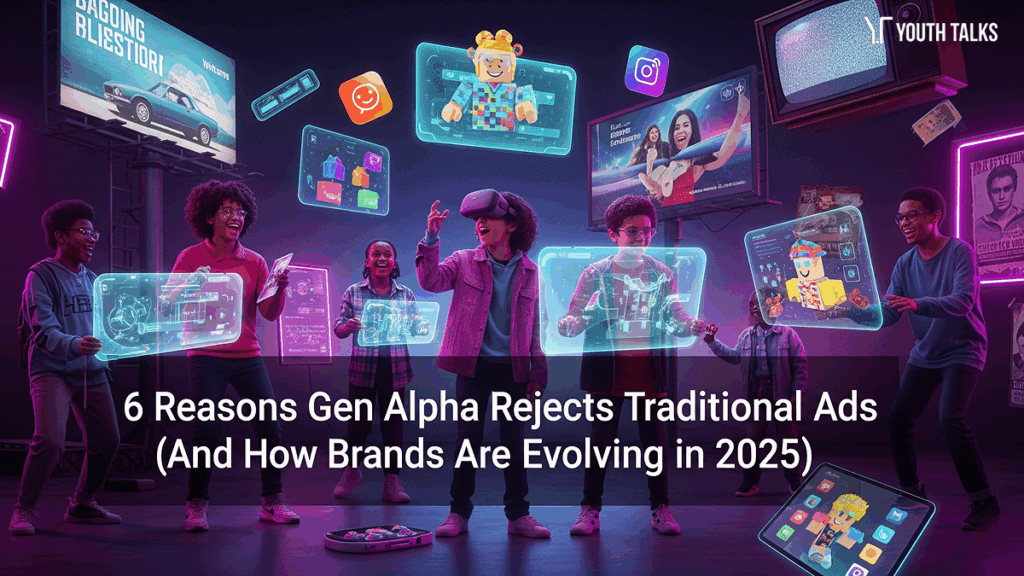
Short answer: Only 14% of Gen Alpha are influenced by celebrity endorsements, according to Marcos Figueira. Born after 2010, this generation skips, blocks or ignores traditional ads and responds to authentic creators, interactive experiences on Roblox and Minecraft, edutainment, and brands that live their values. Nike (NIKELAND), LEGO (NASA, Mindstorms), Crocs and Barbie are adapting.
Generation Alpha is not the next consumer wave, they are already shaping how brands speak, sell and show up. Born after 2010, these digital natives are the first generation raised entirely in an online-first world, swiping before they could speak and treating content like air.
One thing they are not buying into: traditional advertising.
From celebrity endorsements to high-budget television commercials, the old playbook does not land. Here is a closer look at why Gen Alpha is turned off by conventional marketing, and how smart brands are adapting in India and globally.
1. Celebrity endorsements feel forced
Once, a Bollywood star on a billboard could sell anything from soap to smartphones. Not anymore.
Only 14% of Gen Alpha are influenced by celebrity endorsements, according to Marcos Figueira. Celebrities can feel distant, curated and out of touch. A YouTuber who shares their everyday life carries more weight than a star reading a scripted line.
My 11-year-old cousin once said, “Why is he even promoting that snack? He probably doesn’t eat it!” That one comment said it all.
What brands are doing instead: shifting to micro-influencers, relatable creators and real customers who tell honest stories.
2. Ad fatigue is real
Gen Alpha is growing up in an environment full of ads, from mobile games to YouTube pre-rolls to pop-ups in educational apps. They have learned to skip, block or ignore anything that smells like a sales pitch.
This generation has internal ad-blockers, not the browser kind, but the mental kind.
What brands are doing instead: turning advertising into interactive experiences, from AR filters on Instagram to gamified challenges on Roblox and YouTube Kids. Barbie’s DreamHouse YouTube series lets kids vote on plot twists, giving them a say in how the story unfolds.
3. They want authenticity, not perfection
Airbrushed models and overly polished videos do not connect. Gen Alpha responds to real people, real moments and a little awkwardness.
According to LinkedIn, this generation sees right through overly curated content. If something feels scripted or insincere, they tune out.
What brands are doing instead: embracing imperfection. Crocs, once mocked for their design, now own their “weird” look and connect with Gen Alpha through memes, humour and unapologetic quirkiness.
4. They prefer to learn while being entertained
Gen Alpha does not mind learning if it is fun. Traditional education or long “how it works” ads are a pass.
They are drawn to “edutainment”, content that teaches while engaging. Think science experiments, STEM challenges and how-to videos with a creative twist.
What brands are doing instead: creating content that is informative and fun. LEGO’s partnerships with NASA and educational kits like Mindstorms spark curiosity and creativity while carrying a clear brand message.
5. They want to interact, not just watch
Gen Alpha does not only consume media, they participate. Roblox, Minecraft and the metaverse offer immersive experiences where kids create, customise and connect.
This generation wants to be in the driver’s seat, not a passive audience.
What brands are doing instead: entering their worlds. Nike’s NIKELAND in Roblox lets users explore a branded universe, play games and dress their avatars in virtual Nike gear. It is marketing, but it feels like play.
6. They expect brands to care
More than any generation before, Gen Alpha is growing up with conversations around climate change, diversity, mental health and fairness. They want fun, and they want values.
A LinkedIn study shows Gen Alpha expects brands to market values and live them. That is a high bar.
What brands are doing instead: aligning with causes in meaningful ways. From eco-friendly packaging to diversity in product design, brands are showing up for Gen Alpha and their millennial parents, who are often the decision-makers.
The big picture: from ads to meaningful engagement
Traditional ads are yesterday’s language. In 2025, brands that thrive are the ones that stop shouting and start listening. They co-create, collaborate and connect on real platforms with real purpose.
Whether you are a marketer, a teacher or a parent trying to understand what works with this generation, the takeaway is the same. Gen Alpha does not want to be sold to. They want to be inspired.
FAQs about Gen Alpha and advertising
Why does Gen Alpha reject traditional ads?
They have grown up with ads everywhere and learned to skip, block or ignore anything that feels like a sales pitch. They also read curated content as insincere and prefer authentic creators.
How many Gen Alpha kids are influenced by celebrity endorsements?
Only 14% of Gen Alpha are influenced by celebrity endorsements, according to Marcos Figueira. They tend to trust micro-influencers and real customers more than stars in scripted ads.
Which brands are successfully marketing to Gen Alpha in 2025?
Nike with NIKELAND on Roblox, LEGO with NASA partnerships and Mindstorms kits, Crocs with meme-led marketing, and Barbie with its interactive DreamHouse YouTube series are all examples.
What kind of marketing works with Gen Alpha?
Interactive experiences on Roblox, Minecraft and AR filters, edutainment that teaches while entertaining, authentic creators, and brands that live their values rather than just advertising them.
What is edutainment and why does Gen Alpha like it?
Edutainment is content that teaches while engaging, such as science experiments, STEM challenges and creative how-to videos. Gen Alpha is open to learning if it is fun, which makes this format more effective than conventional how-it-works ads.