
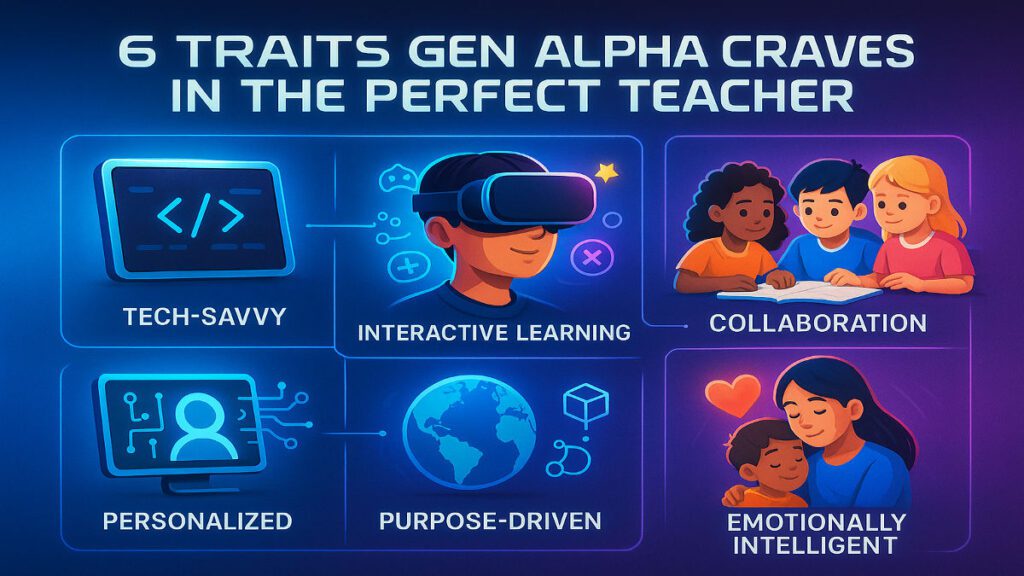
Short answer: Gen Alpha wants teachers who are tech-savvy, interactive, collaborative, personalised, purpose-driven, and emotionally intelligent. In 2025, the perfect teacher is less lecturer and more coach, guide, and listener, using AI tools to free up time for real human connection.
In 2025, the classroom is not what it used to be, and neither is the role of a teacher. Generation Alpha grew up with touchscreens, AI tutors, and instant answers. Chalk-and-talk does not inspire them. They want connection, creativity, and purpose, not just information.
So what does the perfect teacher look like to Gen Alpha? Not someone who hands out worksheets and lectures from the front of the room. Here is what this generation is asking for.
1. Why does Gen Alpha want tech-savvy teachers?
Gen Alpha was practically born with a tablet in hand. From coding apps to interactive videos, they are used to technology doing the teaching, so they expect their teachers to be fluent in digital tools too.
Tech fluency goes beyond using a smartboard. The perfect teacher weaves in platforms like Google Classroom, Kahoot, and AI-powered learning tools. Research from Atlantis Press notes that a lack of tech fluency in teachers creates a major learning gap.
Gen Alpha also wants teachers to go past usage and teach digital literacy: how to think critically online, verify information, and use tech responsibly.
A student from Delhi once put it this way: “I don’t need a teacher who just tells me how to click something. I want them to show me why it matters and how to use it wisely.”
2. How do interactive classrooms help Gen Alpha learn better?
Passive listening does not work. Gen Alpha thrives in hands-on, gamified, visually rich environments. Think science experiments over science notes. Roleplays instead of reciting. Lessons that feel as engaging as their favourite app.
Schools like City Montessori have already embraced project-based and experiential learning, and the results are clear: higher engagement, better retention, happier learners.
Multimedia makes a difference too. Videos, animations, AR, and VR make lessons memorable. A teacher who turns a history class into an interactive AR timeline is a Gen Alpha favourite.
3. Why is collaboration the core of Gen Alpha learning?
Teamwork is not a buzzword for this generation, it is how they learn best. They prefer working in groups, solving problems together, and learning from each other.
The perfect teacher acts like a coach or facilitator, guiding discussion rather than dominating it. They create safe spaces for debate, brainstorming, and creative exploration.
Communication matters too. Gen Alpha wants to know where they stand, through clear feedback, ongoing conversations, and casual check-ins that build trust.
As one 10-year-old from Bengaluru put it, “I like teachers who talk to me, not just at me.”
4. How should teachers personalise learning for Gen Alpha?
From YouTube algorithms to custom avatars in games, Gen Alpha is used to personalisation. They expect the same from school.
They learn better when teachers adapt lessons to different learning styles, visual, auditory, or kinesthetic. Adaptive learning tools, differentiated assignments, and flexible pacing help students feel seen.
A teacher who sees that one child needs more time while another is ready to leap ahead is gold to this generation. As India Today has highlighted, personalised learning is no longer optional, it is essential.
5. Why does purpose matter so much to Gen Alpha?
Gen Alpha is surprisingly practical. They are not learning for grades alone, they want to know how knowledge connects to life.
The ideal teacher bridges theory and reality. They bring in real-world examples, tackle global issues, and link classroom content to future careers or social impact.
Using math to budget a fundraiser, or discussing climate change in science class, shows Gen Alpha that what they learn has meaning.
6. Why do Gen Alpha students need emotionally intelligent teachers?
This might be the biggest one. Mental well-being is a priority for Gen Alpha, and they want teachers who acknowledge emotions, encourage empathy, and build a classroom culture of trust and safety.
They value teachers who listen, who notice when something is off, and who make space for conversations about feelings, stress, or struggles.
Research from ResearchGate shows that students who feel emotionally supported by their teachers perform better academically and socially.
One 8-year-old from Hyderabad summed it up well: “My favourite teacher is the one who smiles at me when I’m sad, even if she doesn’t know why.”
Teaching the future starts now
The perfect teacher for Gen Alpha is defined by adaptability, empathy, creativity, and the ability to connect, not just years of experience or subject expertise.
In 2025, education has to move past rigid systems and embrace fluid, student-centred learning. The future of teaching is about collaboration, connection, and care, not control.
Gen Alpha is ready. They are not just looking for someone to teach them facts, they are looking for someone to help them thrive.
FAQs: the perfect teacher for Gen Alpha
What traits do Gen Alpha students want in a teacher?
Six traits stand out: tech fluency, interactive teaching, collaboration, personalisation, real-world purpose, and emotional intelligence. Gen Alpha wants a teacher who can use digital tools, run engaging classrooms, and support mental well-being.
Why does Gen Alpha want tech-savvy teachers?
Because they grew up on tablets, AI tools, and interactive apps. They expect teachers to use platforms like Google Classroom, Kahoot, and AI tutors, and to teach digital literacy so students can think critically online.
How can teachers personalise lessons for Gen Alpha?
By adapting lessons to visual, auditory, and kinesthetic learners, using adaptive learning tools, giving differentiated assignments, and allowing flexible pacing. India Today has noted that personalised learning is now essential.
Why is emotional intelligence important for Gen Alpha teachers?
Mental well-being matters to Gen Alpha. Research from ResearchGate shows students who feel emotionally supported perform better academically and socially. Teachers who listen and notice emotional cues build trust.
What is experiential learning for Gen Alpha?
It is learning by doing: hands-on projects, roleplays, experiments, and AR or VR lessons. Schools like City Montessori use project-based learning and see higher engagement and retention.