
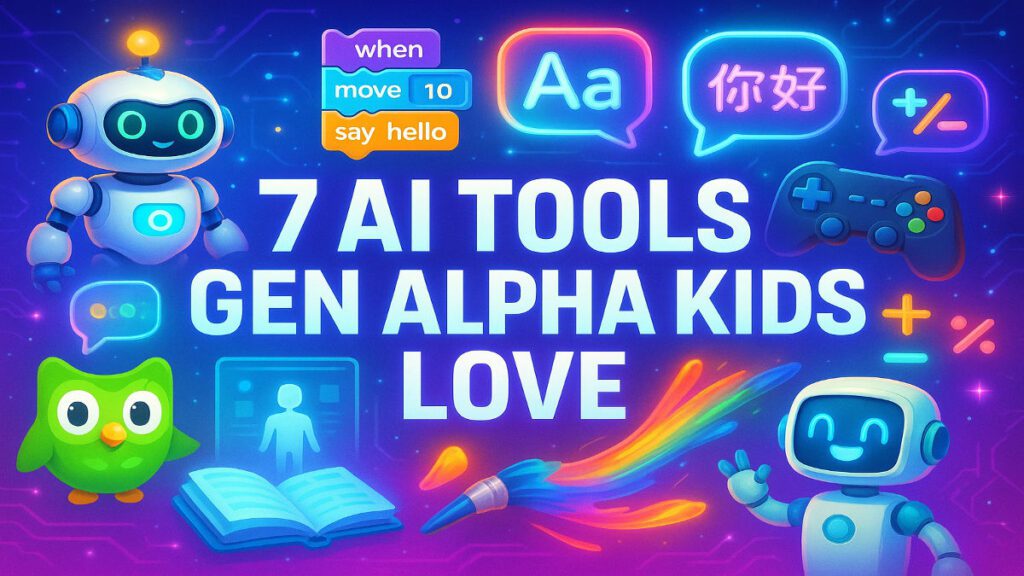
Short answer: Gen Alpha kids, born after 2010, are using AI tools like ChatGPT, Duolingo, Scratch with Machine Learning for Kids, Google Teachable Machine, Osmo, DALL·E, Ello AI, Khan Academy Kids, Prodigy and JetLearn to study, play, code and create in 2025. With parental supervision, these tools personalise learning and build future-ready skills.
Generation Alpha, kids born after 2010, aren’t just growing up with technology. They’re growing into it. With tablets in hand before they can talk and smart devices as daily companions, Gen Alpha is navigating a world where artificial intelligence isn’t science fiction. It’s their study buddy, tutor and creative partner.
As parents and educators try to keep up, one thing is clear: AI tools are reshaping how the youngest generation learns. From gamified language apps to visual coding platforms, here’s a look at the most popular and engaging AI-powered tools for Gen Alpha learners in 2025.
1. ChatGPT: the curious kid’s favourite study pal
Whether it’s a tricky math question or a short story idea about flying cats, ChatGPT has become a go-to resource for many Gen Alpha learners.
Children use this AI chatbot to:
- Ask questions in simple language
- Understand tough school concepts
- Brainstorm creative projects
- Generate fun quizzes
With parental supervision and filters, tools like ChatGPT and JetLearn’s educational bots can personalise learning without the pressure of classroom judgment.
According to HostingAdvice.com, 20% of parents say their Gen Alpha children already use AI tools to complete homework, and the number is expected to rise.
2. Duolingo: language learning that feels like a game
Gen Alpha loves games, and Duolingo knows it.
With vibrant characters, gamified streaks and personalised AI feedback, Duolingo turns learning a new language into a playful challenge. The app adapts in real time, focusing on vocabulary or grammar the child struggles with most. Kids feel like they’re levelling up in a game, not grinding through flashcards.
Apps like Quora’s language bots and JetLearn’s bilingual lessons are emerging too, but Duolingo still leads because of its smooth user experience and constant evolution.
3. Scratch plus Machine Learning: where play meets programming
Coding used to feel like a task reserved for older kids or adults. Not anymore.
Scratch, a visual coding platform developed by MIT, uses drag-and-drop blocks to teach logic, creativity and sequencing. With the Machine Learning for Kids extension, it now helps students understand how AI works by letting them build their own intelligent projects.
My niece, 10, created a game where her laptop recognised her dog’s bark and triggered an animation of a dancing robot. The pride on her face? Unforgettable.
Tools like this turn abstract AI concepts into hands-on fun that sticks.
4. Google Teachable Machine: AI in the child’s hands
Few tools feel as empowering as Google’s Teachable Machine.
In minutes, kids can:
- Train a model to recognise hand gestures
- Use sound recognition for interactive games
- Upload images to create smart object detectors
This free tool breaks down complex machine learning into bite-sized, visual activities. It is engaging and a soft introduction to what will soon be a core skill in tomorrow’s workplaces.
5. Osmo Genius Starter Kit: AI that sees and plays
Combining physical play with digital smarts, Osmo is a favourite among parents of younger Gen Alpha kids. The system uses a reflective camera that watches what the child does with physical blocks, letters or numbers, then responds through a tablet screen.
Whether it’s solving math puzzles or drawing monsters that come to life, Osmo’s AI provides instant feedback, helping kids learn through trial and error.
“It’s like having a teacher at the table, only more patient,” says Priya M., a mom of two in Mumbai.
6. DALL·E and Ello AI: creative tools for young minds
AI isn’t only about academics. It’s also about creativity and self-expression.
- DALL·E, OpenAI’s image generator, lets kids type prompts like “a spaceship made of candy” and see their wildest ideas come to life as digital art.
- Ello AI acts as a reading coach, listening to children read aloud and offering real-time suggestions on pronunciation and fluency.
Both tools build confidence while nurturing imagination and literacy in fresh ways.
7. Other AI tools that keep Gen Alpha hooked
- Khan Academy Kids: AI personalises math, reading and emotional learning for younger kids.
- Prodigy Math Game: fantasy-themed platform that adapts math challenges using AI logic.
- Codeyoung and JetLearn: AI-fuelled workshops and courses for Gen Alpha learners in coding, storytelling and logic building.
AI tools are helpers, not replacements
As impressive as these AI tools are, they aren’t a substitute for human connection, critical thinking or emotional growth. What they offer is a chance for Gen Alpha to explore, question and create in ways no previous generation could.
Parents and educators must play an active role by guiding, supervising and discussing what children learn from these tools. With balance and intention, AI can unlock possibilities that feel like magic while still rooting kids in reality.
So let’s not fear AI. Let’s shape how it shapes our kids.
FAQs about AI tools for Gen Alpha kids
What AI tools are safe for Gen Alpha kids?
ChatGPT with filters, Duolingo, Scratch with Machine Learning for Kids, Google Teachable Machine, Osmo, Khan Academy Kids and Ello AI are widely used, though all should run with parental supervision and clear usage rules.
Which AI tool helps kids learn to code?
Scratch, developed by MIT, teaches coding through drag-and-drop blocks. The Machine Learning for Kids extension layers on AI model-building so kids can code their own intelligent projects.
Can AI tools really replace tutors for kids?
No. AI tools personalise practice and feedback, but they can’t replace human connection, critical thinking or emotional growth, which is why parents and educators still need to guide how kids use them.
How many Gen Alpha kids already use AI for homework?
According to HostingAdvice.com, 20% of parents say their Gen Alpha children already use AI tools to complete homework, and that share is expected to keep climbing.
What’s the best AI tool to spark creativity in kids?
For visual creativity, OpenAI’s DALL·E lets kids turn text prompts into original digital art. For reading and expression, Ello AI listens to kids read aloud and coaches them on pronunciation and fluency.