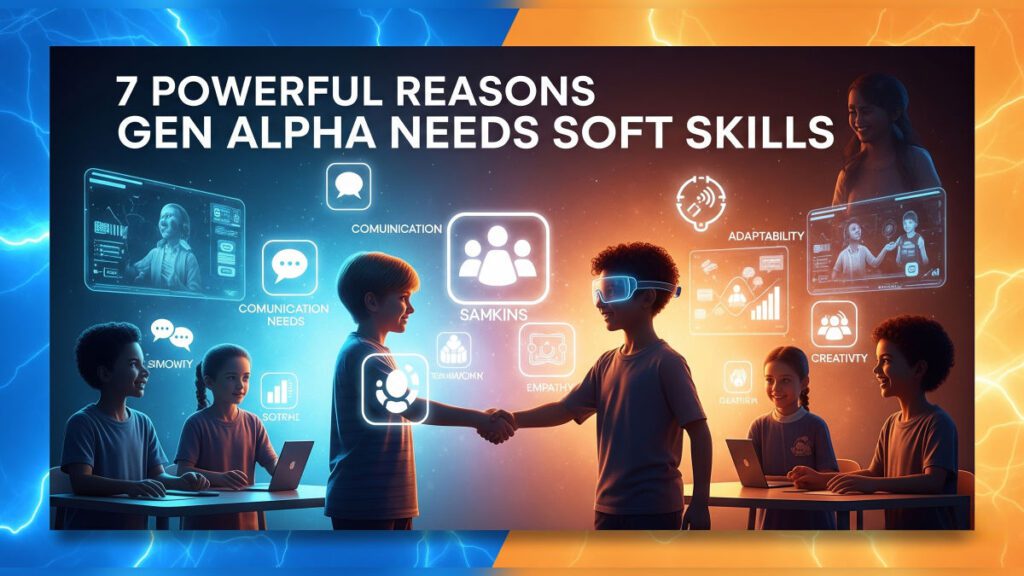
Short answer: Gen Alpha, born between 2013 and 2025, is the first fully digital generation. Being tech-fluent isn’t enough. In an AI-driven world, soft skills like communication, empathy, adaptability, critical thinking and emotional intelligence are what will set them apart. Common Sense Media reports over 60% of tweens feel emotionally affected by what they see online, which makes these skills urgent, not optional.
Why being smart isn’t enough anymore
In today’s AI-driven world, hard skills like coding, data crunching and automation look like the keys to success. They matter. But soft skills are emerging as the real game-changers for Generation Alpha.
Born between 2013 and 2025, Gen Alpha is the first generation to grow up entirely in the digital age. They’re swiping screens before they can write their names, and they talk to Siri as comfortably as a teacher. Being digitally fluent isn’t enough. To thrive in a hyper-connected world, Gen Alpha needs a strong foundation in soft skills.
What exactly are soft skills?
Soft skills are the human qualities that shape how we interact, collaborate and handle challenges. Unlike hard skills, which are technical and measurable, soft skills are interpersonal, emotional and behavioural. Think communication, empathy, adaptability, creativity and emotional intelligence.
A few examples:
- Communication: Active listening, clear expression, diplomacy.
- Teamwork: Building relationships, resolving conflict, sharing ideas.
- Critical Thinking: Problem-solving, innovation, evaluating situations.
- Adaptability: Embracing change, learning on the fly.
- Emotional Intelligence: Self-awareness, empathy, emotional regulation.
- Work Ethic: Responsibility, persistence, time management.
These aren’t buzzwords. They’re essential life skills, and Gen Alpha needs them now more than ever.
1. How do soft skills help Gen Alpha face a hyper-digital world?
Gen Alpha may be tech-savvy, but many struggle with in-person communication. As digital natives, they often rely more on emojis than eye contact. I’ve seen this with my niece: confident on video calls, shy in face-to-face conversations.
Soft skills like active listening, emotional awareness and verbal communication are critical. They help Gen Alpha build meaningful relationships in both virtual and physical settings, creating connections technology alone can’t replace.
2. Why are soft skills key to navigating online spaces?
Growing up online brings opportunities and risks. Gen Alpha is at home on digital platforms but often lacks the ethical and emotional frameworks to navigate them safely.
Skills like social perspective-taking, empathy and self-regulation help counter cyberbullying, misinformation and the mental health toll of digital overstimulation. According to Common Sense Media, over 60% of tweens feel emotionally affected by what they see online. That’s a wake-up call.
3. How do soft skills prepare Gen Alpha for jobs that don’t exist yet?
By the time Gen Alpha enters the workforce, many of today’s jobs will be obsolete. Automation and AI will handle routine tasks. Machines can’t replicate creativity, empathy and leadership.
Soft skills will be the uniquely human advantage. Gen Alpha will need to adapt quickly, think critically and work across cultures, whether they’re launching startups, joining global teams or tackling world problems.
4. Why do soft skills matter for multigenerational, multicultural teams?
The modern workplace is remote, diverse and filled with people of all ages and backgrounds. Gen Alpha will need strong collaboration and inclusion skills to thrive in it.
Imagine a 20-year-old on a virtual project with teammates from five countries and three generations. That takes more than tech skills. It takes emotional intelligence, cross-cultural communication and empathy.
5. How do soft skills build mental resilience?
With constant notifications, comparison culture and screen time, Gen Alpha is more vulnerable than ever to mental health struggles. Soft skills like self-regulation, mindfulness and emotional resilience are essential tools for wellbeing.
Being able to pause, reflect and respond with intention can help them navigate stress, avoid burnout and stay grounded in an overstimulated world.
6. Why do soft skills make Gen Alpha empathetic changemakers?
Gen Alpha is globally connected and socially aware. They care about climate change, equality and justice. Caring isn’t enough, they need skills to act.
With strong soft skills, they can become bridge-builders, advocates and community leaders. Empathy helps them understand others. Communication gives them a voice. Creativity helps them imagine solutions, and bring them to life.
7. How will soft skills shape the future Gen Alpha creates?
As Gen Alpha grows into entrepreneurs, inventors and leaders, soft skills will be at the heart of what they build. Innovation happens when people collaborate and take risks together.
If we want a future powered by compassion, courage and connection alongside intelligence, soft skills aren’t optional. They’re everything.
The human edge that matters most
In a world where AI can write code, answer emails and analyse data, what will set Gen Alpha apart? Their humanity.
It’s time to shift focus from screens to self-awareness, from speed to empathy, from tech skills to life skills. Whether you’re a parent, teacher, mentor or Gen Alpha yourself, start now. Build the foundation of soft skills that will carry this generation into a future where being human is their greatest strength.
Because in 2025 and beyond, it won’t just be about what they know. It’ll be about who they are.
FAQs about soft skills for Gen Alpha
What are soft skills and why do Gen Alpha kids need them?
Soft skills are interpersonal abilities like communication, empathy, adaptability, teamwork, critical thinking and emotional intelligence. Gen Alpha kids, born 2013-2025, are digitally fluent but often struggle with in-person interaction, stress and online overload. Soft skills help them handle that.
Which soft skills matter most for Gen Alpha?
Communication, emotional intelligence, critical thinking, adaptability, teamwork and self-regulation. Active listening, empathy and mindfulness are especially useful given how much of Gen Alpha’s social life happens online.
How do soft skills help Gen Alpha with mental health?
Common Sense Media found over 60% of tweens feel emotionally affected by what they see online. Self-regulation, mindfulness and emotional resilience help Gen Alpha pause, reflect and respond with intention, which reduces stress and burnout.
Will AI make soft skills more important for Gen Alpha careers?
Yes. AI and automation will replace many routine tasks. What machines can’t replicate is creativity, empathy, leadership and cross-cultural collaboration. Those human skills become the edge.
How can parents help Gen Alpha build soft skills?
Encourage face-to-face conversations, teamwork through group activities, and open discussions about online experiences. Model active listening, talk through emotions, and give kids room to solve problems themselves.