
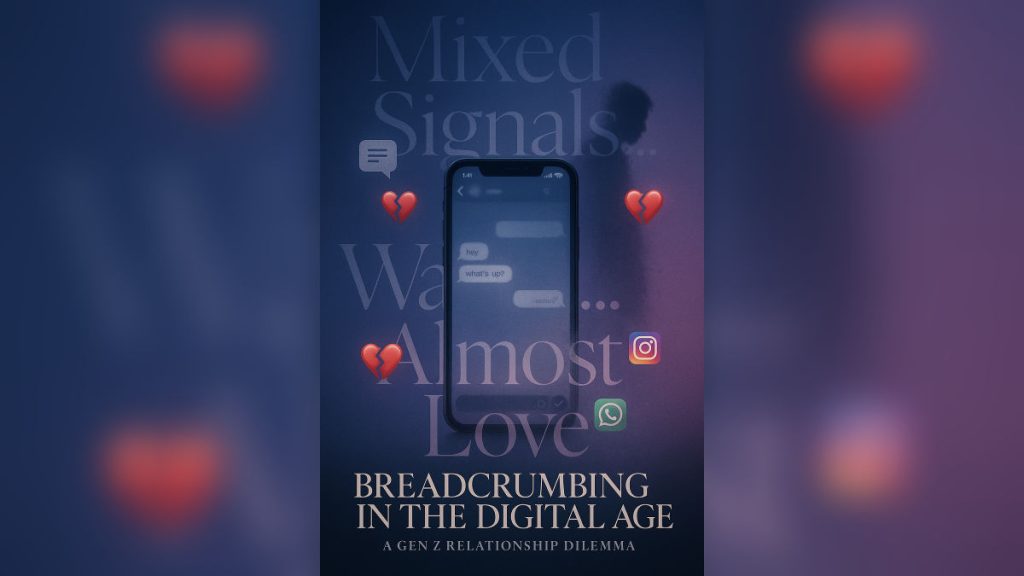
Short answer: Breadcrumbing is when someone sends flirty but non-committal messages, the odd late-night text, a random Instagram like, just enough to keep you emotionally hooked without ever moving things forward. It’s hugely common on Tinder, Bumble, Hinge and Snapchat among Gen Z, and Psychology Today links it to higher loneliness and lower life satisfaction. The fix is awareness, clear communication and the willingness to walk.
Dating in 2025 looks nothing like it did a decade ago. The rules have shifted, the platforms have multiplied, and a whole new vocabulary has emerged to describe behaviours that didn’t quite exist before. Some are empowering. Others are confusing. A few are just plain toxic. Breadcrumbing falls firmly in that last bucket.
The word sounds harmless. Almost cute, even. The reality isn’t.
What exactly is breadcrumbing?
At its core, breadcrumbing is the act of sending flirtatious but non-committal messages, the “breadcrumbs,” to keep someone emotionally invested without any real intention of pursuing a serious relationship. It’s the occasional late-night “Hey, what’s up?” text. A random comment on your Instagram story. A scattering of likes across your timeline.
It’s not enough to move things forward. Just enough to stop you moving on.

And that, in a sentence, is why it’s so manipulative. The behaviour toys with hope and expectation, keeping people in a romantic limbo that almost always leads nowhere.
Why is Gen Z particularly vulnerable to breadcrumbing?
Breadcrumbing isn’t new. But it’s become alarmingly prevalent in Gen Z’s relationship landscape. Why? Because digital platforms (Tinder, Bumble, Hinge, Snapchat, even Instagram) have turned casual interactions into the norm. A few taps and swipes simulate connection without any actual commitment.
“It’s like someone offering you a slice of cake when you’re starving, but never letting you have the whole thing,” says 22-year-old college student Meera, who experienced breadcrumbing over a six-month stretch. “You keep hoping something real will happen, but it never does.”
Let’s break down the main factors fuelling this trend.
1. Convenience culture
Technology has made communication easier and lazier in the same breath. Sending a quick emoji or heart reaction feels like engagement, even when it’s hollow. For someone hoping for emotional closeness, that half-hearted attention can feel like a promise.
2. Fear of vulnerability
Many Gen Z individuals report anxiety around emotional intimacy. It’s far easier to flirt from behind a screen than to risk rejection face-to-face. Breadcrumbing becomes a way to maintain some level of connection without facing the demands of real emotional labour.
3. Validation over connection
We live in a time where a double-tap can validate self-worth. For some, breadcrumbing isn’t really about the other person, it’s about ego. Knowing someone is emotionally invested in you, even when you’re not reciprocating, can be a temporary confidence boost. Cheap, but effective.
4. The paradox of choice
According to the Indigo Therapy Group, dating app fatigue and the “paradox of choice” play a huge role. With endless potential matches a swipe away, people get overwhelmed. Easier, then, to keep someone on the backburner, just in case, while you keep exploring.
What are the emotional consequences of breadcrumbing?
For those on the receiving end, the impact runs deeper than disappointment. Breadcrumbing can lead to:
- Anxiety and confusion about where the relationship stands
- Lowered self-esteem, often tied to constant second-guessing of one’s worth
- Emotional exhaustion from unmet expectations
- A fear of future intimacy, making it harder to trust again

In one survey by Psychology Today, individuals who had been breadcrumbed reported higher levels of loneliness and lower life satisfaction compared to those who hadn’t. Not a minor inconvenience. A real emotional wound.
A personal perspective
I remember a friend from college who lived this exact pattern. She met someone on a dating app who seemed charming and interested, until he wasn’t. He’d disappear for weeks, then pop up again with a “missed you” text or a selfie. The cycle repeated for months, each loop shorter than the last.
When she finally confronted him, he said, “I didn’t want to lead you on, I just like talking to you sometimes.” The irony was glaring. He had led her on, with no intention of ever taking it further.
How do you protect yourself from breadcrumbing?
If this pattern feels uncomfortably familiar, it’s time to take back some control. A few ways to navigate it:
1. Recognise the signs
Are their actions inconsistent? Do they only reach out when it suits them? Are you constantly hoping for more but receiving less? Awareness is your first defence.
2. Communicate your expectations
Have an honest conversation. Tell them what you’re after, whether it’s a serious relationship or just emotional clarity. If they back away or deflect, that’s a red flag waving with both hands.
3. Set boundaries
Don’t settle for sporadic attention. You deserve consistency and mutual respect. If someone can’t meet that bar, it’s okay to let them go.
4. Lean on your support system
Talk to friends, journal, see a therapist if it helps. Processing the emotion is what rebuilds confidence and clarity, even when the other person never explains themselves.
5. Know when to walk away

Walking is hard, especially if there was once a spark. But remember: breadcrumbs are not a meal. You deserve the full experience of love, not the emotional leftovers.
How do you build healthy digital relationships instead?
Gen Z is uniquely placed in this evolving dating world. They’re tech-savvy, emotionally intelligent and far more open about mental health than previous generations. Which means they also have the power to reshape how relationships work online.
Start by fostering connections that are:
- Mutually respectful
- Transparent
- Emotionally fulfilling
- Rooted in communication
Swipe culture might be here to stay. That doesn’t mean emotional games need to come bundled with the package.
Final thoughts: choose wholeness over crumbs
Breadcrumbing is a symptom of our digital era, fuelled by convenience, avoidance and superficial engagement. But we don’t have to normalise it. As Gen Z continues to define what love looks like in a connected world, let authenticity lead the way.
If you ever feel like you’re settling for scraps of affection, take a step back. Ask yourself: is this what I truly deserve? Chances are, you already know the answer.

Let’s encourage a culture of clarity, courage and compassion in relationships, because everyone deserves more than just a trail of crumbs.
“Don’t chase people. Be yourself, do your thing, and work hard. The right people, the ones who really belong in your life, will come to you. And they’ll stay.” – Will Smith
FAQs about breadcrumbing in dating
What is breadcrumbing in a relationship?
Breadcrumbing is the practice of sending small, flirty but non-committal messages, the occasional text, a random Instagram like, a vague “miss you,” to keep someone emotionally invested without intending to pursue anything serious. It keeps the recipient hopeful while costing the breadcrumber almost nothing.
How is breadcrumbing different from ghosting?
Ghosting is a clean cut, all communication stops without warning. Breadcrumbing is the opposite: contact never fully ends. You get just enough sporadic attention to stop you moving on, which often makes it more emotionally exhausting than a straight ghost.
Why is breadcrumbing so common on dating apps?
Apps like Tinder, Bumble, Hinge and Snapchat make casual contact frictionless and reward quick swipes over deep conversation. Combined with dating app fatigue and the paradox of choice (per the Indigo Therapy Group), users end up keeping multiple people on the backburner rather than committing.
What does breadcrumbing do to your mental health?
Psychology Today found that people who had been breadcrumbed reported higher levels of loneliness and lower life satisfaction. Common effects include anxiety, lowered self-esteem, emotional exhaustion and a fear of future intimacy that can interfere with healthy bonding later.
How do I stop being breadcrumbed?
Recognise the inconsistent pattern and name it. Have one honest conversation about where things stand. If the response is evasive or vague, set a clear boundary and step away. Redirect your energy to friends, therapy or hobbies that rebuild your sense of self-worth.