Short answer: Emotional UI design is the practice of building interfaces that shape how users feel, not just what they see. In 2025, that means warmer colour systems, empathetic microcopy, adaptive layouts powered by AI, and sensory touches like haptics, all measured by delight, trust, and frustration instead of clicks alone.
User Interface (UI) design is no longer just about clean layouts or smooth animations. It is about emotion. In 2025, successful interfaces are the ones that make users feel something. Whether it is comfort, excitement, or curiosity, emotion-driven design has become the secret ingredient behind memorable digital experiences.
Designers are shifting their focus from “How does it look?” to “How does it make users feel while they use it?” The emotional connection between a product and its user is now a crucial metric of success, especially as attention spans shrink and competition grows fiercer.
How does UI design use psychology to shape user feelings?
Every pixel tells a story. Colour palette, spacing, motion, and typography subconsciously shape how users perceive a product. Soft gradients and rounded corners evoke safety and friendliness, while bold contrasts and sharp edges create energy and excitement.
UI designers are studying behavioural psychology to craft interfaces that trigger specific emotional responses. Warm colours like orange and coral build enthusiasm, while muted tones bring calmness, a technique mental health apps and fintech platforms use to inspire trust.
Microinteractions, those small animations or sound cues when you click a button, play a key role too. They are subtle but powerful emotional reinforcements that say “You are in control,” “You have achieved something,” or “We see you.”
How are designers humanizing digital experiences?
Technology can often feel cold and mechanical. The best UI designers today are reversing that by humanising interfaces. The aim is to make apps feel like conversations rather than commands.
Think about how Spotify personalises playlists or how Duolingo’s friendly owl celebrates your progress. These are examples of emotional UI: designs that respond to user behaviour with empathy and personality.
Voice interfaces, chatbots, and adaptive designs add to this sense of connection. The more a digital product understands user needs and moods, the more it feels alive rather than merely functional.
Why is meaningful minimalism replacing strict minimalism?
For years, minimalism ruled UI. Clean lines, monochrome colours, and stripped-down layouts were the standard. In 2025, designers are realising that less is not always more.
The new movement, meaningful minimalism, keeps simplicity but adds personality. Colour, texture, and motion return thoughtfully to give interfaces warmth and individuality.
Apple’s recent shift from sterile white backgrounds to dynamic gradients in visionOS, and Notion’s introduction of customisable themes, are clear examples of this evolution. Functionality remains key, but emotion drives retention.
How do accessibility and empathy shape modern design?
Emotionally intelligent design is not only about aesthetics. It is about inclusion. Accessibility has become a moral and creative responsibility for modern designers.
High-contrast options, text-to-speech features, motion sensitivity settings, and adaptable layouts make sure that everyone can connect emotionally with the experience, regardless of ability.
Designers are realising that empathy is not only good ethics. It is good design. An interface that makes people feel seen, respected, and comfortable naturally builds loyalty.
Why are dark mode and customization emotional tools?
Customisation is emotional empowerment. Users today want to own their digital spaces, not just use them. That is why dark modes, dynamic wallpapers, and theme customisation are more than design trends. They are emotional anchors.
When users tailor an app’s look to their personality or mood, it strengthens their bond with the product. It turns the experience from passive usage into active participation.
Designers are exploring adaptive colour systems that change with time of day, emotional state, or even weather, interfaces that feel alive alongside their users.

How is AI changing user interface design?
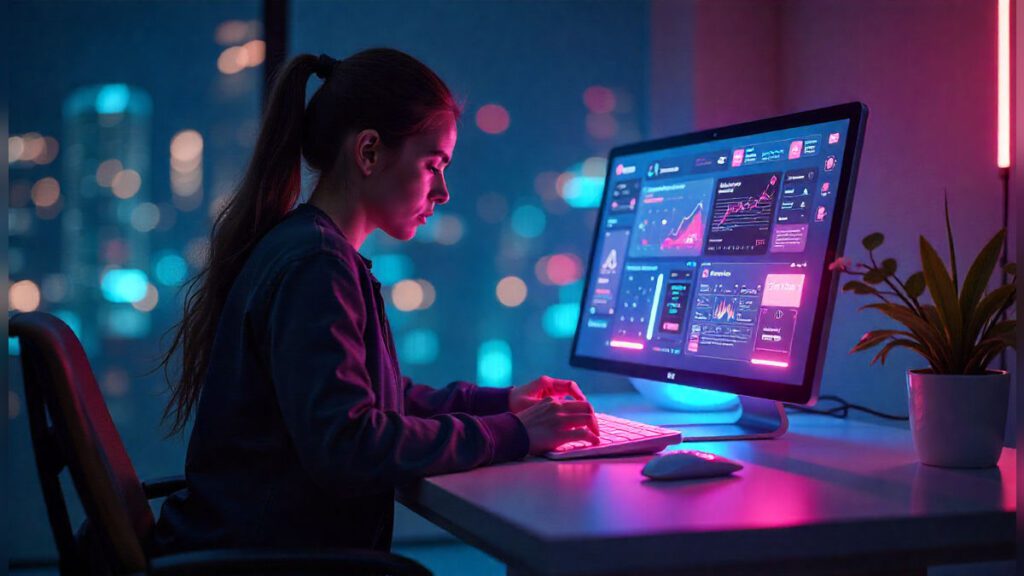
Artificial intelligence has entered the design studio, not to replace creativity but to amplify it. AI-powered tools analyse behaviour data, test usability, and generate interface variations at scale.
The real innovation lies in emotional intelligence. Some next-gen design systems can adjust UI layouts in real time based on a user’s micro-expressions or engagement levels.
A learning app might simplify its layout when it detects frustration or highlight achievements when motivation dips. The future of UI is not static. It is empathetic, adaptive, and aware.
Why are microcopy and voice the new personality layers?
Words are design too. Microcopy, the small bits of text on buttons, tooltips, and alerts, is becoming a vital emotional layer.
A button that says “Let’s go!” feels different from one that says “Submit.” A simple “Oops, something went wrong” sounds friendlier than “Error 404.” Designers are now working with writers and psychologists to craft interfaces that speak human.
Voice interfaces are giving brands new tones, literally. Siri, Alexa, and ChatGPT-style assistants are being trained not just to respond but to empathise. Tone, pacing, and phrasing are now emotional design decisions.
How do you measure emotion in UI design?
Traditionally, UI success was measured by clicks, conversions, and time-on-page. Designers are now introducing emotion-based KPIs like delight rate, frustration score, and trust index.
Through surveys, heatmaps, and facial analysis in research settings, design teams can map emotional journeys. This data helps refine experiences to maximise positive emotion and reduce friction.
The new UI design philosophy is clear: measure how users feel, not only what they do.
What does the future of multisensory UI look like?
The next frontier of UI design goes beyond screens. Haptic feedback, immersive 3D interfaces, and augmented reality will engage touch, motion, and sound as part of the design process.
We are moving toward multisensory interfaces, where you do not just see or click but feel interactions. Whether it is a smartwatch that vibrates differently for emotional messages or AR glasses that blend digital art with your surroundings, emotion will remain the design compass.
The human brain craves connection, and in the end, even in pixels, emotion is the bridge between technology and humanity.
FAQs about emotional UI design
What is emotional UI design?
Emotional UI design is an approach that uses colour, motion, microcopy, microinteractions, and adaptive layouts to shape how users feel while using a product, not just how the product looks. The goal is comfort, trust, delight, and engagement.
Which brands are good examples of emotional UI?
Spotify’s personalised playlists, Duolingo’s owl celebrating progress, Apple’s visionOS gradients, and Notion’s customisable themes are widely cited examples of interfaces that trigger specific emotional responses.
What are microinteractions in UI design?
Microinteractions are small animations or sound cues that happen when a user taps a button, completes a task, or triggers an alert. They reinforce feelings of control, achievement, or reassurance in an interface.
How do designers measure emotion in an interface?
Designers track emotion-based KPIs like delight rate, frustration score, and trust index, alongside surveys, heatmaps, and facial analysis in research settings. These metrics map the emotional journey, not just clicks.
Will AI replace UI designers?
No. AI-powered tools in 2025 analyse behaviour data, test usability, and generate interface variations, but human designers still set the emotional direction, write microcopy, and decide what “speaking human” should sound like for a brand.