
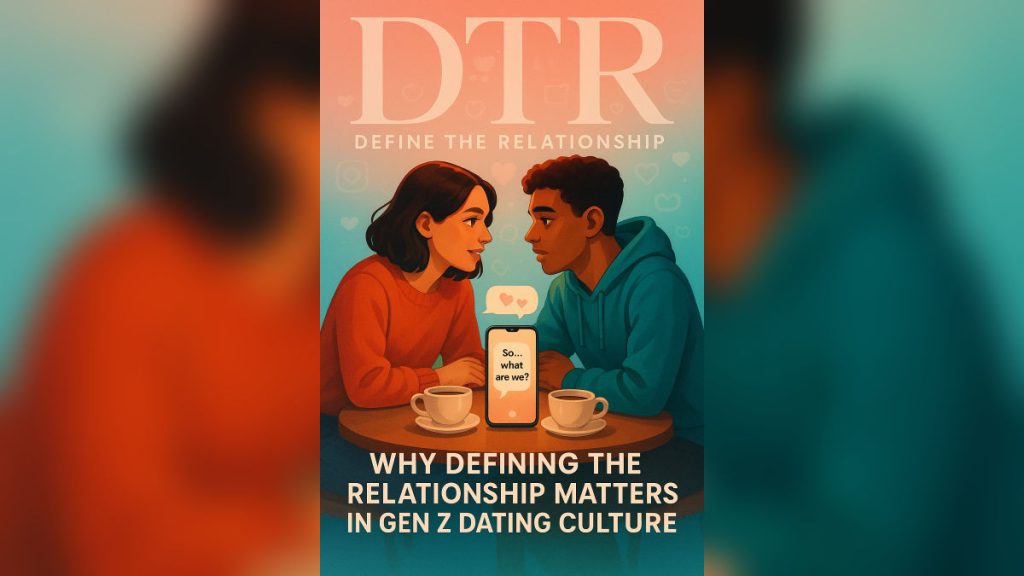
Short answer: DTR stands for Define The Relationship, an honest conversation between two people about what they actually are to each other. For Gen Z, who navigate dating apps, situationships and unspoken vibes, a DTR talk replaces guesswork with clarity, sets boundaries, and protects emotional well-being. It’s not about pushing for commitment, it’s about agreeing on the page you’re both on.
Modern love can feel like a puzzle missing a few key pieces. Swipes, streaks, situationships. Among Gen Z, where digital dating and casual connections are the norm, one concept keeps gaining ground: DTR, or Define The Relationship. It might sound like just another acronym. It isn’t. DTR is the conversation that can make or break a connection. It isn’t only “What are we?”, it’s about clarity, boundaries, and emotional safety in a fast-paced, emotionally ambiguous dating world.
What does DTR really mean?
At its core, DTR is a conversation between two people in a romantic, or potentially romantic, relationship where they actually articulate what they are to each other. It’s the moment unspoken assumptions and “vibes” get put aside, and real words are used to understand the relationship’s boundaries, expectations and direction.
According to The Times of India, DTR aims to end ambiguity and open the door to honest communication. Whether two people are dating casually, exploring something deeper, or honestly unsure where they stand, a DTR talk gets it all out in the open.

Why does Gen Z need DTR more than ever?
The rise of situationships
Situationships, those undefined, label-less “things” that linger in a grey area between friendship and dating, are wildly common among Gen Z. Social media and dating apps have blurred the lines between flirting, talking and being in a relationship. According to The Karan, that ambiguity leaves many feeling emotionally unsettled, unsure whether they’re allowed to be hurt, hopeful, or heartbroken.
In this landscape, DTR isn’t just helpful. It’s essential. It pulls people out of emotional limbo and into a place of certainty, even if that certainty is simply agreeing to keep things casual.
Prioritising emotional well-being
One of the most refreshing things about Gen Z is the emphasis on mental health and emotional honesty. A DTR conversation fits that mindset perfectly. Instead of playing games or burying feelings, it invites honesty and a bit of vulnerability. And anyone who’s been ghosted or breadcrumbed knows, a little clarity goes a long way in cutting anxiety and emotional fatigue.
Preventing misunderstandings and disappointment
Misaligned expectations are one of the leading causes of heartbreak. You might be planning date nights and future holidays, while the other person still considers things “chill.” Without a DTR talk, those assumptions snowball into disappointment.
Clear communication makes sure both parties know what page they’re on, or whether they’re even reading the same book. Whether you’re after exclusivity or wanting to keep things light, stating intentions openly prevents unnecessary emotional pain.

What makes a good DTR conversation?
Like any meaningful talk, timing and tone matter. A well-handled DTR conversation can bring two people closer, or, at the very least, give them the clarity to walk forward, or away.
Choose the right time and setting
A noisy bar or a rushed five-minute call isn’t the place. Pick a calm, private moment where both of you can speak openly and listen without distractions. A DTR isn’t a confrontation. It’s a conversation, and it deserves space.
One Gen Z college student shared how she brought up the topic while taking a walk with her partner. “It was relaxed, not forced,” she said. “We just talked about how we were feeling and where this thing was going. It helped us both feel more secure.”
Be honest and specific
Vague phrases like “I kinda like you” or “I’m just going with the flow” muddy the waters. Be clear about what you want, exclusivity, a more casual arrangement, even taking a break. Ambiguity only creates room for misinterpretation.
Ask open-ended questions
Instead of bombarding your partner with yes-or-no questions, open the floor. Ask things like:
- “How do you feel about where we are right now?”
- “What do you want from this relationship?”
- “Are we on the same page when it comes to exclusivity?”
That encourages dialogue rather than defensiveness.
Listen without judgment
Maybe the most underrated part of a DTR talk is listening. Be ready for the possibility that the other person might not feel the same way you do, and that’s okay. Respecting their truth, even if it stings, is better than living in uncertainty.
DTR isn’t just for serious relationships
Here’s the twist. Defining the relationship doesn’t mean you’re pushing for commitment or heading toward marriage. A DTR conversation can just as easily end with, “Let’s keep it casual, but respectful,” as it can with, “Let’s be exclusive.”
The point isn’t to push someone into something they aren’t ready for. It’s to create mutual understanding and emotional safety. SoulMatcher, a relationship guidance platform, notes that DTR is about building trust through transparency, no matter what the outcome is.

What does the real-life impact of DTR look like?
One of the most striking examples came from a friend of mine, Maya. She was dating someone for a couple of months, and on the surface everything seemed fine. But something felt off, like she wasn’t sure whether he was all in or just along for the ride. She initiated a DTR conversation.
To her surprise, he admitted he wasn’t looking for anything serious. She was hurt initially. Later she told me, “I’m glad I asked. It saved me months of wondering, overthinking, and wasting emotional energy.”
That’s the real power of DTR. Not just defining the relationship with another person, but defining your own boundaries and emotional needs in the process.
A tool for modern love
In a world where labels are often rejected and clarity is undervalued, DTR offers a refreshing return to intentionality. It invites courage, honesty and mutual respect, qualities that never go out of style, no matter how much dating trends evolve.
So whether you’re deep into a situationship or just casually seeing someone, consider carving out time for that defining conversation. It might feel awkward at first. Clarity is always more valuable than comfort in the long run.
Don’t be afraid to ask the big question
Love today is fluid, nuanced and often confusing. But that doesn’t mean we should settle for relationships built on guesswork. Asking “What are we?” isn’t needy or intense, it’s mature.

DTR isn’t about controlling someone else’s feelings. It’s about taking ownership of your own. It’s a moment of pause in a whirlwind of dates and DMs, a chance to breathe, speak and truly connect.
So if you’re feeling unsure, don’t wait for the other person to make the move. Ask the question. Define the relationship. And most importantly, define what you want and deserve.
FAQs about DTR and Gen Z dating
What does DTR stand for in dating?
DTR stands for Define The Relationship. It’s a conversation between two people, romantic or potentially romantic, where they openly articulate what they are to each other, what their boundaries look like, and what they expect going forward. It replaces unspoken assumptions with words.
When is the right time to have a DTR conversation?
There’s no fixed timeline, but a DTR talk usually makes sense once feelings start getting serious, when you’re unsure of where you stand, or when assumptions are starting to pile up. Choose a calm, private setting, not a noisy bar or a rushed call. Walks together, quiet evenings at home, low-pressure moments work best.
How is a DTR different from a relationship?
A DTR is the conversation, the relationship is the outcome. A DTR talk can end in anything, exclusivity, casual dating with respect, an open situation, or even a clean walk-away. The point of DTR isn’t to force commitment, it’s to create mutual understanding so both people know exactly where they stand.
What is a situationship and how is it linked to DTR?
A situationship is an undefined, label-less connection that sits in a grey area between friendship and dating. It’s wildly common in Gen Z dating culture, fuelled by apps and casual digital communication. DTR is the conversation that pulls a situationship out of limbo, either by defining what it is, or by giving both people clarity to move on.
How do you start a DTR talk without making it awkward?
Pick a relaxed setting and lead with open-ended questions like “How do you feel about where we are right now?” or “What do you want from this?” Be honest about your own feelings, listen without judgment, and accept that the answer might not match your hopes. Honesty up front beats months of overthinking.