
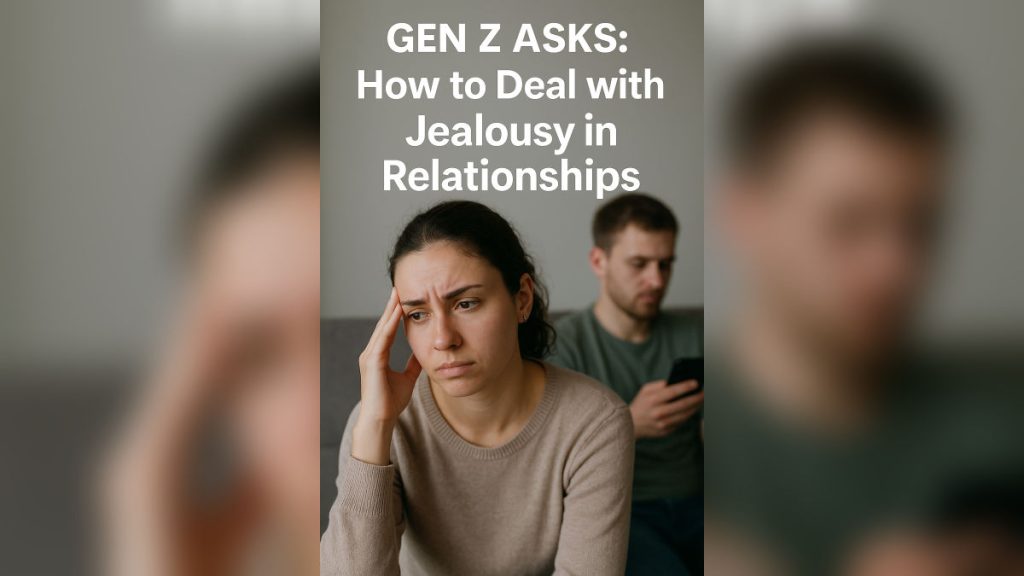
Short answer: Jealousy isn’t a sign you’re broken, it’s a signal asking for attention. The Gen Z playbook is six steps: name the feeling, communicate with “I” statements, build trust through small consistent actions, set mutual boundaries, get outside support when needed, and stay in the present. A 2023 Jed Foundation report found over 70% of Gen Z see therapy as a proactive tool, not a last resort.
Turning insecurity into intimacy
Let’s face it. Jealousy sucks. It sneaks in when your partner double-taps someone’s selfie, or sits in your gut during a night out. Social media glamorises perfect love lives. The truth is messier. Even the most self-aware, emotionally fluent people still feel it.
For Gen Z, a generation deeply invested in authenticity, vulnerability and mental health, the conversation around jealousy isn’t taboo. It’s essential. Rather than ignoring or shaming the feeling, Gen Z is leaning into emotional honesty, choosing to confront jealousy before it corrodes things from the inside.
So how do you deal with it? Here’s the breakdown.
Step one: acknowledge and validate your feelings
Jealousy is normal. You’re not broken.
First things first: you’re human. Jealousy isn’t proof that you’re toxic, insecure, or incapable of love. It’s a signal, one that’s asking for your attention. Tempting to suppress it, brush it off, shame yourself for having it? Sure. That just fuels the fire.
“Jealousy is simply the fear of comparison,” says psychologist Dr. Carla Marie Manly. “It’s rooted in insecurity and the fear of being replaced or not being enough.”
Try journaling when jealousy hits. Write about what triggered it, how it landed, and whether the feelings are coming from old wounds or current realities. Or try mindfulness. Take a few breaths, name the feeling without judgement, and ask yourself, “What am I afraid of losing?”
Step two: communicate with courage
Honesty builds intimacy
Once you understand your jealousy, talk about it. Calmly, clearly, kindly. Gen Z is no stranger to open communication, but even the most expressive of us go quiet when emotions run high.
Start with “I” statements to express how you feel without sounding accusatory. For example:
- “I felt a bit insecure when I saw you laughing with your ex at the party.”
- “I know it might be silly, but I got anxious when I saw that DM from someone I don’t know.”
“I” statements keep the focus on your emotions instead of pinning blame. Equally important? Listening to your partner. Ask how they feel. Stay open to their truth, even if it doesn’t match your fears.
My friend Zoya once told her boyfriend she felt uneasy when he kept liking a particular influencer’s photos. His response wasn’t defensive. He explained he admired her photography. That conversation didn’t end in conflict. It ended in clarity.
Step three: build trust brick by brick
Trust isn’t given; it’s earned
Jealousy often grows from a lack of trust, in your partner, in yourself, or in the relationship as a whole. To tackle it, build emotional security like a house: slowly, intentionally, and with a strong foundation.
Some trust-building habits:
- Being honest about your whereabouts and intentions
- Following through on promises
- Checking in without checking up on each other
- Celebrating each other’s independence, not fearing it
It also means working on self-confidence. When your self-worth is strong, others stop reading like threats. Affirm your value, embrace your quirks, and recognise no one else brings your energy into the relationship.
Step four: set healthy, mutual boundaries
Clarity prevents chaos
Boundaries aren’t walls. They’re windows into how you love and want to be loved. In a relationship, they define what’s okay, what isn’t, and what makes both partners feel safe.
Talk about:
- How much time you want to spend together versus apart
- What kind of interactions with exes or flirty acquaintances are okay
- What digital boundaries matter (likes, follows, comments, DMs)
Setting boundaries should feel like collaboration, not control. And once they’re in place, mutual respect is the whole point. If a boundary feels off or shifts over time, revisit the conversation. Open dialogue is a sign of a growing relationship.
Step five: reach out for support
You don’t have to handle it alone
Sometimes jealousy gets heavy. It might trace back to trauma, past betrayal, or chronic anxiety. If that’s the case, get help.
Talk to trusted friends or mentors. A fresh perspective brings clarity, and comfort. Or consider therapy. Gen Z has done wonders in destigmatising mental health support, and seeing a counsellor doesn’t mean you’ve failed. It means you’re investing in emotional resilience.
A 2023 report from The Jed Foundation showed that over 70% of Gen Z believe therapy is a proactive tool, not a last resort. Whether it’s solo therapy or couples counselling, the insight can be transformative.
Step six: anchor yourself in the present
Mindfulness helps you stay grounded
Jealousy is future-focused. It tells you stories like:
- What if they leave me?
- What if I’m not good enough?
- What if someone else catches their eye?
The antidote? Being present. Meditation, deep breathing, or simply unplugging from social media reduces anxiety. It shifts your focus from what if to what is.
Pair that with self-care. Walks. Art. Dance like nobody’s watching. The more time you invest in yourself, the more you reinforce your self-worth, and the less power jealousy holds.
Conclusion: feel the feeling, then choose the response
Jealousy doesn’t have to be a relationship killer. It can be a teacher, one that points to where you’re still healing, growing, or needing reassurance. The trick isn’t to fear it. Meet it with curiosity and compassion.
For Gen Z, this emotional honesty is already part of the blueprint. You’re not afraid to ask questions, set boundaries, or speak your truth. Now take that same energy and apply it to jealousy, not as a weakness, but as a way to deepen connection.
FAQs about jealousy in Gen Z relationships
Is it normal to feel jealous in a healthy relationship?
Yes. Even self-aware, emotionally intelligent people feel jealousy. It’s a signal, not a sentence. The healthy move is naming it and talking about it, not pretending it isn’t there.
How do I tell my partner I’m jealous without sounding controlling?
Use “I” statements that own your feeling instead of accusing them. Try “I felt insecure when…” rather than “You always…”. That keeps the conversation about your emotions, not their behaviour, which makes it easier for them to actually listen.
When should I see a therapist for jealousy?
If jealousy is tied to past trauma, betrayal or chronic anxiety, or if it keeps overwhelming you despite honest conversations, talk to a therapist. The 2023 Jed Foundation report found over 70% of Gen Z treat therapy as a proactive tool, not a last resort.
Can mindfulness actually reduce jealousy?
Often, yes. Jealousy is future-focused, full of what if stories. Meditation, deep breathing or a social-media break pulls you back to what is, which softens the spiral.
How do you build trust after a jealousy spike?
Slowly, with small consistent actions: keeping promises, being honest about your day, checking in without checking up, and celebrating each other’s independence. Trust isn’t a single conversation. It’s a habit.