Short answer: India’s Gen Z now trusts digital creators over Bollywood stars and cricketers when buying things. A TheYouthTalks survey of 200+ students across New Delhi and NCR found 72% trust creators more than celebrities, 65-68% have bought a product on a creator’s recommendation, and Instagram and YouTube lead the pack. Micro and nano influencers feel more authentic than big names, which is why brands are following the audience.
Not long ago, influence in India meant Bollywood and cricket. Billboards carried film stars, TV ads ran on celebrity faces, and a brand’s credibility came from whoever was holding the product. Aspiration was the whole point.
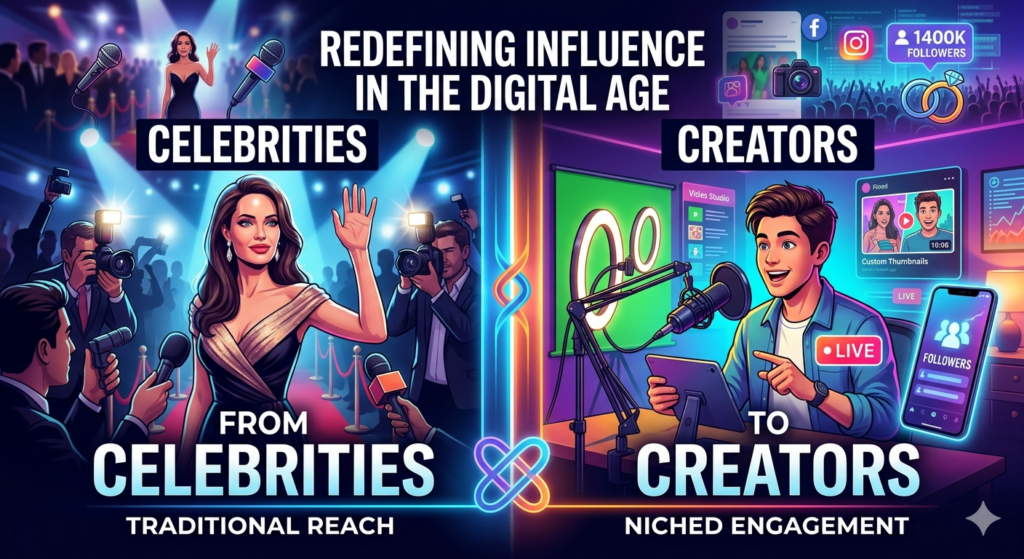
That picture has changed. With a phone, a ring light, and a real voice, creators have taken over as the new centre of influence. For Gen Z, the question is no longer how famous the face is – it’s whether the person feels relatable, authentic, and part of a community.
During a recent campus interaction in Delhi, I asked a group of students whether they would trust a Bollywood actor or a YouTube tech reviewer before buying a smartphone. Almost all of them picked the reviewer. One student put it bluntly: “Celebrities are paid to promote, but creators actually use the products.” That single line captures how Gen Z thinks about trust now.
The rise of the creator economy is both a cultural and an economic shift. People are building communities, shaping opinions, and quietly steering buying decisions. This piece looks at how that shift is playing out for Gen Z in India.
How did we listen to Gen Z for this story?
To keep this grounded in real behaviour rather than secondary data, TheYouthTalks ran a primary survey of over 200 Gen Z students across New Delhi and the National Capital Region (NCR). Respondents came from a mix of colleges, courses, and economic backgrounds, which gave us a fair read on youth preferences in one of India’s busiest urban hubs.
What the survey looked at
The goal was to map trust in creators versus celebrities, and to figure out which platforms and content categories matter most to Gen Z. The areas covered were:
- Preferred social media platforms for following creators.
- Purchasing decisions shaped by creator recommendations.
- Categories of creators with the strongest pull – tech, fashion, finance, gaming, education.
- Perceptions of authenticity and relatability.
- Preferences for nano, micro, or celebrity influencers.
What the data showed
The numbers point to a clear shift in how young Indians think about influence:
- 72% of respondents said they trust digital creators more than traditional celebrities when making a purchase.
- 65-68% reported they had bought a product or service on a creator’s recommendation.
- Instagram and YouTube were the most influential platforms for creator engagement.
- Micro and nano creators were seen as more authentic and relatable than celebrity influencers.
- Content on technology, fashion, gaming, and personal finance had the strongest impact on students.
These findings give us a localised, research-backed view of how the creator economy is reshaping influence among Gen Z in Delhi-NCR.
What is the creator economy, exactly?
The creator economy is a digital ecosystem where individuals make, distribute, and earn from content on platforms like Instagram, YouTube, Snapchat, and a growing list of short-form video apps. Unlike celebrities who depend on legacy media, creators grow their audience directly through storytelling, expertise, and steady engagement.
It includes:
- Social media influencers
- YouTubers and streamers
- Podcasters
- Bloggers and educators
- Gamers and live streamers
What sets creators apart is their direct relationship with their audience. That builds a kind of trust and community traditional media has never been able to copy.
Why does Gen Z trust creators more than celebrities?
1. Relatability and authenticity
Gen Z puts authenticity above almost everything. Creators share unfiltered slices of their day, including the messy parts, which makes them easier to relate to than a celebrity standing behind a polished campaign.
A survey participant from Delhi said it best:
“Creators feel like friends. Celebrities feel like advertisements.”
That emotional pull turns into trust, and trust turns into loyalty.
2. Transparency and honest reviews
Creators give detailed reviews, tutorials, and side-by-side comparisons. Many of them flag paid partnerships openly, which adds to their credibility. Celebrity endorsements, on the other hand, often come across as scripted.
3. Accessibility and interaction
Creators talk back. They reply in comments, go live, and respond to DMs. That two-way conversation is something celebrities rarely offer, and it’s a big reason followers feel they belong to a community.
4. Niche expertise
Most creators specialise – tech, finance, fashion, education, gaming. That focus lets them build authority within a clear lane, which makes their recommendations land harder.
Why are micro and nano influencers winning?
Who are they?
- Nano influencers: Fewer than 10,000 followers
- Micro influencers: Between 10,000 and 100,000 followers
Smaller audience, but often higher engagement rates and tighter bonds with followers.
Why they matter
- Authenticity: Their content reads as genuine, not as a brand brief.
- Community engagement: Followers see them as peers, not distant figures.
- Cost-effectiveness for brands: Targeted reach with better ROI.
- Localised influence: Many create in regional languages, expanding reach across India.
The survey showed over 60% of respondents trust micro and nano creators more than celebrity influencers – a clear sign of where the weight is shifting.
Which platforms power the creator economy in India?
Instagram: the lifestyle hub
Instagram is where lifestyle content lives. Reels, Stories, and Live sessions let creators stay in front of their audience without breaks. Fashion, travel, food, and fitness creators dominate here.
YouTube: the authority platform
YouTube is still the home for long-form, in-depth content. Tech reviewers, finance educators, and gaming streamers have built large communities through detailed, informative videos.
Snapchat: intimate and personal
Snapchat works best for close-knit communication and behind-the-scenes moments. That intimacy strengthens emotional bonds with followers.
Emerging platforms
Short-form video apps and regional content ecosystems are pulling new voices into the spotlight, especially from smaller towns and non-English audiences.
How is the creator economy reshaping commerce?
Influencing purchasing decisions
The creator economy has changed how people shop. A trusted creator’s recommendation often becomes the final nudge before checkout. The survey found nearly two-thirds of respondents had made at least one purchase based on a creator’s endorsement.
How creators earn
Creators today work like small businesses. Their income usually comes from:
- Brand collaborations
- Affiliate marketing
- Merchandise sales
- Paid subscriptions
- Online courses and workshops
How brands are responding
Brands are moving budgets from traditional advertising to influencer collaborations. Authentic storytelling and targeted engagement tend to convert better than conventional campaigns.
Which creator categories shape Gen Z behaviour?
1. Technology creators
Drive gadget purchases through detailed reviews and comparisons that help students decide.
2. Finance educators
Push financial literacy, investment awareness, and basic money management – increasingly relevant for young Indians.
3. Fashion and lifestyle influencers
Set style preferences and consumer trends, often dictating campus fashion.
4. Gaming streamers
Build active communities and feed the rapid growth of India’s esports ecosystem.
5. Educational creators
Open up access to learning through tutorials, exam prep content, and career guidance.
Together, these categories show how widely the creator economy reaches into Gen Z’s daily life.
What are the ethical challenges?
1. Transparency in paid promotions
Many creators disclose sponsored content, but it’s inconsistent. Clearer rules and ethical practices are needed to protect trust.
2. Mental health pressures
Constant content demands can lead to burnout, anxiety, and stress for creators themselves.
3. Algorithm dependency
Creators often live and die by platform algorithms, which makes both visibility and income unpredictable.
4. Authenticity vs commercialisation
As creators scale, holding on to authenticity while signing brand deals gets harder.
Working through these issues matters if the creator ecosystem is going to last.
What’s next for influence in India?
India’s creator economy is on track for fast growth. A few trends to watch:
- Regional language creators: Reaching deeper into linguistic audiences.
- Creator-led brands: Influencers launching their own product lines.
- Virtual influencers: AI-generated personalities entering the mainstream.
- Community-driven commerce: Social media and e-commerce blending together.
- Professionalisation of content creation: More structured talent management and monetisation.
As these play out, the line between creators, entrepreneurs, and community leaders will keep blurring.
Influence in the age of authenticity
The rise of the creator economy is more than a marketing shift. It’s a real change in how influence is defined and held. For India’s Gen Z, trust no longer flows from fame – it flows from authenticity, relatability, and meaningful engagement.
From tech reviews shaping which phone you buy to finance educators changing how you invest, creators are now part of everyday life for young Indians. They aren’t just entertainers. They’re educators, community builders, and people who move culture forward.
One last thought
One thing is clear in this digital era: followers have become the new currency of influence. Fame has been democratised. Anyone with a voice, a story, and some patience can shape the cultural narrative.
So next time you scroll, pause and ask: which creator has shaped your choices or shifted how you think? Engage with that work, back authentic voices, and join the conversation.
In today’s India, influence isn’t reserved for the famous. It belongs to the relatable.
FAQs about the creator economy and Gen Z in India
Why does Gen Z in India trust creators more than Bollywood celebrities?
Because creators feel relatable and transparent. They share daily life, review products they actually use, and reply to followers directly. Celebrity endorsements come across as paid and scripted. In our Delhi-NCR survey, 72% of Gen Z respondents said they trust creators more than celebrities for buying decisions.
What percentage of Gen Z buys products based on creator recommendations?
Between 65% and 68% of the 200+ Gen Z students surveyed across New Delhi and NCR said they had bought a product or service after a creator recommended it. Nearly two-thirds had made at least one purchase based on a creator’s endorsement.
Which platforms matter most for the creator economy in India?
Instagram and YouTube lead. Instagram drives lifestyle, fashion, food, and fitness content through Reels, Stories, and Lives. YouTube owns long-form content like tech reviews, finance education, and gaming. Snapchat and short-form video apps are also growing, especially for regional creators.
What is the difference between nano and micro influencers?
Nano influencers have fewer than 10,000 followers. Micro influencers have between 10,000 and 100,000. Both groups usually see higher engagement rates than celebrity influencers and feel more authentic to Gen Z, which is why over 60% of respondents trust them more than big-name influencers.
Which creator categories influence Indian Gen Z the most?
Technology, fashion, gaming, and personal finance had the strongest impact in our survey. Tech reviewers shape gadget buys, finance educators drive investment habits, fashion creators set campus trends, and gaming streamers fuel India’s esports growth. Educational creators are also reshaping how students learn.