Short answer: Gen Alpha needs on-screen representation because seeing characters who share their ethnicity, gender, ability or family structure supports identity, self-esteem and learning. Sources like Little Ruth, LinkedIn, Voy Media and ScienceDirect show representation boosts retention, breaks stereotypes, and helps kids feel they belong, especially in the most diverse generation ever raised by intentional millennial parents.
Why does representation in media matter more than ever in 2025?
In 2025, cartoons, books, and streaming shows are more than entertainment for Gen Alpha. They’re mirrors. This generation, born into a world of diversity and digital access, doesn’t just enjoy seeing characters who look like them. They expect it. For them, representation isn’t a nice-to-have. It touches identity, confidence, learning, and belonging.
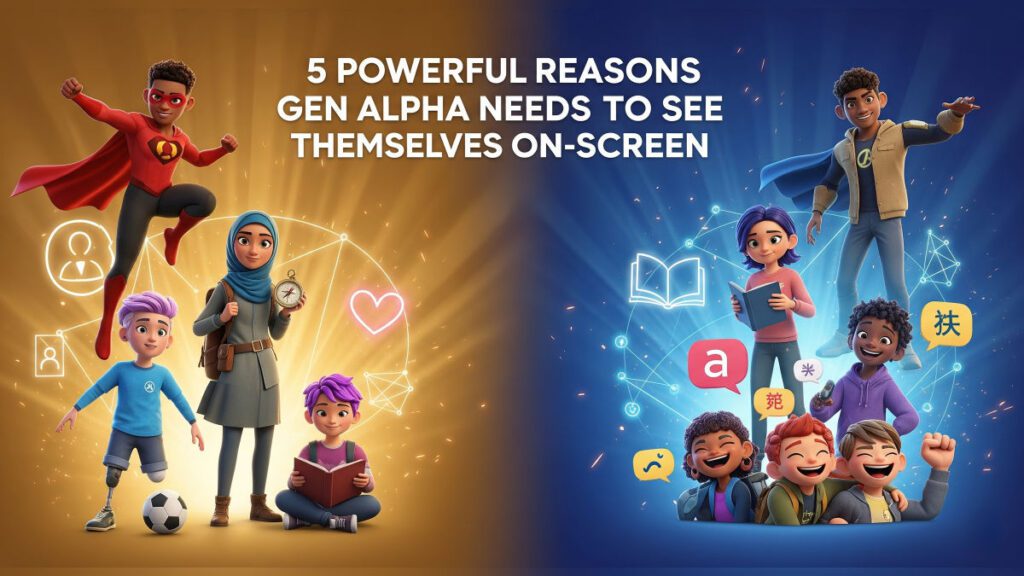
Whether it’s a brown-skinned superhero, a hijab-wearing adventurer, or a non-binary class president in a school drama, the characters that resonate with Gen Alpha reflect real-world diversity in meaningful, authentic ways.
Let’s unpack the emotional, psychological, and social reasons why Gen Alpha representation in media is essential, and why content creators should take it seriously.
How does identity and self-esteem start with seeing yourself?
For children, media is a tool for making sense of who they are and how they fit into the world.
According to Little Ruth, when kids see characters who share their ethnicity, gender, ability, or family structure, it supports a healthy self-concept. It tells them, “You belong here.” That validation matters. A study published on LinkedIn highlighted that diverse representation directly boosts children’s self-esteem by signalling that their stories, cultures, and identities are valued.
I remember watching my nephew, who has vitiligo, light up when he saw a cartoon character with the same skin condition. He wasn’t watching a show. He was watching himself be brave, funny, and strong.
How does relatability deepen learning and engagement?
Children don’t only want to see themselves. They want to connect. When characters share their experiences, speak their languages, or wear familiar clothes, kids are more likely to stay engaged and absorb lessons being taught.
Research published on ScienceDirect.com supports this: children who identify with characters retain more information, show greater emotional investment, and are more likely to imitate positive behaviour. Would you learn more from a lecture or a conversation that feels personal?
Representation also fosters empathy. As Little Ruth points out, seeing different perspectives helps kids step into someone else’s shoes, and that makes them better humans in the long run.
How does representation normalise diversity and break bias?
Gen Alpha is growing up in the most racially and culturally diverse generation the world has seen. Their reality includes multiracial families, gender-fluid friends, and multilingual classrooms. They want their media to reflect that, not an outdated version.
Voy Media highlights that representation helps normalise differences and dismantle stereotypes. When children see a girl coding, a boy expressing emotions, or a disabled hero saving the day, it challenges old narratives and builds new inclusive ones. It shapes what they believe is possible, for others and themselves.
How does social media extend representation beyond the screen?
This generation isn’t only watching content. They’re creating it.
Platforms like TikTok, YouTube Shorts, and Roblox have made it easy for Gen Alpha to become digital storytellers. As Voy Media notes, kids today follow influencers who look like them, and also become influencers themselves. This creates a feedback loop of representation where children aren’t asking for visibility; they’re taking control of their narratives.
My niece, age 10, proudly shares dance videos in her traditional Assamese attire. Her friends cheer her on not because it’s different, but because it’s her. For Gen Alpha, identity is something to be celebrated, not hidden.
How are millennial parents raising Gen Alpha differently?
Gen Alpha isn’t forming their media habits in isolation. Their parents, largely millennials, grew up questioning systems and pushing for inclusivity. These are the parents curating playlists, picking picture books, and choosing cartoons with intention.
LinkedIn and Voy Media both report that today’s parents actively seek content aligned with equity, justice, and empathy. They’re talking to their kids about race, gender, and identity far earlier than previous generations. As a result, Gen Alpha isn’t a passive consumer group. They’re conscious citizens in the making.
Why is representation more than inclusion?
Gen Alpha is watching the world through many screens, and what they see shapes who they become. When they see characters who look, sound, and feel like them, they grow up knowing they matter.
Representation in media is more than a trend. It’s a tool for belonging, learning, and empowerment. It’s how we tell every child, “You are seen. You are heard. You are enough.”
As creators, educators, and parents, the call is clear: make space for every story. Because every child deserves to be the hero of theirs.
FAQs about Gen Alpha representation
Why does representation matter for Gen Alpha kids?
Representation matters because Gen Alpha kids use media to make sense of identity and belonging. According to Little Ruth and LinkedIn, seeing characters who share their ethnicity, gender, ability or family structure boosts self-esteem and tells them their stories are valued.
Does representation help children learn better?
Yes. Research on ScienceDirect.com found children who identify with characters retain more information, show greater emotional investment, and are more likely to imitate positive behaviour.
How does Gen Alpha extend representation beyond TV?
Gen Alpha creates content themselves on TikTok, YouTube Shorts and Roblox. Voy Media notes they follow influencers who look like them and become influencers themselves, creating a feedback loop of representation.
How do millennial parents influence Gen Alpha media?
Millennial parents curate playlists, pick picture books and choose cartoons intentionally. LinkedIn and Voy Media report they actively seek content aligned with equity, justice and empathy, and discuss race, gender and identity with kids earlier than previous generations.
What kinds of diverse characters do Gen Alpha kids want to see?
Gen Alpha resonates with characters like brown-skinned superheroes, hijab-wearing adventurers, non-binary class presidents, girls who code, emotionally expressive boys, and disabled heroes. Authentic real-world diversity beats token inclusion.