

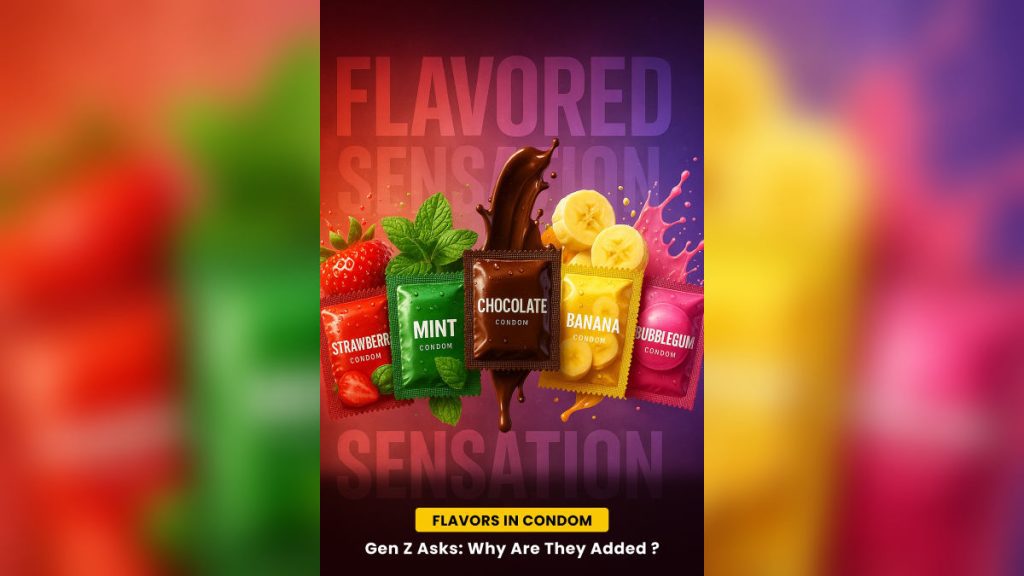
Short answer: Flavours are added to condoms mainly to mask the rubbery taste of latex and make oral sex safer and more enjoyable. They aren’t a marketing gimmick. Per a 2022 Planned Parenthood survey, only 17% of sexually active young adults consistently use protection during oral sex, and flavoured options nudge that number up. They’re for oral use only, not vaginal or anal.
Sexual health and wellness isn’t the hush-hush topic it once was. With Gen Z leading the charge, curiosity around intimate products, condoms included, keeps climbing. And among the eyebrow-raising questions young people ask today, one keeps popping up: “Why are flavours added to condoms?”
It’s a fair question. Why would something built for protection need to taste like chocolate, strawberry, even paan? Pure marketing? Or is there more under the wrapper? Let’s peel back the layers.
What are flavoured condoms, really?
Flavoured condoms are structurally just like regular condoms. Usually latex, designed to act as a barrier during sex. The twist? They come coated with food-safe flavouring agents that enhance the taste, and sometimes the scent.
But these aren’t about turning your bedroom into a candy shop. There’s a functional reason behind the fun.

Why mask the latex taste?
Let’s be honest, latex has a distinctive rubbery taste and smell that can be a real turn-off during oral sex.
Imagine you’re in the heat of the moment, everything’s flowing, and suddenly the taste of balloon rubber hits. Not exactly the mood you were going for, right? Flavoured condoms cover that taste, making oral significantly more enjoyable. For many people, swapping unpleasant latex for something closer to a fruity lollipop changes whether they reach for protection at all. This sensory upgrade encourages partners to choose safety without sacrificing pleasure.
Do flavoured condoms encourage safer oral sex?
According to the CDC, oral sex can transmit several sexually transmitted infections (STIs), including herpes, gonorrhea, syphilis and HIV. Plenty of people still believe protection isn’t necessary for oral sex. That misconception comes at a serious cost.
Flavoured condoms play a real role here. By making the experience appealing, they nudge people toward using condoms even during oral encounters. Think of it this way: if it tastes good, you’re more likely to use it, especially when pleasure and protection arrive in the same wrapper.
A 2022 survey by Planned Parenthood found that only 17% of sexually active young adults consistently used protection during oral sex. That number could climb if safer-sex tools were more appealing. That’s where flavoured condoms come in.

What flavours actually exist?
From classics like chocolate and mint to more out-there options like bubblegum, cola, even Indian-inspired paan and mango, the flavour list is surprisingly diverse.
This variety isn’t only about taste. It’s about exploration.
Many Gen Z couples today see sex as an experience, not a performance. Flavoured condoms add a hit of playfulness, helping break the ice or rekindle chemistry. Trying out a new flavour can be a fun way to bond, spark laughter, or simply discover what you both like. It turns the act from a routine task into something novel.
I remember a college friend joking about a “condom tasting weekend” with their partner. They tried four flavours over a few days, and not only did they find a favourite (mint, surprisingly), it opened up a much-needed conversation about STI protection that they’d previously avoided.
Are flavoured condoms safe for vaginal sex?
Here’s where things get serious. Flavoured condoms are designed for oral sex only, not vaginal or anal use, unless the packaging explicitly says otherwise.
Why? Many flavoured condoms contain sugar or sweeteners in the coating. Great for taste. Disastrous for vaginal pH balance, where those sugars can trigger yeast infections or irritation.
The brand Nutshell, in a popular Facebook post, flagged this very risk, reminding users to always read the label and use condoms as intended. If you’re planning to transition from oral to penetrative sex, the safest move is to switch to a regular condom.
Are flavoured condoms just a gimmick?
Some argue flavoured condoms are all flash, no function. That’s far from the truth.
The introduction of flavours has actually contributed to normalising condom usage, especially among younger people who might otherwise skip protection out of discomfort or embarrassment. Making condoms taste pleasant is a small but powerful way to remove friction (pun intended) in practising safer sex.
And in a world where STIs among Gen Z are steadily rising, with syphilis cases alone doubling in the last decade (CDC, 2023), any innovation that promotes protection deserves credit.
Why is chocolate the all-time favourite?
Among all the flavours, chocolate stands out. There’s just something about its rich, sweet warmth that lands. No surprise, then, that chocolate-flavoured condoms are often the top sellers in both Indian and international markets.

It’s also worth noting that for many couples, flavour choice can be symbolic. Chocolate means love. Strawberry might say playfulness. Mint could imply freshness. Subtle cues, sure. But they shape the emotional tone of an encounter.
Pleasure and protection can coexist
Next time someone smirks at the idea of a flavoured condom, you might want to remind them: it’s not just about fun, it’s about function.
By making safer sex more enjoyable, flavoured condoms bridge the gap between responsibility and desire. They make conversations around protection less awkward and give partners a way to explore intimacy without compromising safety.
So whether you’re new to the idea or a seasoned explorer of condom flavours, the message is clear: protecting yourself doesn’t have to be boring. It might even taste sweet.
FAQs about flavoured condoms
Why are flavours added to condoms in the first place?
Mainly to mask the rubbery taste and smell of latex during oral sex, making the experience more pleasant. The secondary goal is to encourage protection, since something that tastes good is more likely to actually be used. Per Planned Parenthood, only 17% of sexually active young adults consistently use protection during oral sex.
Can I use flavoured condoms for vaginal or anal sex?
No, not unless the packaging specifically says they’re safe for it. Many flavoured condoms contain sugar or sweeteners that can disrupt vaginal pH balance, increasing the risk of yeast infections and irritation. Switch to a regular condom for penetrative sex.
Do flavoured condoms protect against STIs?
Yes, when used correctly during oral sex, flavoured condoms help prevent transmission of STIs the CDC lists for oral exposure, including herpes, gonorrhea, syphilis and HIV. The flavour doesn’t reduce the barrier function, the latex still does its job.
What flavours of condoms are available?
The range is wide. Classics like chocolate, strawberry, mint and vanilla, plus options like bubblegum, cola, banana, and Indian-inspired flavours like paan and mango. Chocolate is often the top seller in India and globally.
Are flavoured condoms made differently from regular ones?
Structurally they’re nearly identical, usually latex, same barrier function. The difference is a food-safe flavouring agent applied to the coating. The latex thickness, shape and effectiveness against pregnancy and STIs match standard condoms.