
Short answer: Gen Z protests, from Nepal’s 2025 #NepoKids uprising to Kenya’s 2024 finance-bill revolt, Iran’s Women, Life, Freedom movement and Fridays for Future, are rewriting activism through social media, intersectional framing and global solidarity. They’ve forced finance bills to be withdrawn, ministers to resign, and ban orders to be reversed. The playbook is digital-first, sensory, and extremely hard to ignore.
Young people have always been the heartbeat of social and political change. Civil rights marches, anti-war demonstrations, every generation gets its own defining fight. But Gen Z, the first truly digital-native generation, isn’t repeating the playbook. They’re rewriting it. Armed with smartphones and viral hashtags and an unrelenting drive for justice, they’ve turned local frustrations into global movements at a speed nobody has quite seen before.
And it’s working. Over the past decade, Gen Z protests haven’t just rattled governments and institutions, they’ve revealed something deeper, this generation refuses to accept the world as it is. They’re demanding the world as it should be.
Why do Gen Z protests feel different from past movements?
It’s tempting to read these protests as repeats. Student-led uprisings aren’t new, after all. What sets Gen Z apart is the speed and reach, the ability to mobilise across borders in hours using nothing more than a phone. Instagram stories become rallying cries. TikTok videos serve as on-the-ground reporting. Hashtags evolve into political slogans before the news cycle even catches up.
And the protests are intersectional. Climate justice gets framed alongside racial justice. Economic struggles tie directly to corruption and nepotism. That ability to connect dots, the refusal to keep issues in their own neat boxes, is what’s let Gen Z build coalitions that cross geography and class and sometimes even ideology.
Having grown up in a hyper-connected and unstable world, climate crises, rising authoritarianism, financial inequality piled on top of each other, Gen Z understands one thing clearly. Waiting for gradual change is no longer an option.
Nepal’s youth revolution: from a social media ban to a systemic uprising (2025)
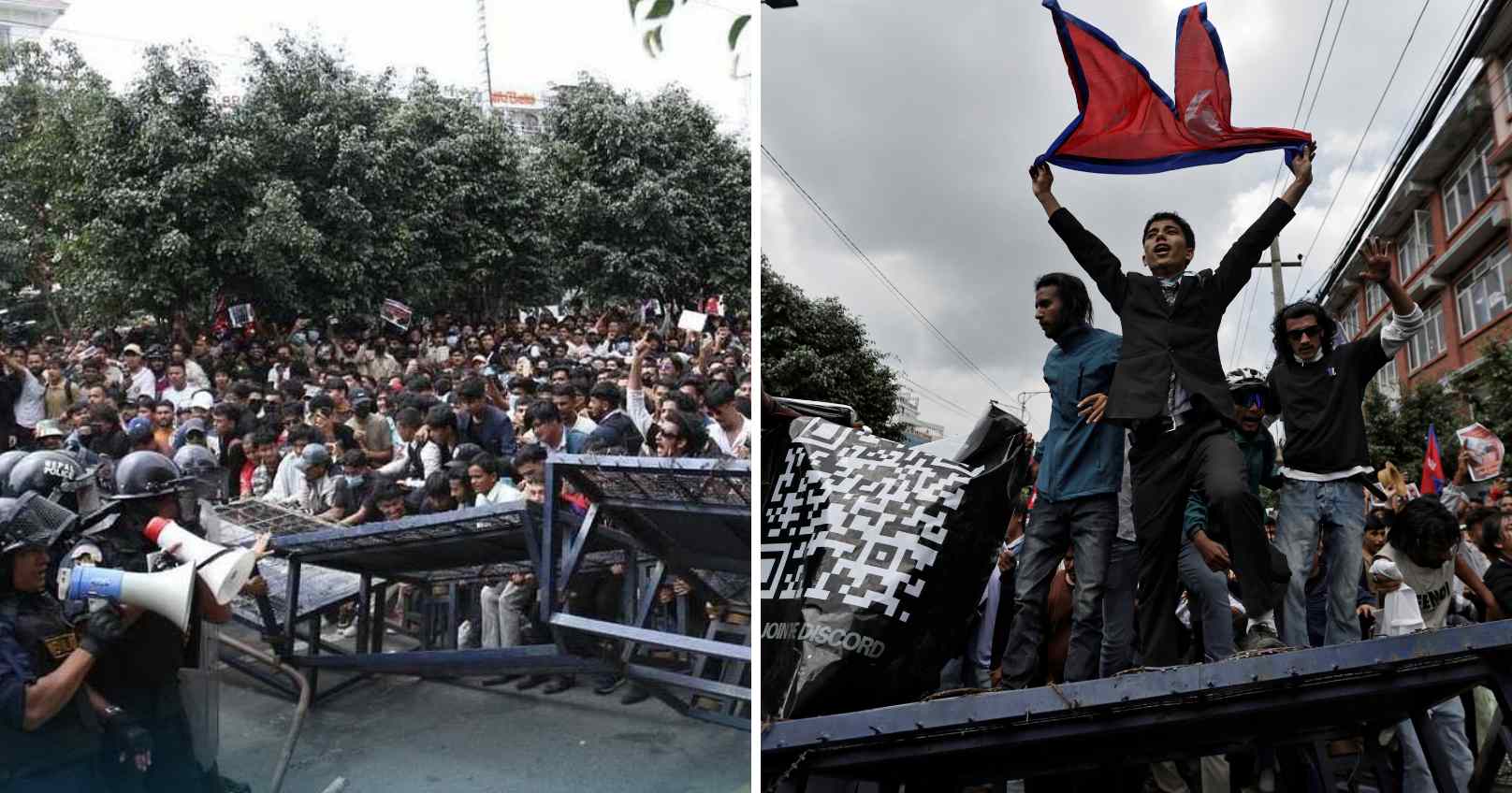
September 2025. Nepal’s streets filled with thousands of young people, many of them students, holding nothing more than banners, smartphones and unshakable anger. On paper the protests started as a reaction to a government ban on 26 social media apps. But beneath the surface lay years of frustration, corruption and nepotism that had hollowed out trust in leadership long before the ban.
The hashtags #NepoKids and #YouthsAgainstCorruption became digital weapons, exposing the lavish lifestyles of political elites against the daily grind of ordinary citizens.
The result? Nineteen lives lost, hundreds injured, and a country forced to reckon with its own future. The government lifted the social media ban. The Home Minister resigned. Calls for Prime Minister K.P. Sharma Oli’s resignation grew louder. Nepal’s protests showed how fast Gen Z can flip digital censorship into a catalyst for a nationwide movement.
Fridays for Future: the global climate awakening (2018-Present)
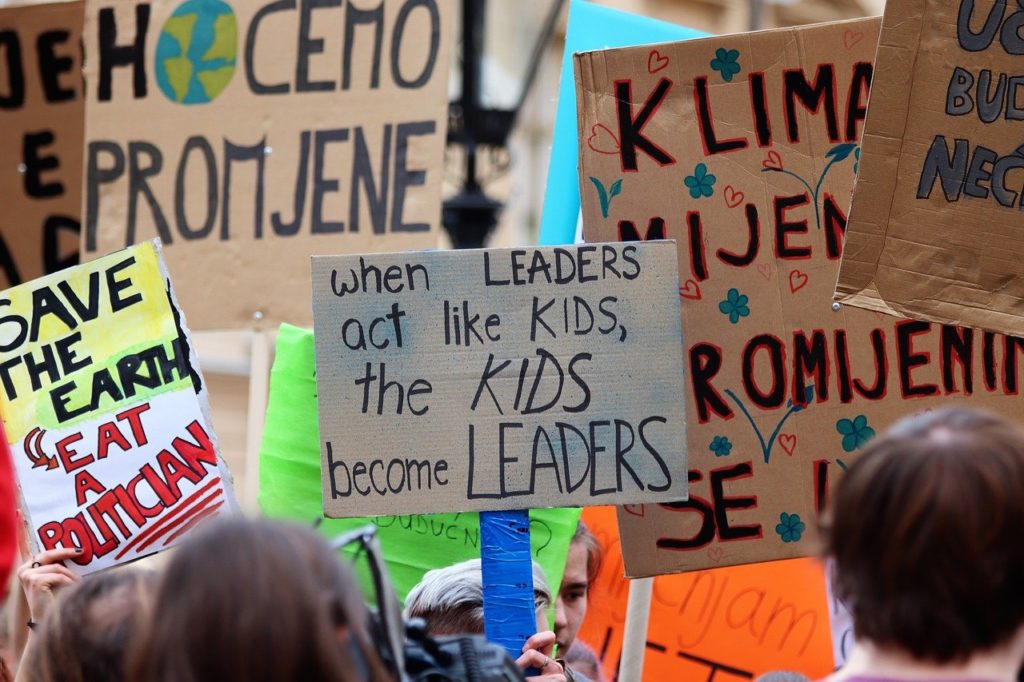
Few images are as iconic as Greta Thunberg sitting outside the Swedish parliament in 2018 with her “School Strike for Climate” sign. What started as one teenager’s solitary act of defiance snowballed, fast, into Fridays for Future, one of the largest youth-led movements in history.
By 2019, millions of students were skipping school to demand climate action. Streets from New York to New Delhi filled with placards reading “There is No Planet B” and “System Change, Not Climate Change.”
The “Greta effect” was undeniable. Politicians were forced to address climate change as an immediate crisis, not a distant concern. Critics dismissed the movement as naive, but public opinion and corporate accountability both shifted in measurable ways. Gen Z’s climate strikes proved schoolchildren could make world leaders squirm.
Black Lives Matter and the digital frontlines (2020)
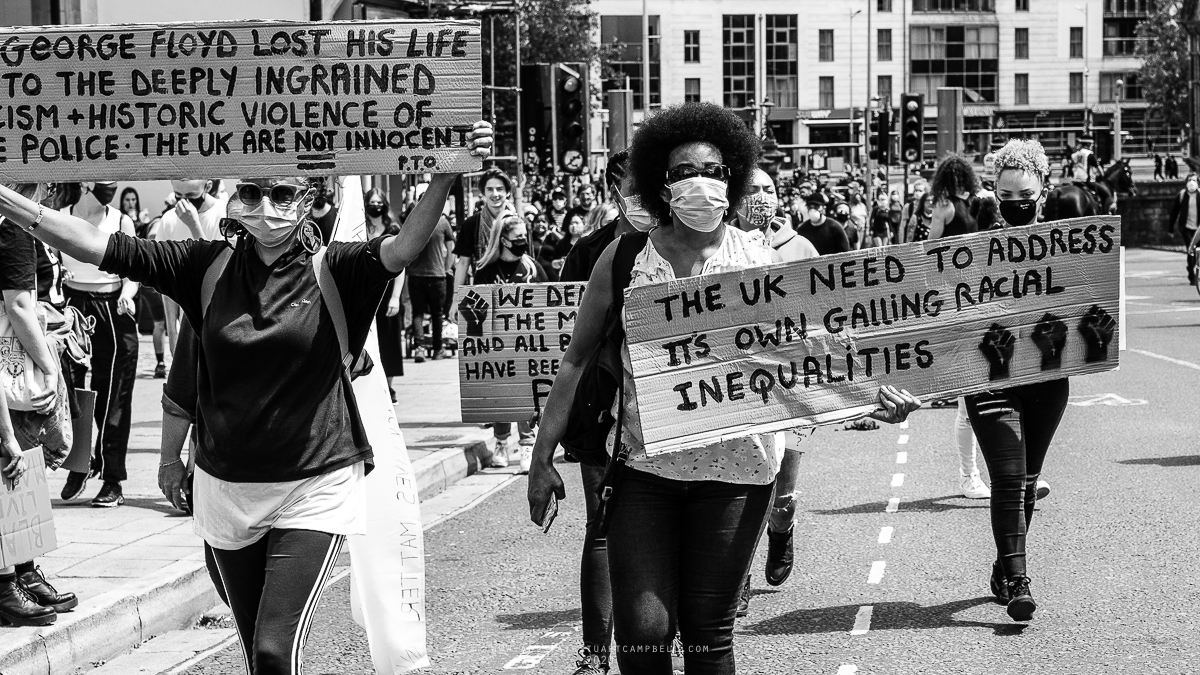
The murder of George Floyd in May 2020 sparked protests that spread far past U.S. borders. Gen Z was central to amplifying the Black Lives Matter movement, leveraging TikTok, Instagram and Twitter to document police violence, organise rallies and educate peers in real time.
What set Gen Z apart was their fluency in online storytelling. Viral videos of protests, infographics on systemic racism, calls to action moving at lightning speed. For many young people, posting a black square on Instagram was just the start, real activism meant donating, protesting and lobbying for reform.
The result wasn’t only heightened global awareness of racial injustice. It was tangible policy debate around police funding, accountability and structural reform, the kind that doesn’t disappear when the news cycle moves on.
Pro-Palestine student encampments: the campus as battleground (2024-Present)
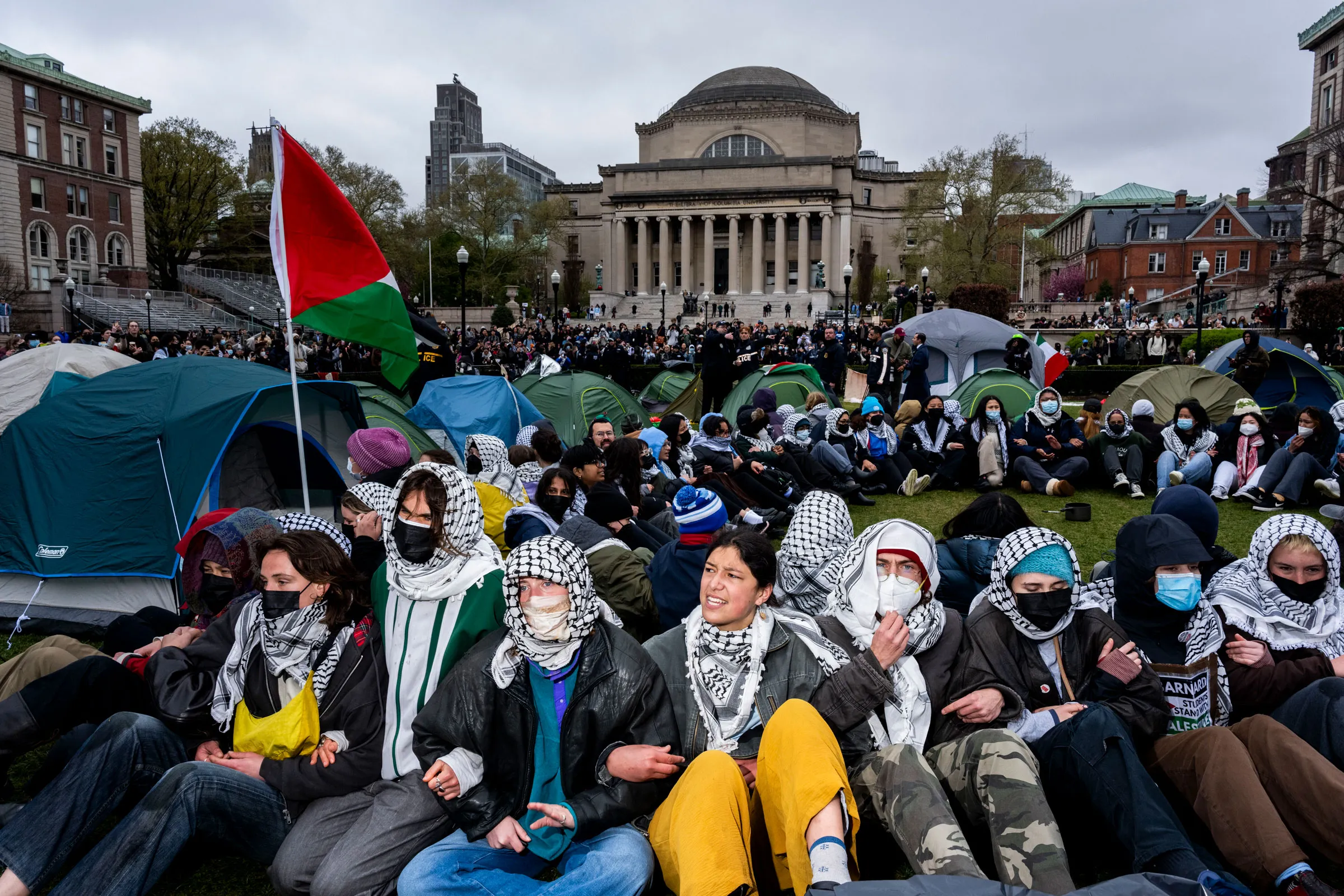
Universities have always been hotbeds of dissent. But in 2024, campuses across the U.S. and beyond became the epicentre of the pro-Palestine student movement. Students pitched tents, staged teach-ins and demanded divestment from companies linked to the Israeli military.
For Gen Z students, the Gaza crisis wasn’t a distant foreign policy issue. It was a moral litmus test for their institutions. The protests drew harsh backlash, arrests, suspensions, accusations of antisemitism. Yet they also forced universities to reckon with where their money flows, and what values they embody when nobody’s watching the endowment.
Whatever your position on the conflict, the protests revealed a sharp generational divide. For many young activists, neutrality in the face of injustice simply wasn’t acceptable anymore.
Kenya’s Gen Z uprising against economic injustice (2024)
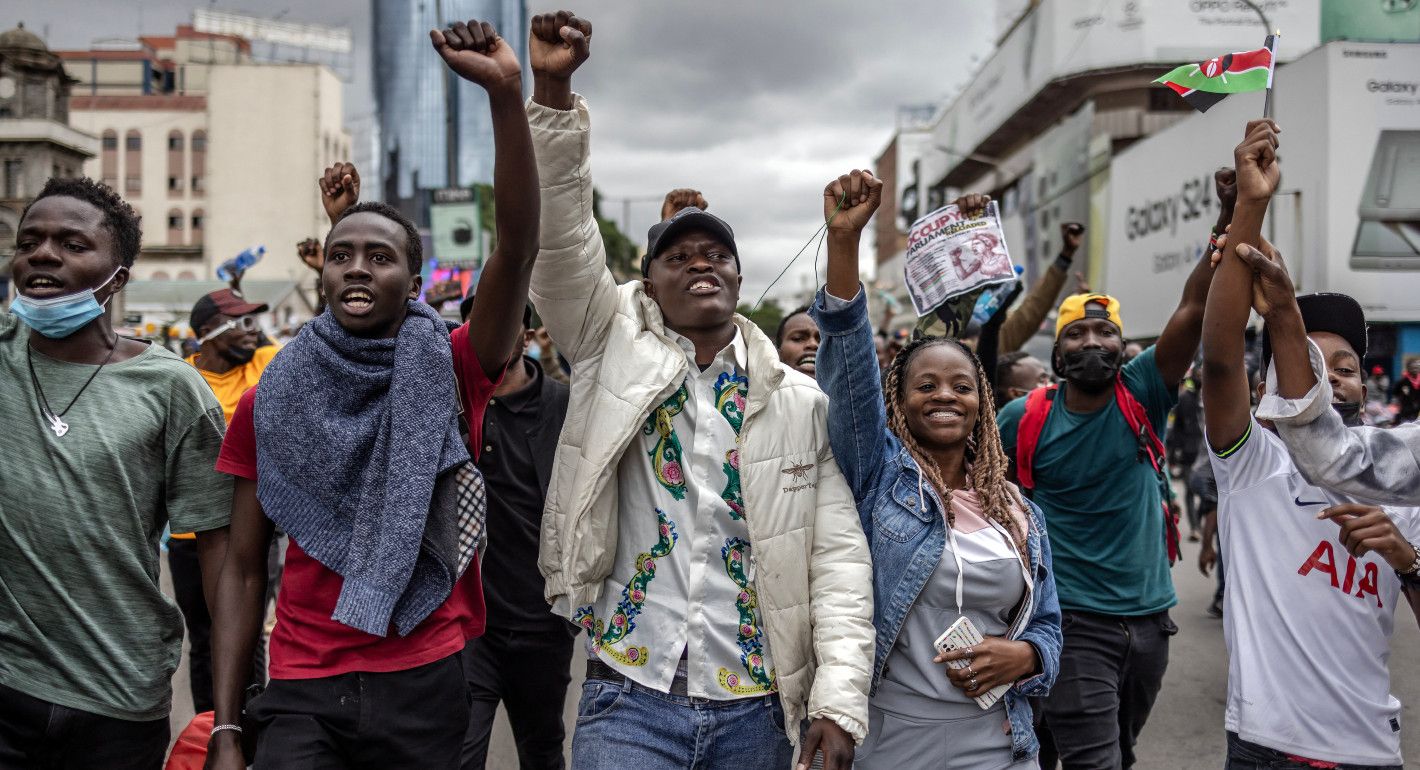
Kenya’s proposed finance bill in 2024 might have looked like just another dry economic policy. Until Gen Z turned it into a rallying cry. Facing rising living costs, rampant corruption and youth unemployment, young Kenyans organised mass protests using social media as the command centre.
The slogan was simple. “We are not just future leaders; we are leaders now.”
Despite a violent crackdown that killed dozens, the movement pushed the president to withdraw the bill. The protests didn’t only defeat a tax law, they ignited a broader youth-led demand for accountability and transparency across Africa’s political landscape.
Hong Kong’s fight for democracy (2019-2020)
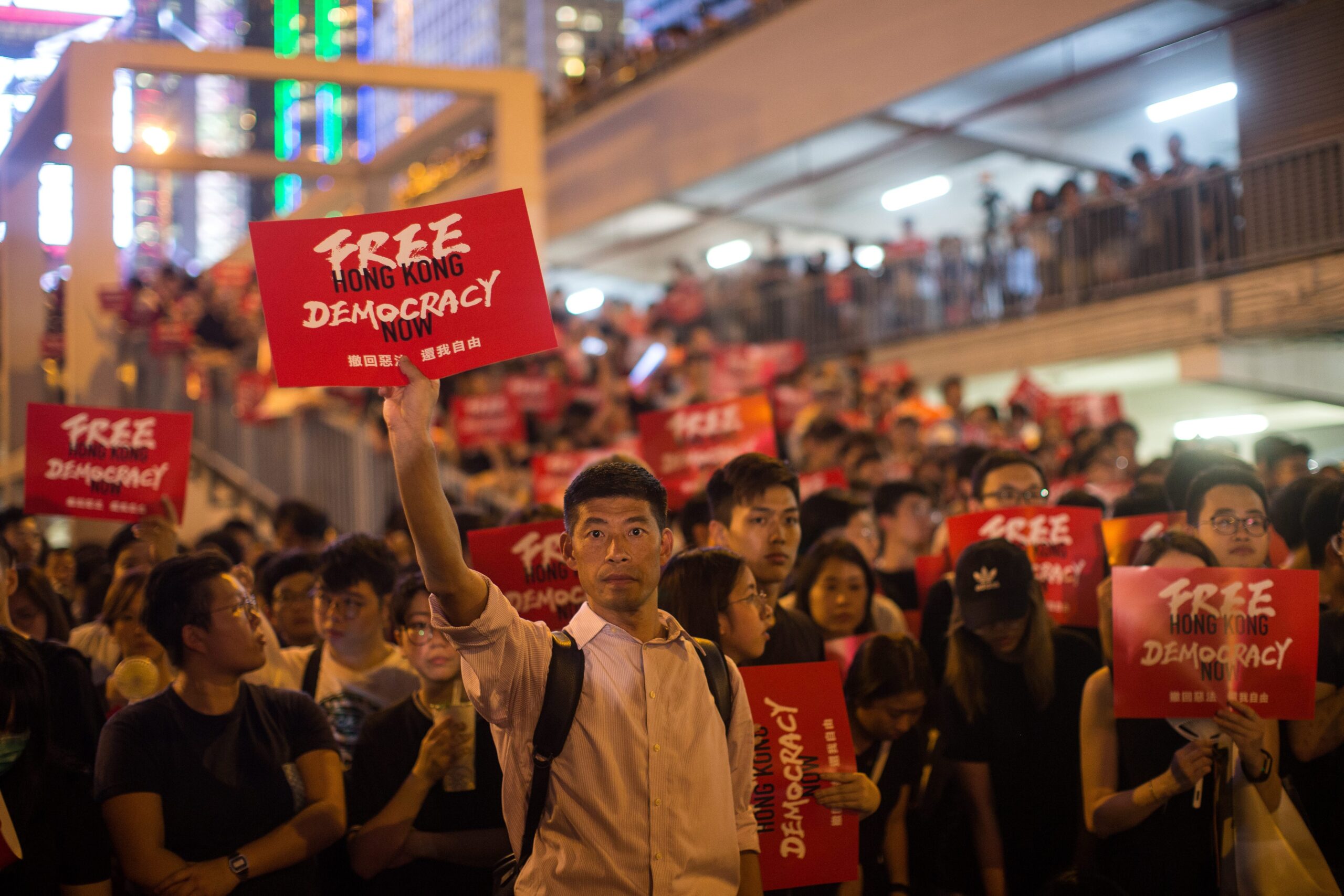
Before COVID-19 shut down most of the world, Hong Kong was in the headlines for its massive youth-led protests. Triggered by an extradition bill that threatened judicial independence, the demonstrations expanded fast into a full-fledged demand for democracy.
Students and young professionals organised flash mobs, human chains, and even built protest apps from scratch. Their ingenuity was remarkable. Umbrellas became shields, lasers distracted surveillance cameras, encrypted messaging coordinated actions across the city in near real time.
Beijing’s national security law eventually crushed the movement. But the courage of Hong Kong’s youth inspired pro-democracy activists worldwide, and the playbook they wrote, decentralised, digital, fluid, didn’t disappear when the protests did.
Iran’s schoolgirls and the fight for women’s rights (2022)
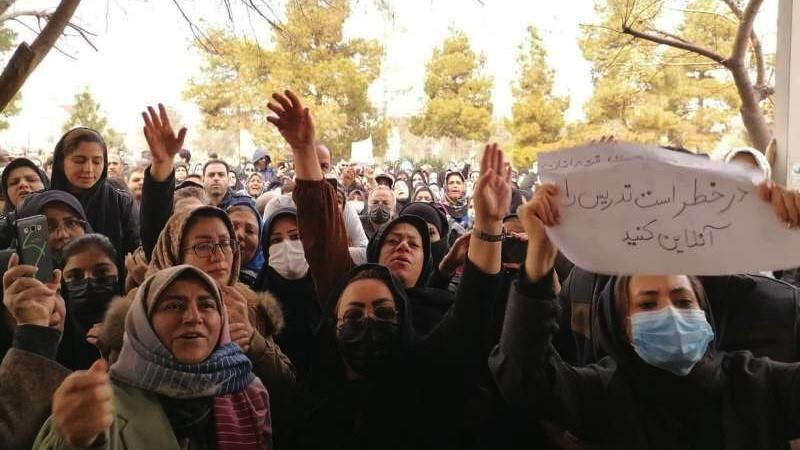
When 22-year-old Mahsa Amini died in the custody of Iran’s morality police in 2022, young Iranians erupted in fury. Schoolgirls tore off their hijabs, chanting “Women, Life, Freedom” in classrooms and streets. Videos of their defiance spread across the globe, shaking the foundations of one of the world’s most repressive regimes.
The crackdown was brutal, mass arrests, killings, sweeping surveillance. The protests didn’t disappear though. They shifted underground, proving that resistance in Iran is now generational. For many young women, simply walking unveiled in public became an act of revolution.
What can we actually learn from Gen Z protest movements?
Looking across these protests, a few patterns surface clearly:
- Digital fluency as power: Social media isn’t just a communication tool, it’s the very architecture of modern protest.
- Intersectional vision: Climate justice links to economic justice, racial justice to gender rights. Gen Z refuses to see issues in isolation.
- Courage in the face of violence: From Nepal to Iran, young people have risked, and lost, their lives for change.
- Global solidarity: Movements in one country inspire others, creating a feedback loop of activism across continents.
A personal reflection
I attended a local Fridays for Future strike in 2019, and I remember the mix of emotions vividly. Standing alongside high schoolers holding handmade signs, I felt both inspired and humbled. These weren’t seasoned politicians or lifelong activists. They were teenagers who’d decided that skipping math class was worth it if it meant protecting the planet.
That protest reminded me courage doesn’t always arrive in grand gestures. Sometimes it’s quieter, in the determination of young people refusing to sit back while their future gets bargained away over their heads.
The generation that refuses silence
Gen Z has shown us protest is no longer confined to public squares. It lives in hashtags, in viral videos, in digital organising that moves faster than any government press office can keep up with. Their movements have toppled finance bills, shaken governments, reshaped public opinion and inspired millions.
The lesson is clear. This generation isn’t content to inherit the world as it stands, they’re actively reshaping it, demanding climate action, racial justice, gender equality and political accountability all at once.
The question is no longer whether Gen Z will change the world. They already are. The real question, the one the rest of us have to sit with, is, will we keep up?
FAQs about Gen Z protests
What sparked Nepal’s 2025 Gen Z protests?
The trigger was a government ban on 26 social media apps in September 2025, but the deeper cause was years of frustration over corruption and nepotism among political elites. The hashtags #NepoKids and #YouthsAgainstCorruption captured the broader anger that turned the ban into a mass uprising.
How did Kenya’s Gen Z protests in 2024 force the government to back down?
Young Kenyans used social media to organise mass protests against a proposed finance bill seen as crushing for ordinary citizens. Despite a violent crackdown that killed dozens, the sustained pressure pushed the president to withdraw the bill, a rare and direct policy reversal driven entirely by youth-led organising.
Is Greta Thunberg still relevant to Fridays for Future today?
Greta Thunberg remains a high-profile figure, but Fridays for Future has long outgrown a single face. Local chapters in dozens of countries now drive their own campaigns, which is part of why the movement has lasted from 2018 into the present, it’s decentralised, not personality-dependent.
How are Gen Z protests organised differently from older movements?
They tend to be decentralised, digital-first and intersectional. Instead of a single charismatic leader, you see hashtags, encrypted messaging groups, livestreams from the ground and rapid global solidarity loops. Hong Kong’s flash mobs and protest apps are a clear example, no central command, but tight coordination.
Do Gen Z protests actually change anything, or are they mostly online noise?
They’ve changed quite a lot. Nepal lifted the social media ban and saw the Home Minister resign. Kenya withdrew its finance bill. Iran’s Women, Life, Freedom movement reshaped daily life for many young women, even under crackdown. Online noise, on its own, doesn’t move policy. Online noise paired with sustained street presence does, and that’s the Gen Z formula.