In an age where virtual connections dominate and digital content dictates our social lives, it is fascinating to witness a quiet but powerful counter-movement led by Gen Z—the generation that grew up online but now yearns to reconnect offline.
This is the same cohort that built trends on TikTok, created communities on Discord, and influenced global culture through screens. Yet today, they are the ones most passionately fueling the revival of in-person, experiential engagement. Their growing preference for authentic, collective, and sensory experiences is reshaping how brands, artists, and organizations think about physical events.
From Digital Saturation to Experiential Craving
Over the last decade, social media promised a world without borders—where concerts could be streamed, meetups could be virtual, and experiences could be replicated through pixels. But the pandemic years exposed the limits of that idea.
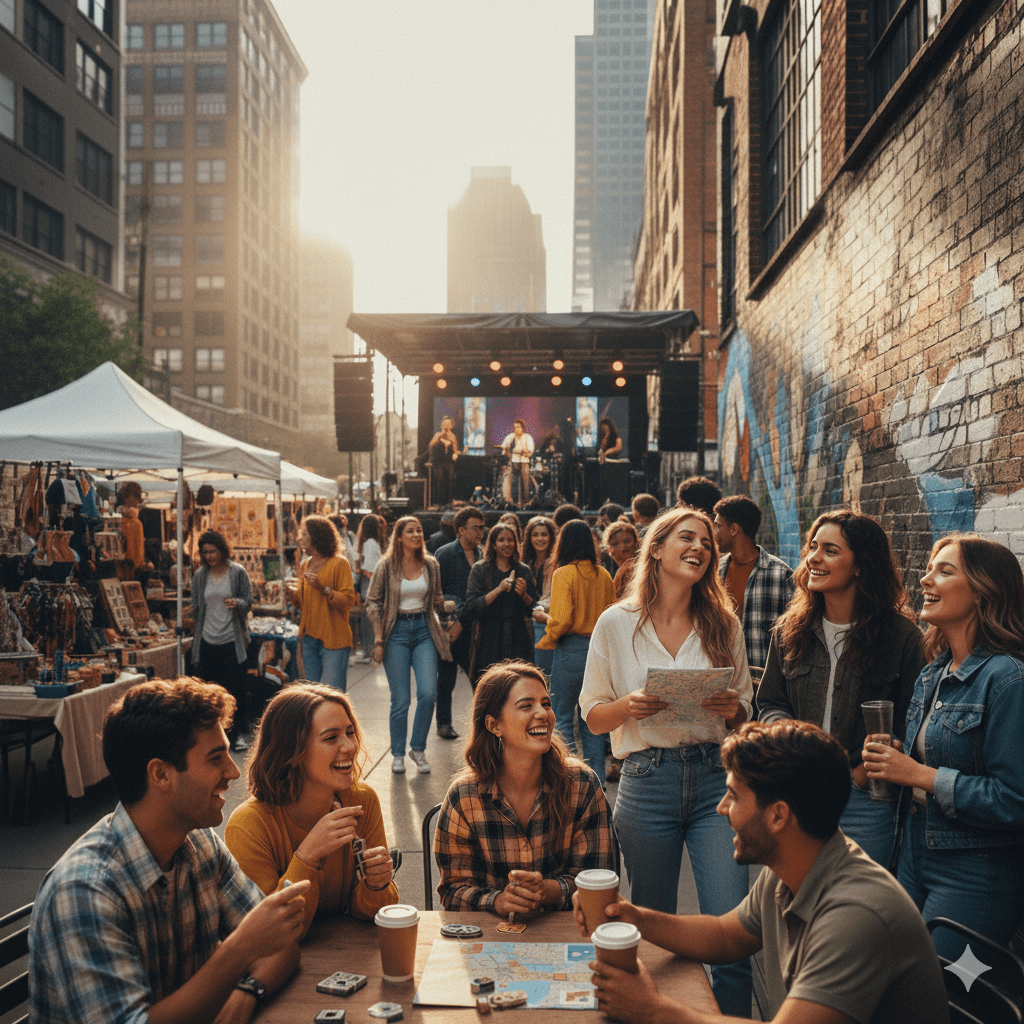
When physical spaces reopened, Gen Z was not satisfied with digital substitutes. They wanted to be there—to feel the bass of live music reverberate through their body, to join thousands of voices in a chant, to experience the unfiltered spontaneity of real life.
In other words, they reminded us that the essence of experience lies in presence.
A 2024 Eventbrite report highlighted that over 70% of Gen Z consumers would rather spend on experiences than possessions—a reversal from previous generations. For them, attending an event is not a leisure activity; it is a statement of identity.
Why Gen Z is Reimagining the Experience Economy
1. Experiences as Identity and Expression
Gen Z is redefining what it means to belong. For them, where they go and what they experience says more about them than what they own. Festivals such as Coachella, Lollapalooza, and India’s Sunburn Festival have evolved into social ecosystems that allow Gen Z to express individuality and values—through fashion, sustainability, inclusivity, and self-expression. These spaces are where identity is performed, not just observed.
2. The Pursuit of Authenticity
Unlike previous generations, Gen Z does not engage with experiences that feel staged or transactional. They gravitate toward authentic, participatory environments—places that invite them to co-create rather than consume. Global icons like Tomorrowland have mastered this approach, turning music festivals into multi-sensory playgrounds where storytelling, art, and emotion converge. Every stage, installation, and interaction is designed to make participants feel connected to something larger than themselves.
3. A Sense of Community in a Fragmented World
Growing up in a digital age often marked by isolation, Gen Z values togetherness. In-person experiences—from concerts to comic conventions and sporting spectacles like the Indian Premier League (IPL)—offer them that shared sense of belonging.
At these events, personal differences dissolve, replaced by a collective rhythm of energy and emotion. That unifying power is something no livestream or virtual meetup can replicate.
4. The Digital-Physical Symbiosis
For Gen Z, the line between online and offline does not exist. Their experiences unfold across both realms simultaneously. Every live moment is instantly documented, filtered, and shared, amplifying the reach of an in-person event far beyond its physical boundaries.
This has given rise to “phygital” experiences—seamlessly integrating digital technology into live environments. Whether it is AR-powered brand activations, QR-led gamified experiences, or live social media walls, the new norm is not digital or physical, but digital and physical.
How the Industry is Evolving
The growing influence of Gen Z has pushed the experiential industry into a new era—one that demands empathy, agility, and creativity.
At NeoNiche Integrated Solutions Pvt. Ltd., we have seen firsthand how this generation is reshaping the design and delivery of live experiences. Today, success is not just measured by footfall—it is measured by impact, engagement, and recall.
Here’s how brands are adapting:
Designing immersive environments that engage all senses and invite co-creation.
Embedding sustainability into every element—from eco-friendly event materials to waste-free zones.
Leveraging data and interactivity to personalize the attendee journey in real time.
Creating socially conscious experiences that reflect Gen Z’s commitment to purpose and inclusivity.
In this landscape, every event is more than a gathering—it is a living narrative where the audience becomes the protagonist.
Challenges and the New Creative Mandate
While the opportunity is immense, catering to Gen Z is not without challenges. Their attention span is short, their standards are high, and their digital fluency makes them quick to critique anything inauthentic.
This means event creators must be bold, adaptive, and transparent. They must craft experiences that are not just visually spectacular but emotionally resonant. The real success lies in creating moments that linger—long after the stage lights dim and the screens go dark.
Conclusion: The Human Comeback
As the most connected generation drives us back into physical spaces, they are reminding the world of something essential: technology can amplify experience, but it cannot replace it.
For Gen Z, in-person experiences are not a rejection of the digital world—they are an evolution of it. They are spaces of discovery, authenticity, and shared emotion.
And as experience creators, our role is clear: to design environments that spark connection, celebrate individuality, and deliver meaning. Because in the end, the most powerful experiences are not those you watch—they are the ones you live.