

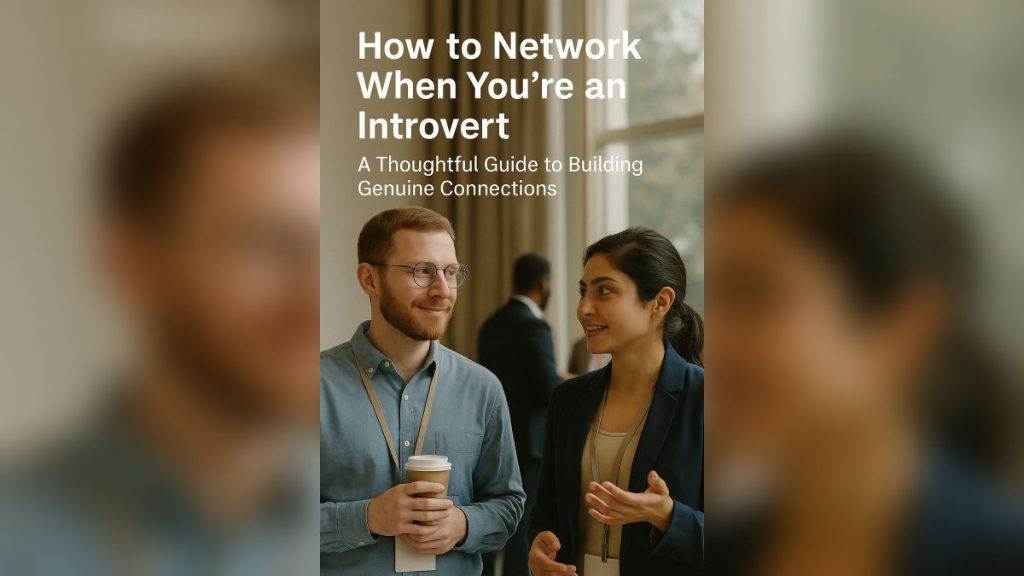
Short answer: Introverts network best by playing to their strengths, deep listening, smaller events, online platforms like LinkedIn, and thoughtful follow-ups, instead of trying to “work the room.” Set tiny goals, prepare questions in advance, and protect recovery time afterwards. Quality beats volume every single time.
Networking. The word alone makes some people break into a sweat, especially introverts. Walking into a room of strangers, making small talk, “selling yourself.” It can feel overwhelming and a bit unnatural. But here’s the thing, you don’t need to be the loudest voice in the room to make powerful connections. Introverts often bring strengths to the table that lead to deeper, longer-lasting professional relationships, which is the part most networking advice skips over.
If you’ve ever wondered how to network as an introvert without pretending to be someone you’re not, this is for you. Let’s walk through how to master networking, not by changing who you are, but by leaning into the natural strengths you already have, with a bit of strategy and care.
Why are introverts often better networkers than they think?
The power of deep listening
Introverts are often exceptional listeners. While others dominate the chatter, introverts observe, absorb and respond with thought. In networking, that’s a huge asset. People appreciate being heard, properly heard, and active listening helps you understand what someone actually needs and positions you as someone insightful and trustworthy.
Instead of trying to impress with non-stop talking, try asking, “What led you to your current role?” or “What challenges do you see in your industry right now?” Open-ended questions take pressure off you and pull richer answers from the other person.
Meaning over volume
Unlike extroverts who may thrive on chatting with dozens of people in one go, introverts tend to prefer quality. That isn’t a weakness, it’s a strength. One well-developed connection can lead to opportunities, referrals or mentorship. Ten surface-level conversations? Often nowhere.
How can introverts play to their strengths in networking?
Set small, achievable goals
You don’t need to “work the room.” Set a goal that fits your comfort zone. Introduce yourself to one new person. Ask two questions during a panel Q&A. Starting small builds confidence, slowly. Success isn’t measured in business cards collected, it’s about the engagement that actually sticks.
Prepare like a pro
Before any event, do your homework. Who’s speaking? Who’s attending? What topics will be covered? Context lets you prepare conversation starters and feel more in control. When I was invited to my first industry mixer, I made a list of five questions tied to the event’s theme and rehearsed a short introduction about myself. That preparation turned my nervousness into focus, and helped me connect with someone who later became a mentor.
Leverage online networking
Introverts often feel more comfortable expressing themselves in writing than in spontaneous conversation. Use that. Platforms like LinkedIn, Twitter or even Reddit let you connect with professionals at your own pace.
- Comment on posts.
- Share insightful articles.
- Send personalised connection requests.
A thoughtful message like, “I really enjoyed your recent article on remote work trends, I’d love to connect and follow your updates,” often lands harder than a handshake in a noisy room.
What kind of networking events work best for introverts?
Pick the right events
Big networking galas with open bars and loud music? Probably not ideal. But smaller workshops, professional development events, alumni meetups? Far more conducive to real interaction.
Look for events that offer:
- Clear agendas
- Breakout sessions
- Industry-specific discussions
These create natural openings to connect over shared interests instead of forced small talk.
Bring a “networking buddy”
If going alone feels daunting, bring a friend or colleague. They can introduce you to people, and their presence keeps you grounded. Just remember to step out of that comfort zone at some point and make at least one new connection independently. Otherwise the buddy becomes a hiding spot.
Volunteer or join committees
Volunteering at events, or being part of a professional group, shifts your role from attendee to participant. You might help organise sessions, moderate panels or run the registration table. These roles spark conversations naturally, no cold introductions required, and you meet people who already share your interests.
How do introverts follow up after networking?
Thoughtful follow-ups
The real magic of networking happens after the event. Take time to write a short, personalised follow-up. It can be as simple as: “Hi Aditi, it was great chatting with you about sustainable design at the workshop yesterday. I appreciated your insights on circular fashion, let’s stay in touch.” That reinforces your interest and opens a door for future conversations.
Stay connected without being overbearing
You don’t have to constantly message people to stay in their orbit. Share articles they might find useful. Congratulate them on a work anniversary. Comment on their posts. Small touches. They keep the connection alive without feeling intrusive.
How do introverts protect their energy while networking?
Know your limits and recharge
Networking can be draining, let’s be honest. Introverts need recovery time after social interaction. Plan with intention. If you’re attending an evening event, maybe block out the next morning for quiet reflection or solo work. Taking breaks isn’t unprofessional, it’s how you stay sharp and emotionally present for the people you actually want to connect with.
Silence the overthinking voice
Introverts are introspective. Sometimes that tips into over-analysis. “Did I come across awkward? Did I talk too much? Was that joke weird?” Normal thoughts. Don’t let them spiral. Focus on what went well, and remember every interaction is a chance to learn.
Stay true to you
Don’t try to mimic extroverted behaviours just because that’s the stereotype of a “successful networker.” Be authentic. Be curious. Be kind. People are drawn to sincerity far more than performance, even when it doesn’t look that way from the outside.
Final thoughts: your quiet strength is a networking superpower
You don’t need to dominate a room to make a lasting impression. You don’t need to be the life of the party to build a valuable network. As an introvert, your strengths, deep thinking, listening, empathy, intentionality, are powerful. Approach networking with strategy, purpose and self-awareness, and you can build professional relationships that feel genuine, mutually beneficial and sustainable. It isn’t about being everywhere or knowing everyone. It’s about creating the few real connections that actually matter.
So next time you feel hesitant about networking, remember. You don’t need to be loud. You just need to show up as yourself, and let your quiet strength speak.
FAQs about how to network as an introvert
How do introverts start a conversation at a networking event?
Open with a low-stakes, open-ended question tied to the event, like “What brought you here today?” or “Which session are you looking forward to?” Prepared questions kill the cold-start panic.
Is online networking as effective as in-person?
For introverts, often more so. LinkedIn, Twitter and Reddit let you build through writing, which most introverts do better than spontaneous talk. A thoughtful comment opens the same doors a handshake would.
How long should an introvert stay at a networking event?
Long enough for one or two meaningful conversations, then leave. No extra credit for staying till the end. An hour of focus beats three hours of fatigue.
What’s the best way to follow up after meeting someone?
Send a short personalised message within 24 to 48 hours. Reference something specific you discussed, not a generic “nice to meet you.” That proves you were listening.
Can introverts succeed in sales or client-facing roles?
Yes, often more than expected. Introverts read people well, ask better questions and don’t oversell. Clients trust someone who listens before pitching.