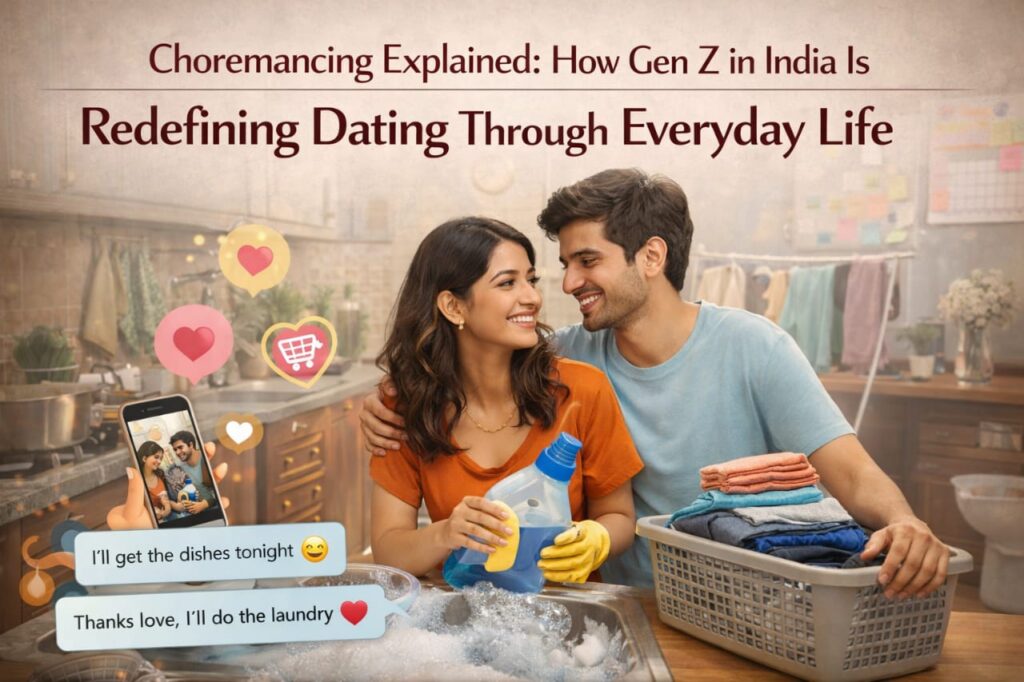
Short answer: Choremancing is when couples turn everyday tasks — grocery runs, mall errands, bookstore browsing, chai walks — into shared dates. A 2025 Plenty of Fish survey found nearly 42% had experienced it without knowing the term. Gen Z in India is choosing it because it strips out the performance of formal dates, costs less than a ₹2,000–₹5,000 dinner, and reveals who someone actually is.
Forget dinner dates — what kind of romance is emerging?
For years, dating followed a predictable rhythm. Dinner reservations. Movie tickets. Carefully planned conversations. A version of yourself that was slightly more polished than usual.
You showed up to impress.
Somewhere along the way, that formula started to feel incomplete. Today, a growing number of young Indians are choosing something far less curated and far more real. They’re going grocery shopping together. Running errands. Walking through malls. Even doing everyday chores.
This trend, popularly known as “choremancing,” may sound unromantic at first. Look closer, and it reveals a deeper truth about how Gen Z is approaching relationships. In India, this shift is already happening.
What is choremancing and why is it catching on now?
Choremancing is exactly what it sounds like: turning everyday tasks into shared experiences. Instead of a formal date, two people might:
- Pick up groceries together
- Browse a bookstore
- Grab chai and take a walk
- Run errands at a mall
At first glance, it feels ordinary. Almost too ordinary. That’s the appeal.
“I don’t want to see someone in ‘date mode’,” says Arjun, a 22-year-old college student from Delhi. “I want to see how they are in real life. That tells you everything.”
According to a 2025 survey by Plenty of Fish, nearly 42% of respondents said they had experienced “choremancing” without even knowing the term. Meanwhile, broader dating trends show that nearly half of young daters prefer discussing serious topics — like finances, values, and long-term goals — within the first few interactions.
The message is clear: Gen Z is not here to waste time.
Why compatibility now matters more than chemistry
Traditional dating emphasized chemistry — the spark, the excitement, the butterflies. Gen Z still values connection, but they are placing equal, if not greater, importance on compatibility.

Do we think alike? Can we communicate easily? Do our lifestyles align?
“I’ve had amazing dinner dates that went nowhere,” says Riya, a 24-year-old professional from Mumbai. “But a simple walk or coffee has told me more about a person than any fancy place ever did.”
Choremancing strips away the performance. No ambient lighting. No scripted conversations. No pressure to impress. Two people navigating everyday life together. Sometimes, that’s where the truth shows up.
What do traditional dates miss?
Most first dates are curated. You’re careful with your words. You’re polite. You’re trying to make a good impression. Real relationships aren’t built in curated environments. They’re built in traffic jams, long queues, small everyday decisions, and unexpected inconveniences.
“What happens when something goes wrong?” asks Karan, a 23-year-old MBA student. “That’s when you see the real person.”
This idea echoes what psychologists often refer to as behavioral consistency — people reveal their true selves in unscripted, everyday situations rather than staged ones. Choremancing, in that sense, isn’t a dating trend. It’s a reality check.
Why does choremancing fit so naturally in India?
While the term may be new, the behaviour is not — especially in India.
1. Dating has always been low-key
Unlike Western cultures where elaborate dinner dates are common, Indian dating has traditionally been more casual.

Most Gen Z dates already involve café meetups, mall outings, street food trails, and walks in public spaces.
“I’ve never really done the whole fancy dinner thing,” says Sneha, a 21-year-old student from Pune. “It’s usually coffee or a walk — and honestly, that feels more real.”
Indian Gen Z has been practising choremancing long before it had a name.
2. The economics of dating
In major Indian cities, a single dinner date can cost ₹2,000 to ₹5,000 or more. For students and early professionals, that’s a meaningful expense.
“I’d rather meet someone multiple times in simple settings,” says Aditya, a 25-year-old software engineer from Bengaluru. “It feels more natural — and way more sustainable.”
Globally, studies by platforms like eHarmony suggest that nearly 75% of young daters prioritise financial stability over romantic spending. In India, where disposable income is often limited, this mindset becomes even more pronounced. Choremancing isn’t a trend. It’s practical.
3. Safety and comfort matter
In India, especially for women, dating decisions are influenced by safety and comfort. Public, low-pressure environments — malls, grocery stores, cafés — offer a sense of security that private or formal settings may not.
“I feel more relaxed in casual spaces,” says Riya. “There’s no pressure, and I can be myself.”
Everyday settings aren’t only convenient. They’re ideal.
4. Less pressure, more authenticity
Dating in India carries unspoken expectations. Family involvement. Marriage conversations. Social scrutiny. A formal “date” can feel like a big, loaded step. A casual outing feels lighter, more natural, less intimidating.
“It doesn’t feel like a ‘date-date’,” says Arjun. “It’s hanging out. And that’s way easier.”
That shift, from pressure to ease, is what makes choremancing work.
How is social media shaping choremancing?
Gen Z doesn’t only experience relationships — they observe them. Platforms like Instagram are filled with snippets of everyday romance:

- Cooking together
- Grocery shopping
- Lazy day-outs
These moments feel real. Relatable. Achievable.
Even pop culture has captured this shift. Think of the iconic IKEA scene in 500 Days of Summer, where the characters bond not over a grand date but while playfully navigating a furniture store. That’s the kind of intimacy Gen Z resonates with. Not staged. Not perfect. Real.
Is choremancing killing romance?
Not quite. It’s evolving.
Critics argue that choremancing makes dating feel transactional — like you’re evaluating someone instead of enjoying their company. That concern has some weight.
“I still want effort,” says Sneha. “I don’t want everything to feel casual all the time.”
Gen Z isn’t rejecting romance. They’re redefining it. For them, romance is no longer about expensive dinners or grand gestures. It’s about comfort, understanding, and shared routines. Less about the setting, more about the connection.
What does dating with intent really mean?
At its core, choremancing reflects a broader transformation in how Gen Z approaches relationships. They are intentional. They want clarity early on: Where is this going? Do our values align? Is this worth my time?
After witnessing cycles of ghosting, situationships, and emotional burnout, many young people are choosing efficiency over ambiguity.
“I’d rather know in two meetings than drag it for months,” Karan says.
It’s not cold. It’s conscious.
Love, reimagined
Here’s the uncomfortable truth: a ₹5,000 dinner can create an illusion. A ₹500 grocery run can reveal reality. Gen Z is choosing reality.
Choremancing isn’t about killing romance. It’s about grounding it in something more sustainable. Because relationships aren’t built in perfect moments. They’re built in everyday ones.
FAQs on choremancing
What does choremancing mean?
Choremancing is turning everyday chores and errands — grocery runs, bookstore trips, mall visits, chai walks — into a shared dating experience instead of going on a formal dinner date.
How common is choremancing among Gen Z?
According to a 2025 Plenty of Fish survey, nearly 42% of respondents said they had experienced “choremancing” without even knowing the term.
How much can a fancy date cost in India?
In major Indian cities, a single dinner date can easily cost ₹2,000 to ₹5,000 or more. Globally, studies by eHarmony suggest nearly 75% of young daters now prioritise financial stability over romantic spending.
Is choremancing killing romance?
No. Gen Z isn’t rejecting romance — they’re redefining it. Romance for them is less about expensive dinners and grand gestures and more about comfort, shared routines, and seeing someone as they really are.
Why does choremancing fit India so well?
Indian dating has always leaned casual — café meetups, walks, mall outings. Add safety concerns, tighter budgets, and social scrutiny around formal dating, and low-pressure, public, everyday settings become the natural fit.