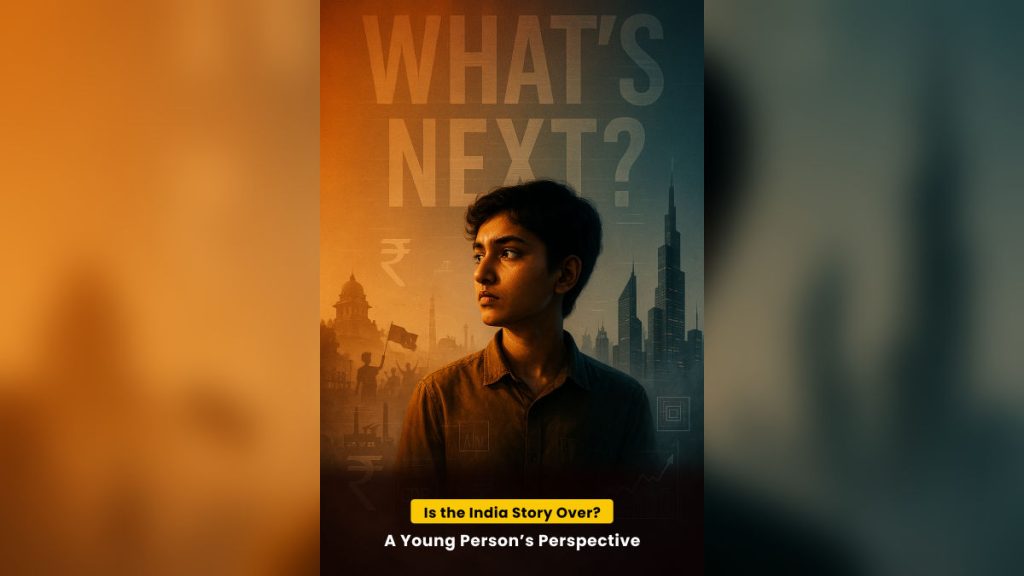
Short answer: No. From the youth’s vantage point, the India story isn’t ending, it’s being rewritten. Over half the country is under 30, startups keep multiplying, and women are claiming new ground. But youth unemployment hit roughly 45% in the 20–24 bracket in 2023, so the optimism comes with caveats.
Ask a young Indian whether the “India story” is over and you’ll usually get raised eyebrows, a flash of fiery optimism, and a sigh of exasperation. All in one breath. India’s narrative has always been a tangle of ancient and new, vibrant democracy and stubborn inequality, resilience and restlessness. From the viewpoint of its youth, with over 50% of the population under 30, that story isn’t finished. It’s just being rewritten, line by line, tweet by tweet, startup by startup.
Why does India’s youth bulge matter so much?
India is sitting on a goldmine. Its people. With a median age of 28.4 years, the country has one of the youngest populations on the planet, and that bulge isn’t just a stat. It’s the engine behind rising consumption, fresh innovation, and a workforce nobody else can match in scale.
Take Karan, a 23-year-old coder from Pune, who’s built a fintech platform helping rural women access credit. Or Anjali, a 21-year-old YouTuber from Guwahati, talking mental health in local dialects. Small stories. Real ones. They show that young Indians aren’t waiting around for change, they’re making it themselves.

How are young Indians driving innovation and entrepreneurship?
This generation is more digitally native, more globally aware and more risk-hungry than any before it. India now has over 100 unicorn startups, and a huge slice of those were co-founded by millennials and Gen Zs. Edtech, agri-tech, climate-tech, the lot.
According to a 2024 Nasscom report, over 45% of new startups in India are founded by entrepreneurs under 30. They’re embracing failure, hustle culture and pivots, not just for the money but for purpose too. Tech isn’t a tool here; it’s a megaphone for ideas, activism, ambition.

What’s fuelling youth activism in India today?
Social media has morphed into a modern town square. Climate change, LGBTQ+ rights, gender equality, exam stress, the list keeps growing. Campaigns like #PeriodPride and #CancelBoardExams weren’t just hashtags. They were proper student-led movements with real momentum behind them.
And that awareness is spilling offline. Young people are volunteering, organising protests, building NGOs, questioning norms their parents accepted without a second thought. Earlier generations stayed quiet, more or less. This one speaks up, and speaks back.
How are young Indian women rewriting the rules?
One of the biggest shifts is happening quietly. In homes, in classrooms, in WhatsApp groups: young Indian women are claiming their space. From engineering classrooms to startup boardrooms, their footprint is expanding.
Programmes like Beti Bachao Beti Padhao made waves. But honestly, it’s the girls themselves who are doing the surfing. More are pursuing higher education, delaying marriage, starting businesses, stepping into leadership. It isn’t just about visibility. It’s about voice.

But it’s not all rosy: the challenge matrix
The unemployment trap
Unemployment is the elephant in every WhatsApp group. The Centre for Monitoring Indian Economy (CMIE) reported that youth unemployment in India hovered around 45% in 2023 for the 20–24 age group. Graduates land in limbo, highly qualified yet underemployed.
“I studied engineering for four years. I now work as a delivery partner,” says Rohit, 25, from Bhopal. His story is far too common. There’s a yawning gap between what colleges teach and what industries actually need, and automation plus an uneven economy haven’t helped.
The mental health crisis
The pressure to “succeed” weighs a tonne. Academic stress, job uncertainty, digital burnout, all of it has pushed a quiet mental health epidemic. A 2023 Lancet study revealed that one in seven Indian youth suffers from some form of mental illness, yet only a fraction gets support.
Awareness is growing, sure. But stigma, the shortage of accessible counsellors and overwhelming family expectations still block the road to real well-being. The conversation has started. The infrastructure hasn’t caught up.
Inequality and the digital divide
Not every young Indian is part of the Instagram-startup revolution. Millions stay on the margins, grappling with poverty, caste discrimination, gender bias and patchy digital access. The urban-rural divide is stark, especially in education and employment.
“I don’t even have a smartphone, how will I apply for an online course?” asks Meena, a 17-year-old from Jharkhand. Which is the point. Inclusive policy frameworks have to reach Meena, not just Karan.
Is the brain drain really that bad?
Plenty of high-achieving youth are looking westward. Better jobs, world-class education, cleaner air, more predictable lives, take your pick. According to the MEA, nearly 2.5 million Indians left the country for work or study in 2023, a sizeable chunk of them in the 20–35 bracket.
Yet the diaspora stays emotionally tethered to India, often investing back through remittances, mentorship and cross-border startups. The challenge is making India attractive enough that they stay. Or come home.

What is the government actually doing for youth?
By early 2024, the Indian government had launched several schemes recognising the youth’s potential:
- Pradhan Mantri Kaushal Vikas Yojana (PMKVY) for skill development.
- Startup India and Mudra Yojana for entrepreneurship support.
- National Youth Policy aimed at inclusive development.
- Digital India, focusing on access and digital literacy.
Big steps. Real gaps. Many young people don’t even know these programmes exist, let alone how to claim them. Bridging that information gap is as important as designing the policies in the first place.
Global dreams, local realities
India’s youth aren’t passive recipients of change, they’re the catalysts. They dream globally and act locally. They want higher incomes, yes, but pride and purpose too. They’re swiping reels while protesting at Jantar Mantar, coding fintech apps and showing up at poetry slams the same week.
This generation isn’t content with the old definitions of success. They’re building new ones, ones that weigh creativity, sustainability and freedom alongside paychecks.

So is the India story really over?
Far from it. It’s evolving, and the pen is now in the hands of the young.
Their ambitions, anxieties and actions are shaping what India will look like in 2050, a story of hustle and heart, of dreams and disruptions, of love for country and a thirst for change. As young Indians confront inequalities, demand representation and build resilient futures, they aren’t just writing the next chapter, they’re redefining the entire narrative.
If you’re a young Indian reading this, here’s the thing: You aren’t just part of the India story, you are the India story. Keep questioning, creating, caring, contributing. The world’s watching. So is the next generation.
FAQs about the India story and young Indians
What does “the India story” mean for young Indians today?
It’s shorthand for India’s growth narrative, jobs, startups, global influence and social change. For under-30s, the story is less about GDP charts and more about whether they can find meaningful work, build businesses and live with dignity at home.
Why is youth unemployment in India so high?
The CMIE pegged youth unemployment at around 45% for the 20–24 age group in 2023. The big drivers are a mismatch between college curricula and industry needs, slow formal-sector job creation, and disruption from automation, leaving many graduates underemployed.
How many Indians are leaving the country for work or study?
According to the Ministry of External Affairs, nearly 2.5 million Indians left India for work or study in 2023, with a sizeable share aged 20–35. That’s the brain drain headline, though many stay financially and emotionally connected through remittances and reverse investment.
Are Indian women really catching up in business and education?
Yes, the shift is real if uneven. More young women are pursuing higher education, delaying marriage, starting businesses and entering leadership roles. Programmes like Beti Bachao Beti Padhao helped, but the bigger driver is girls themselves pushing into spaces earlier generations couldn’t.
Is the India story really over?
No. The pessimism is loud, but the data and the lived experience of young Indians point to a story that’s mutating, not ending. There are 100-plus unicorn startups, a youth-driven activism wave, and a diaspora pulling capital and ideas back home. The next chapter just looks different.