
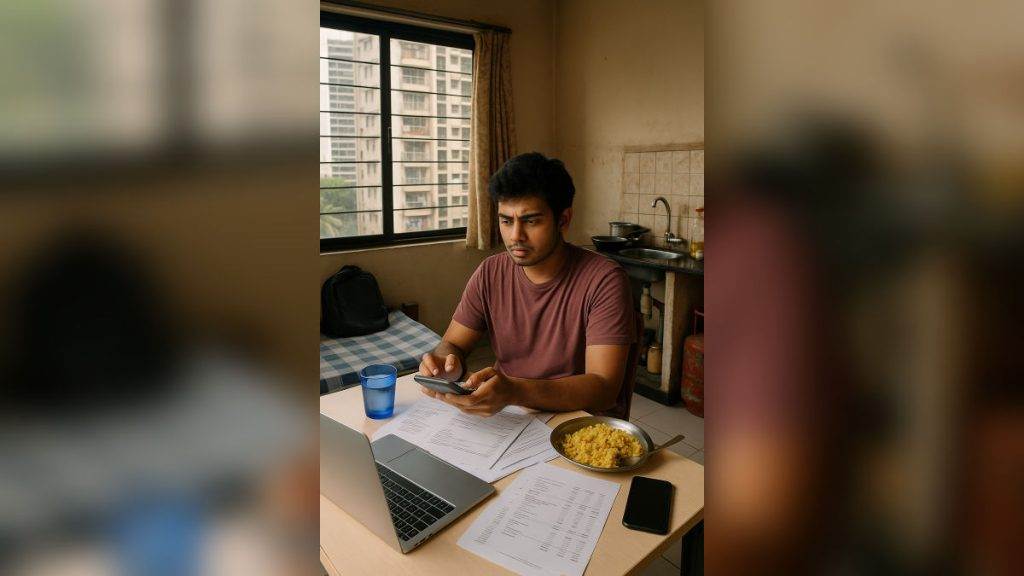
Short answer: A 22-year-old solo worker in a tier-1 Indian metro typically needs ₹28,000–₹35,000 a month if they share a 2BHK, and ₹45,000–₹50,000 for a single occupancy 1BHK. Rent dominates the bill, food and commute follow, and a Swiggy habit can quietly add ₹10,000 a month before you notice.
Living alone in a big Indian city sounds like a dream. Freedom, independence, late-night Maggi without judgement, your own space, what’s not to love? But beneath the excitement sits a financial reality that hits different when your salary has to stretch across rent, bills, groceries and the occasional impulse Zara buy.
If you’re a 22-year-old Gen Z worker eyeing solo life in Mumbai, Delhi, Bengaluru or Hyderabad, here’s the reality check, and a practical guide to plan around it.
Living solo: a dream with a price tag
Many Gen Z professionals are choosing to live alone for a stack of reasons, personal freedom, mental peace, career growth in big cities, or just the urge to step out of “ghar ka pressure.” According to a CBRE India report (2023), rental demand from young working professionals has surged post-pandemic, especially in metros.
But make no mistake. Living alone isn’t cheap. Let’s dive into where your money actually goes.
1. Accommodation: your largest expense
Rent
Unless you’re moving in with family or inheriting a flat from your chaachu, rent will be your biggest monthly outflow.
- In prime city areas, a 1BHK can set you back ₹20,000 to ₹40,000 per month.
- In suburban areas, expect around ₹10,000 to ₹20,000, depending on distance and connectivity.
- Shared accommodations or PGs can cut costs sharply to ₹5,000–₹12,000/month, especially in cities like Pune or Kolkata.
Real Talk: I stayed in a shared 2BHK in Bangalore’s Koramangala. My room cost ₹11,000/month including WiFi and maid services. I missed privacy. But I saved enough to buy a laptop within six months.
Utilities
Add electricity, water, cooking gas and broadband to the mix.
- Utilities: ₹2,000–₹4,000/month depending on AC usage and city.
- Internet: ₹700–₹1,000/month for decent broadband.
- In cities like Delhi, you may benefit from government subsidies on electricity.
Tip: Ask the landlord whether any utilities are included in the rent before you sign the lease.
2. Food & groceries: dabba or delivery?
Cooking at home
If you cook, or at least try to, your grocery bill stays manageable.
- Monthly grocery expense: ₹1,500–₹3,000 if you’re smart with ingredients and plan meals.
- Add maid or cook charges if you hire one: ₹1,000–₹2,500/month.
Eating out
Ordering food regularly might feel convenient. It’s also a fast way to burn cash.
- Low-cost restaurant meal: ₹250–₹350.
- Swiggy/Zomato habit: ₹3,000–₹10,000/month depending on frequency.
- Mid-range restaurant meal for two: ₹1,200–₹1,800.
Personal Experience: A colleague from Mumbai once tracked his Swiggy orders and realised he’d spent ₹12,000 in a single month, all for convenience. After switching to meal preps, he cut it down to ₹4,000.
3. Commuting: from Ubers to metro passes
Public transport
Thankfully, Indian metros offer efficient, cost-friendly transit systems.
- Delhi Metro pass: ₹1,000–₹2,000/month.
- Mumbai local train pass: ₹500–₹1,200/month.
- BMTC monthly bus pass (Bangalore): ~₹1,050.
Taxis & autos
Convenient. Also wallet-drainers if you lean on them.
- Base fare: ~₹25/km in cities like Delhi and Mumbai.
- Uber/Ola surge pricing can inflate costs to ₹4,000–₹8,000/month if used often.
Pro Tip: If your work allows hybrid or remote, use it. Fewer commute days means lower travel costs.
4. Lifestyle and miscellaneous expenses
This is where budgeting discipline, or the lack of it, makes the biggest dent.
Entertainment & shopping
- OTT subscriptions (Netflix, Prime): ₹500–₹800/month.
- Weekend plans (movies, outings): ₹1,000–₹3,000/month.
- Clothes, accessories, shopping sprees: varies wildly.
Personal care & misc.
- Toiletries and household items: ₹500–₹1,000/month.
- Gym, therapy, hobbies: add ₹1,000–₹3,000 depending on your lifestyle.
5. Sample monthly budget for a solo young worker
Here’s an average breakdown for someone living alone in a tier-1 city like Mumbai or Bengaluru:
| Expense Category | Estimated Monthly Cost (INR) |
| Rent (shared 2BHK) | ₹12,000 |
| Utilities + Internet | ₹3,000 |
| Groceries & Food | ₹6,000 |
| Transport (metro + Uber) | ₹2,500 |
| Entertainment/Shopping | ₹3,000 |
| Miscellaneous | ₹1,500 |
| Total | ₹28,000 – ₹35,000 |
For a single occupancy rental, the figure can climb to ₹45,000–₹50,000/month.
6. Tips to survive (and thrive) on a budget
Create a monthly budget
Use Walnut, Moneyfy or Excel to track your spending. You’ll be surprised how much leaks out on random purchases.
Opt for shared living (initially)
If privacy isn’t top priority, take roommates. Splitting rent, WiFi and groceries slashes costs.
Cook more, order less
Learn 5-6 basic recipes. Dal-chawal and stir-fry noodles are budget-friendly lifesavers.
Choose transport wisely
Get a monthly metro/train pass. Book Uber only when you have to.
Look for deals
Student discounts, cashback offers, and bundles like Times Prime or Zomato Gold go a long way.
Living alone is a privilege, handle it responsibly
Living independently in an Indian metro at 22 is empowering. It teaches resilience, budgeting and survival cooking. But it’s also a reality check, where the cost of freedom shows up in EMIs and grocery runs. Know where your money goes, and invest in your growth, not your wardrobe.
“You are the CEO of your life. Budget like it.” — Every adult ever.
FAQs about living alone in an Indian metro
How much does it cost to live alone in an Indian metro at 22?
If you share a 2BHK, expect ₹28,000–₹35,000 a month covering rent, utilities, food, transport and basic lifestyle costs in Mumbai or Bengaluru. A solo 1BHK can push the total to ₹45,000–₹50,000 per month.
What is a realistic monthly rent for a young professional in a metro?
A 1BHK in prime city areas runs ₹20,000–₹40,000, suburban 1BHKs go ₹10,000–₹20,000, and shared accommodations or PGs in cities like Pune or Kolkata can drop to ₹5,000–₹12,000 a month.
Is it cheaper to share a flat or rent a 1BHK alone?
Sharing wins almost every time. A room in a shared 2BHK in Bengaluru’s Koramangala can run around ₹11,000 including WiFi and maid services, well under a comparable solo 1BHK.
How much do Indians spend on Swiggy and Zomato in a month?
₹3,000–₹10,000 a month is common. One Mumbai colleague tracked his orders, hit ₹12,000 in a single month, then dropped it to ₹4,000 after switching to meal preps.
Which apps help track expenses in India?
Walnut and Moneyfy are popular for tracking spends. Excel works too.