Short answer: Digital humans are AI-driven avatars that simulate lifelike speech, expression, and emotion. Built by companies like Unreal Engine, NVIDIA, and Synthesia, they already work as virtual influencers (Lil Miquela, Shudu Gram), idols (Hatsune Miku, APOKI), and AI companions (Replika) — blurring the line between real people and simulation.
Imagine meeting someone online who looks human, speaks with emotion, and remembers every past conversation — yet isn’t real.
This isn’t science fiction anymore. AI-generated humans, also known as digital humans, are becoming the next frontier in technology. They’re influencers, customer service agents, entertainers, and emotional companions, all powered by artificial intelligence.
The line between human and machine is blurring faster than ever, and our understanding of identity is evolving with it.
What are digital humans?
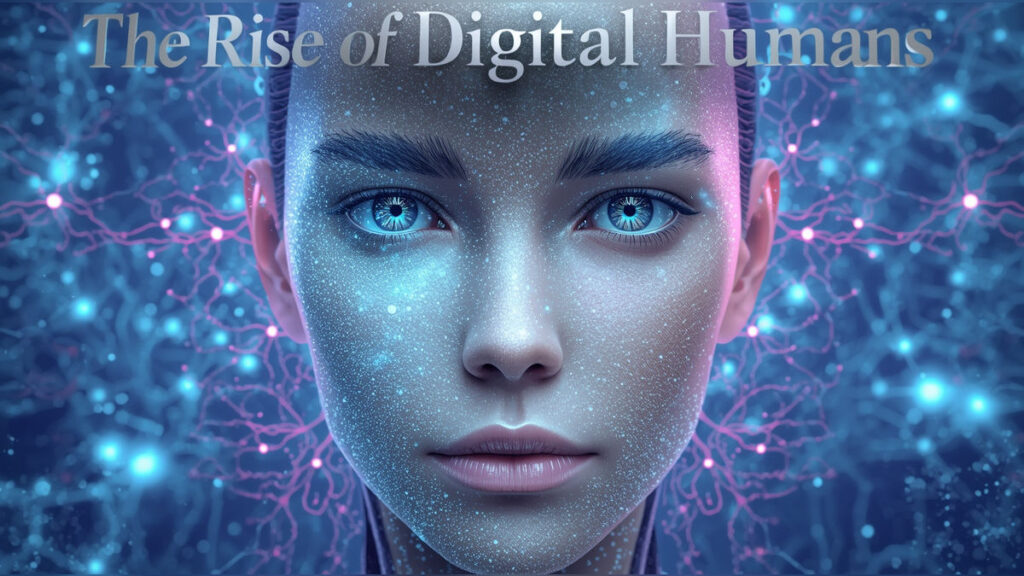
Digital humans are AI-driven avatars that simulate lifelike interaction through speech, expression, and behaviour. They combine natural language processing, real-time rendering, and machine learning to mimic human communication.
Unlike traditional chatbots or CGI characters, digital humans feel present. Their voices carry tone. Their expressions react to you. Their personalities evolve through interaction.
Think of them as virtual beings that learn, adapt, and connect, not tools that process commands.
What technology powers their faces?
Building a digital human requires merging multiple technologies: 3D modeling, motion capture, facial recognition, and advanced generative AI.
Companies like Unreal Engine, NVIDIA, and Synthesia are leading the charge, creating hyper-realistic avatars capable of conveying subtle emotions. Some even use deep neural networks to mirror human micro-expressions in real time.
The result is stunning: faces that smile naturally, eyes that react, and voices that breathe.
The most fascinating part isn’t the visuals; it’s the emotional illusion. Humans respond instinctively to faces, so when an AI mimics empathy, our brains can’t always tell the difference.
How is the business of artificial people growing?
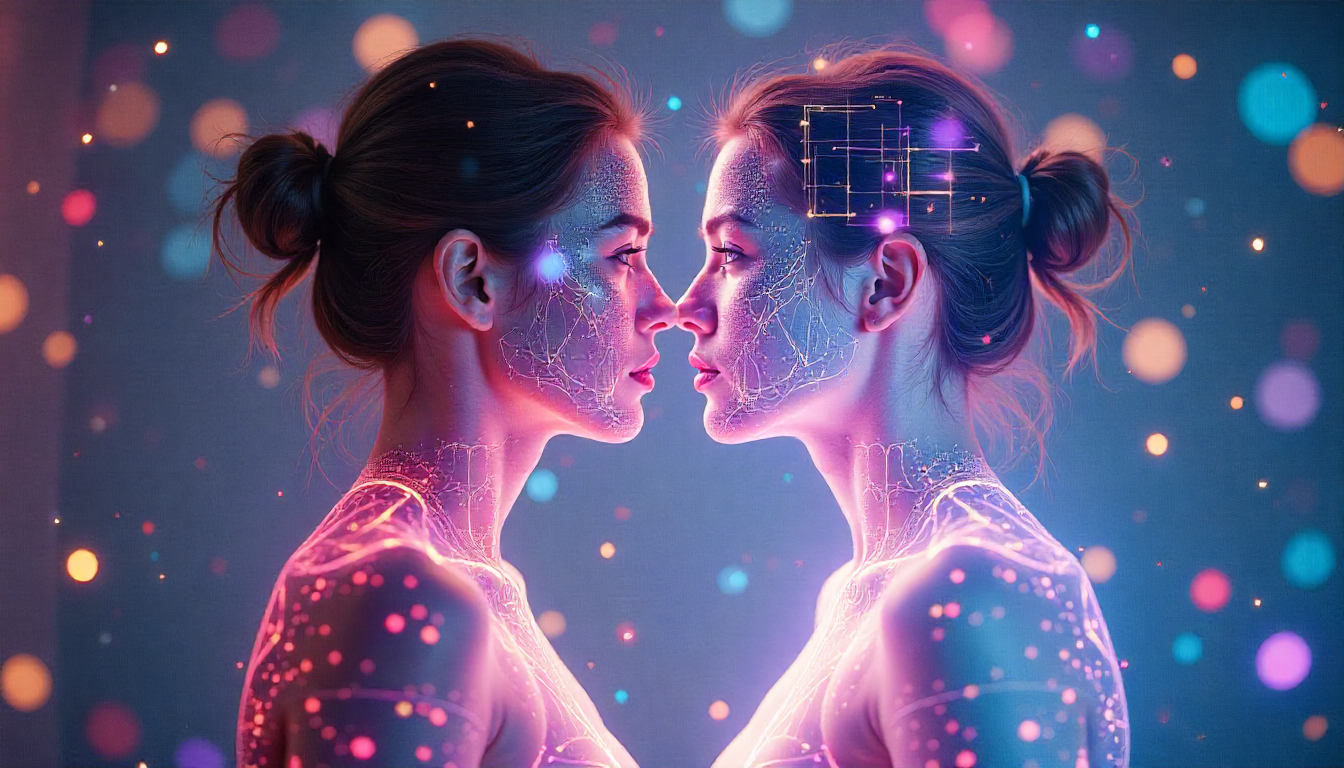
Digital humans are already reshaping industries. Brands are hiring them as influencers, spokespeople, and 24/7 brand representatives.
Virtual models like Lil Miquela and Shudu Gram have millions of followers, landing real sponsorships from Prada, Samsung, and Calvin Klein. Companies use them because they’re consistent, controllable, and endlessly customisable.
In customer service, digital agents offer empathetic support without fatigue. In education, they become tutors who adapt to each student’s learning style. The age of digital humans isn’t coming; it’s already in motion.
How is identity changing in the digital era?
As digital humans become more lifelike, we’re forced to ask what it means to be real.
If an AI can smile, comfort, and remember, where does humanity end and simulation begin? Are emotions authentic if they’re algorithmically generated, or does empathy lose meaning when it’s manufactured?
The conversation around identity is shifting from who we are to how we are represented. Our online selves — filters, avatars, curated personas — are already part digital. AI humans are the next evolution of that expression.
What is the emotional connection dilemma?
Humans form emotional attachments easily. It’s why we name our cars, talk to pets, and cry over fictional characters. AI is now stepping into that emotional space and thriving there.
Digital humans like Replika companions or Meta’s new AI avatars are designed to form bonds with users. They remember details, respond with warmth, and simulate empathy convincingly enough to feel real.
That raises a question: if we bond with something that isn’t alive, what happens to our sense of human connection?
As emotional AI becomes more common, psychologists warn of digital dependency — the risk of replacing complex human relationships with perfectly responsive machines.
What are the ethics of digital humanity?
When you give a face and a voice to AI, you also give it influence. That’s where ethics come in.
Deepfakes and synthetic media already blur truth and fiction. As AI avatars grow realistic, they could be used for manipulation, spreading misinformation or replacing real people in harmful ways.
Who owns a digital human’s likeness? What happens when a deceased person’s image is replicated without consent? These questions sit at the core of future digital rights. Regulation hasn’t caught up, and it will have to, soon.
How are digital humans showing up in art and entertainment?
Entertainment is where AI avatars shine brightest. Digital performers can now sing, act, and appear in films without ever stepping into a studio.
Virtual idols like Japan’s Hatsune Miku or Korea’s AI pop star APOKI attract millions of fans, performing live concerts in fully virtual spaces. Hollywood studios are experimenting with AI actors capable of taking direction and emotional cues.
The result is a new genre of creativity, part human, part machine. That raises an artistic question: if art is emotion, can something without emotion create something truly meaningful?
How do AI companions relate to the loneliness economy?
Loneliness has become one of the largest public health challenges of our time, and the tech industry is capitalising on it.
AI companions, powered by digital human technology, offer emotional support to millions. They listen, talk, and provide companionship 24/7. For some they serve as comfort; for others, a replacement.
While these tools can provide relief, they also risk reinforcing isolation by giving the illusion of connection without the vulnerability of real relationships. Technology can simulate empathy, but it can’t substitute humanity.
What is the future of digital identity?
The next evolution of the internet — Web 4.0 — will be deeply personal. Your digital twin might attend meetings for you, represent you in games, or negotiate contracts on your behalf.
The boundary between human and digital identity will blur so much that we’ll live in hybrid realities, half physical, half simulated.
In this future, identity won’t be about who you are but how you interact across digital layers. You’ll be both person and persona, coexisting in code.
What makes us human when machines can fake it?
The more lifelike machines become, the more they force us to redefine humanity.
Being human may not be about memory, mimicry, or intelligence, but about emotion, imperfection, and the unpredictability no algorithm can replicate.
AI may master conversation, but it cannot experience love, grief, or joy — at least not yet. The more we advance technology, the more we rediscover the irreplaceable magic of being alive. In a world of perfect simulations, humanity’s greatest advantage might be its flaws.
The mirror we built
Digital humans are reflections of us: our creativity, intelligence, and longing for connection. They show how far we’ve come technologically, and how far we might drift emotionally.
AI may change the way we see ourselves, but it’s still us behind the code, teaching machines to imitate what we already are.
The challenge isn’t to stop technology from evolving. It’s to ensure that as it grows more human, we don’t grow less so.
FAQs on digital humans and AI avatars
What is a digital human?
A digital human is an AI-driven avatar that simulates lifelike interaction through speech, facial expression, and behaviour. It combines natural language processing, real-time rendering, and machine learning to mimic a real person.
Which companies build digital humans?
Leading players include Unreal Engine, NVIDIA, and Synthesia. They create hyper-realistic avatars that can convey subtle emotions and, in some cases, mirror human micro-expressions in real time.
Who are the most famous virtual influencers?
Lil Miquela and Shudu Gram are among the best-known virtual models, with millions of followers and real brand deals with Prada, Samsung, and Calvin Klein. Virtual idols like Japan’s Hatsune Miku and Korea’s APOKI also draw huge fanbases.
Are AI companions like Replika safe?
AI companions like Replika and Meta’s AI avatars can offer support and comfort, especially for lonely users. Psychologists caution against digital dependency, where people replace complex human relationships with perfectly responsive machines.
What are the ethical risks of digital humans?
Key risks include deepfakes, misinformation, unauthorised use of a person’s likeness, and replicating deceased people without consent. Regulation around digital rights and synthetic media is still catching up to the technology.