Short answer: Smart devices are moving past voice commands into ambient intelligence — homes, cars and wearables that read context and anticipate needs. The shift brings empathetic tech from brands like Apple, Samsung, Qualcomm and NVIDIA, but also sharper questions about data, privacy and trust.
A quiet shift is running in the background of daily life. Toothbrushes, fridges, sneakers — everyday objects are learning to respond with intelligence. The boom that started with phones and watches has grown into a wider ecosystem of ambient intelligence.
Smart tech is no longer only about convenience. It is becoming a companion to human behaviour, predicting and adapting before we ask. Experts call this the “Conscious Home Era.”
How did we get from smart homes to aware ecosystems?
When Amazon Echo and Google Home first landed, they played music, checked weather and ordered pizza. Today, smart ecosystems go much wider than that.
Picture a home that reads your mood, adjusts lighting, senses stress in your voice, and lowers the temperature to calm you down. It is no longer science fiction.
Companies like Apple, Samsung, and Dyson are pouring billions into AI-driven sensing that can “read” a room. These systems pick up your patterns — wake time, workouts, rest — and start to anticipate needs without a command.
What is predictive comfort?
The next wave of smart tech is not gadgets that obey. It is systems that empathise.
Your car might detect fatigue from your driving rhythm and adjust seat posture. Your mirror could study your skin and suggest hydration routines. Sneakers now carry sensors that track posture and running style, feeding data into health apps for real-time feedback.
Tech is shifting from “Tell me what to do” to “I already know what you need.” That small shift changes everything.

What are the ethics of always-on awareness?
There is a darker side to this brilliance. The smarter our devices get, the more data they demand. A fridge that knows what you eat also knows how healthy you are. A watch that tracks your sleep can infer your emotional state.
Who owns this data? You? The company? The algorithm?
This sits at the heart of today’s tech debate. Governments are scrambling to regulate how behavioural data is stored, used and monetised. The EU’s AI Act (2025) sets a precedent, classifying emotional and biometric tracking as high-risk technologies.
For users, the balance between comfort and control has never been harder to hold.
How are machines becoming more human?
What makes this shift interesting is how humans are starting to relate to machines emotionally.
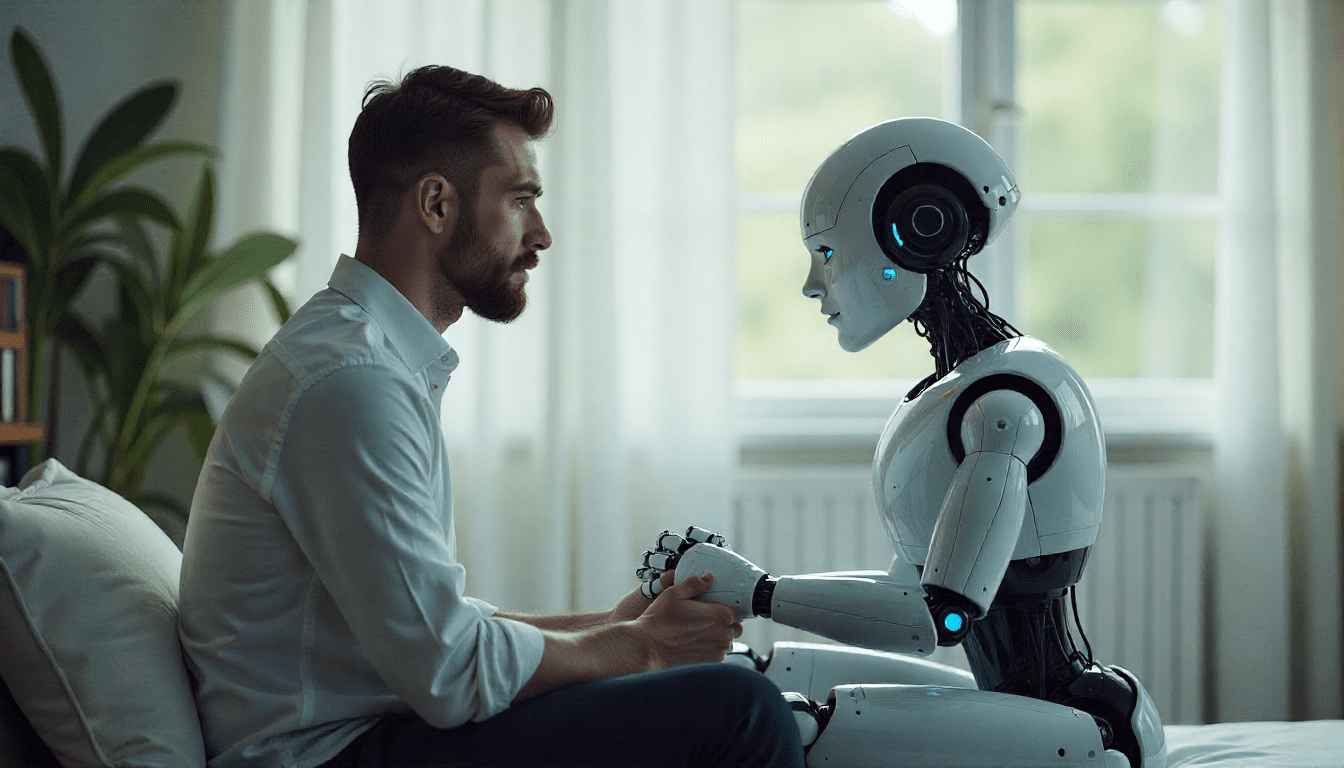
Voice assistants now have personality layers, humour and tone modulation that mirrors empathy. Robots in Japanese care homes hold gentle eye contact and pauses with elderly residents, mimicking understanding.
The line between tool and companion is blurring. Machines are being designed not only to perform, but to connect.
How do AI chips power everyday objects?
Behind the smooth smart experience sit AI-optimised chips.
Instead of sending every command to the cloud, modern devices use on-device machine learning to process tasks instantly and privately. That cuts lag, improves privacy, and lets devices think on their own.
Brands like Qualcomm, NVIDIA, and Apple are leading this push, embedding neural processing units (NPUs) into everything from watches to washing machines. Soon, your devices won’t only be smart — they will be self-sufficient.
What is the Emotional Internet of Things (E-IoT)?
Startups are now testing emotional intelligence inside smart tech. Think headphones that pick up stress from your heartbeat and play calming soundscapes. Or a desk that reminds you to take a break when posture sensors notice fatigue.
This E-IoT could reshape wellness tech and mental health care. It is where psychology meets engineering, and where machines don’t just assist you — they nurture you.
Why is Gen Z both excited and skeptical?
Gen Z sits at the centre of this evolution. They are digital natives who embrace innovation but also question it. They want customisation, not control. They value data-driven health but worry about surveillance.
For them, the future of smart tech comes down to one word: trust.
The brands that win will not be the most powerful. They will be the most transparent. Companies that clearly explain how data is used and how AI decisions are made will earn the next generation’s loyalty.

Why is the future contextual, not digital?
In five years, we may stop calling things “smart devices” altogether — because intelligence will be expected everywhere.
Technology is moving from a visible feature to an invisible fabric that supports daily life. We are heading toward homes, cities and workplaces that understand us not as users, but as humans.
The real question is not how smart our devices can become, but how human they can feel.
When technology learns to care
The next era of tech is defined not by speed or power, but by sensitivity. Smart devices are becoming empathetic partners — listening, learning, adapting. As they do, society will have to redefine what privacy, autonomy and emotional connection mean.
The challenge is not to stop technology from thinking. It is to make sure it thinks with us, not for us.
FAQs about ambient intelligence and smart devices
What is ambient intelligence?
Ambient intelligence is the next stage of smart technology where everyday objects sense context, learn patterns and respond without direct commands — homes, cars, mirrors and wearables that adapt to you rather than wait for instructions.
Which companies are leading the ambient intelligence push?
Apple, Samsung and Dyson are investing in AI-driven sensing for homes, while Qualcomm, NVIDIA and Apple are embedding neural processing units (NPUs) into everyday devices to enable on-device machine learning.
What does the EU AI Act 2025 say about smart devices?
The EU’s AI Act (2025) classifies emotional and biometric tracking as high-risk technologies, setting one of the first legal precedents for how smart devices can collect and use behavioural data.
What is the Emotional Internet of Things (E-IoT)?
E-IoT is an emerging category of smart devices — like stress-sensing headphones and posture-aware desks — that combine psychology with engineering to support wellness and mental health.
Why does Gen Z care about trust in smart devices?
Gen Z embraces innovation but questions surveillance. They reward brands that are transparent about how data is collected and how AI decisions are made, making trust the deciding factor in smart-tech loyalty.