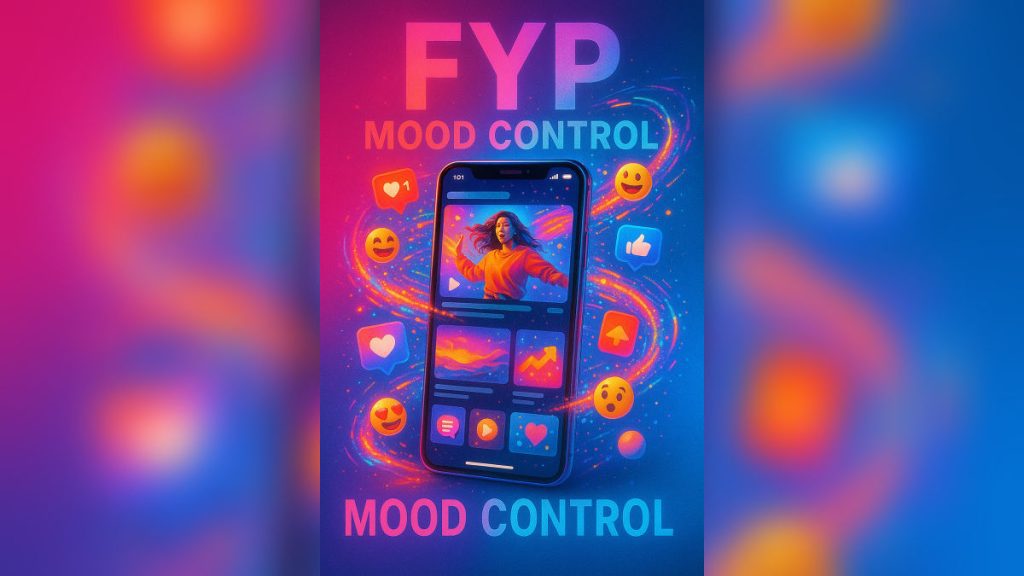
Short answer: FYP stands for For You Page, the algorithm-curated feed on TikTok, Instagram Reels and YouTube Shorts. It learns from what you watch, like and skip, then serves more of the same. For Gen Z in India, that loop can quietly steer mood, sleep and self-image, sometimes for the worse.
Algorithms aren’t just code anymore. They’re quiet little forces shaping how we feel, what we believe, and (slowly) who we become. For Gen Z in India, the clearest place this plays out is the FYP, or For You Page.
Whether you’re on TikTok through a VPN, Instagram Reels, or YouTube Shorts, the FYP has wormed its way into everyday scrolling. But have you ever paused mid-scroll and asked: why does this feed know me so well, and why does it sometimes leave me feeling anxious, left out, or just a bit sad?
Let’s unpack what FYP really means and how it’s quietly swaying Gen Z’s mood, often without anyone realising it.
What exactly is the FYP?
The For You Page, or FYP, is a personalised feed curated by platforms like TikTok, Instagram and YouTube using powerful algorithms. These systems study everything. The videos you like, the ones you share, how long you linger on a clip, what you swipe past in half a second.
Put simply: your FYP is a mirror of your digital habits. But unlike a regular mirror, this one doesn’t just reflect, it also suggests, reinforces, and sometimes distorts.
Say you start watching breakup videos one bad Tuesday night. Soon your FYP is feeding you sad songs, lonely-girl quotes, stories from strangers in emotional turmoil. Before you know it, the entire feed is colouring your real-world mood.
How is the FYP quietly controlling Gen Z’s mood?
1. Personalised to please, or to manipulate?
The most appealing thing about the FYP is how tailored it feels. Gen Z, a generation that craves uniqueness, often loves the comfort of a feed that feels “just for me.”
But here’s the catch. Personalisation can become a trap. It’s lovely to find content that matches your vibe, whether that’s fashion, study tips, comedy or astrology, but it also means you’re being served the same flavour again and again. That repetition reinforces certain feelings and moods, good or bad.
I remember a friend, Riya from Pune, telling me, “When I was feeling low, my FYP was all sad songs and people crying about life. It felt relatable at first, but then I just felt worse.” That’s the emotional loop a lot of Gen Z users are quietly slipping into.
2. The engagement game
Let’s be honest, every platform wants the same thing: your attention. So what gets attention? Emotional, dramatic or sensational content.
That’s why your FYP keeps surfacing videos that are going viral or pulling huge engagement. And there’s a cost to that. Creators feel pressured to make content that fits trends, even when it doesn’t match who they are. Viewers feel pulled to like, comment and share, sometimes without thinking about it.
According to a 2023 Common Sense Media report, over 70% of teens said they’ve felt pressure to look a certain way online to get more likes or views.
3. Addicted to the infinite scroll
There’s no “end” to the FYP. It just keeps going, and that’s what makes it so addictive.
The endless scroll triggers a tiny dopamine rush every time you stumble on something exciting. But that rush quickly hardens into routine. You open your phone to check one video, and before you know it it’s 2 a.m. and your exam prep is still untouched.
Lack of sleep, broken routines, too much screen time, all of it links directly to anxiety and poor mental health, as the Indian Psychiatry Society pointed out in their 2022 findings.
4. Harmful content in disguise
FYPs are supposed to entertain. Sometimes they expose users to disturbing or harmful content, especially around mental health, body image, and even self-harm.
A Wall Street Journal investigation found TikTok’s algorithm could push vulnerable users into a loop of dangerous content in less than 30 minutes. And this isn’t just a Western problem. In India, where mental health stigma still runs deep, that kind of content can worsen things for teens who don’t know who to talk to.
5. FOMO is real, and it hurts
Ever scrolled through everyone doing the same trending dance, using the same viral audio, and felt this sudden urge to join in just to keep up?
That’s FOMO, Fear Of Missing Out, and it’s very real on the FYP. It creates a quiet pressure to always be “on,” always trending, always relevant. For young people still figuring themselves out, that pressure can flatten you.
And if you don’t join in? You feel left behind.
6. Living in an echo chamber
The FYP tends to show you content you already agree with. Sounds nice, right?
But here’s the problem. When you only see views that match your beliefs or lifestyle, you stop being exposed to other perspectives. That builds echo chambers, where ideas aren’t challenged and biases harden.
Take someone who watches content mocking certain political figures. Soon they only see those posts, the viewpoint narrows, and polarisation grows.
Is it all doom and gloom?
It’s not fair to label the FYP as entirely negative. Many Gen Z creators and users have found community, inspiration, even healing through their feed.
Whether it’s study tips that genuinely work, learning to meditate, or discovering small businesses to support, there’s good in the algorithm too. TikTok and Instagram have rolled out tools like “Take a Break” reminders and screen time controls to help users manage usage. Useful. Sometimes ignored.
So what can Gen Z actually do?
The point isn’t to quit social media. It’s to use it with awareness.
- Notice your patterns. If your FYP keeps serving negative or unproductive stuff, deliberately interact with different kinds of posts.
- Diversify your content. Follow creators from different fields, opinions and regions, even outside your bubble.
- Set time limits. Apps like Instagram and YouTube let you monitor screen time, use them.
- Use Digital Wellbeing tools. Platforms now offer settings to limit harmful content or remind you to pause.
- Talk about it. If your FYP is dragging your mood down, talk to a friend, sibling or counsellor. You’re not alone.
Final thoughts: don’t let your feed shape your feelings
In a world ruled by algorithms, Gen Z has to remember one thing. You are more than your feed. Your FYP may know what you watch, but it doesn’t know your worth.
Social media isn’t evil. But like anything powerful, it needs handling with care. Don’t give your screen more control than your soul. Choose what lifts you. Question what dims you. And remember, you control the scroll, not the other way around.
FAQs about FYP and Gen Z mental health
What does FYP stand for on TikTok and Instagram?
FYP stands for For You Page. It’s the algorithm-curated home feed on TikTok, Instagram Reels and YouTube Shorts. The platform analyses what videos you watch, like, share, skip and rewatch, then serves more content that fits the same pattern.
How does the FYP affect Gen Z mental health?
The FYP can push users into emotional loops, sad content begets more sad content, and the infinite scroll disrupts sleep and focus. The Indian Psychiatry Society noted in 2022 that lack of sleep and excessive screen time link directly to anxiety. A 2023 Common Sense Media report also found over 70% of teens feel pressure to appear a certain way online.
Can you reset your FYP if it’s showing bad content?
Yes. Long-press on videos you don’t want and tap “Not Interested,” actively engage with positive or educational content, follow creators outside your usual bubble, and use built-in tools like “Take a Break,” content filters and screen time limits inside Instagram, TikTok and YouTube settings.
Why does the FYP feel so addictive?
The endless scroll is engineered to trigger small dopamine hits with each new discovery. There’s no natural stopping point. Combined with personalisation that keeps content emotionally relevant, it’s designed to hold attention for as long as possible, which is why a quick check often turns into hours.
Is the FYP causing echo chambers in India?
It can. Because the FYP shows you more of what you already engage with, opposing or diverse perspectives appear less often. Over time this narrows what you see, hardens existing biases, and contributes to polarisation, especially around politics, identity and lifestyle topics.