
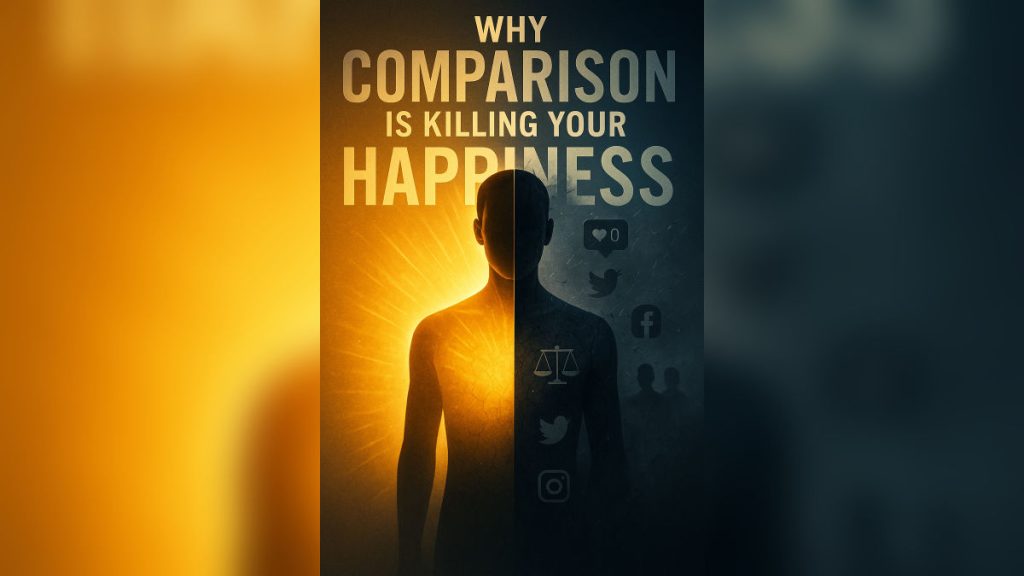
Short answer: Comparison kills happiness because it ties your self-worth to someone else’s highlight reel. A study in the Journal of Social and Clinical Psychology linked Instagram and Facebook comparison directly to depressive symptoms. The way out is gratitude, less screen time, value-based goals, celebrating small wins, and self-compassion.
It starts innocently enough. A scroll through Instagram, a casual conversation about someone’s new job, or a glimpse of someone’s highlight reel online. Before you even realise it, you’ve started comparing your life, your pace, your success — to theirs. And just like that, the joy you once felt about your own achievements begins to shrink.
Comparison is a deeply human behaviour, hardwired into us for survival and social learning. But in today’s hyper-connected, curated digital world, this natural instinct has morphed into a constant internal critic. It chips away at our peace, our progress, and our self-worth. Slowly but surely, comparison kills happiness — and the worst part is, many of us don’t even notice it happening.
Why does comparison erode self-worth?
Why we feel “less than” so often
At its core, comparison creates a mental scale where someone always seems to be doing better than you. A better job. A fitter body. A more exciting social life. And when that pattern becomes habitual, your sense of self-worth takes a hit.
A study published in the Journal of Social and Clinical Psychology found that social comparisons, especially on platforms like Facebook and Instagram, were directly linked to depressive symptoms. The more you compare, the worse you feel about yourself.
I remember a time in college when a close friend landed a dream internship at a major tech company. I was happy for her. Genuinely. But beneath that, I felt a pit in my stomach. Why not me? What am I doing wrong? It took weeks to shake off that feeling of not measuring up, even though I was on my own unique path.
How does comparison fuel envy and disconnection?
The emotional fallout
Comparison doesn’t just steal joy — it replaces it with envy, bitterness, resentment. These emotions don’t only eat at your happiness. They damage your relationships too.
Instead of celebrating others’ wins, you may find yourself secretly wishing they’d fail. Or worse, pretending to be happy while quietly resenting them. That emotional friction builds walls where there should be connection.
According to Psychology Today, repeated exposure to upward social comparisons (comparing yourself to someone “better”) can reduce your capacity for empathy and increase feelings of hostility. And that’s not just harmful to you — it’s harmful to your community and the way you relate to others.
Why does keeping up cause stress?
Keeping up isn’t just exhausting, it’s harmful
Let’s face it: when you constantly measure your worth by someone else’s standard, life becomes a race you can’t win. The pressure to “keep up” triggers chronic stress and anxiety, often rooted in the fear of falling behind or being judged.
Even when you succeed, it doesn’t feel like enough — because someone will always be ahead of you in some way. You might land a new job, but someone else just got promoted. You might feel proud of your body, but someone else seems fitter.
That kind of thinking becomes a mental treadmill. You run faster. You push harder. But you never really arrive anywhere. And over time, it drains your mental health.
What does comparison do to your own path?
The cost of distraction
Perhaps the saddest cost of comparison is how it distracts you from your own journey. When you’re constantly looking sideways, it’s hard to look forward. You stop focusing on what you want, and start chasing what looks impressive in someone else’s story.
I once spent months pursuing a career path I had no real passion for — just because it seemed to be “the thing to do” among my peers. By the time I realised I was building a life I didn’t even like, I had already lost touch with what mattered most to me.
That’s the danger of comparison: it doesn’t just kill happiness — it steals authenticity.
How does social media make comparison worse?
The illusion of perfection
It’s impossible to talk about comparison today without addressing the role of social media. These platforms are curated highlight reels — people showing their best moments, edited selfies, life milestones.
A 2021 study by Frontiers in Psychology revealed that frequent Instagram use was linked to higher body dissatisfaction and social comparison, especially among younger users. The more we scroll, the more we’re exposed to unrealistic standards.
What we forget is that no one posts their full story. No one uploads their failures, insecurities, or everyday mundaneness. So comparing your behind-the-scenes to someone else’s spotlight moment isn’t just unfair. It’s emotionally dangerous.
How do I stop comparing myself to others?
Thankfully, you’re not powerless. There are simple, effective ways to pull yourself out of the comparison spiral and start reconnecting with your own joy.
1. Practise gratitude daily
Focusing on what you do have shifts your mindset from scarcity to abundance. Start a daily habit of writing down three things you’re grateful for — even small things, like a good cup of coffee or a kind message from a friend.
Gratitude has been proven to increase overall well-being. According to Harvard Health, people who regularly express gratitude experience higher levels of optimism, life satisfaction, and emotional resilience.
2. Limit your social media intake
Try scheduling screen-free time each day. You can also unfollow or mute accounts that trigger negative comparisons. Instead, fill your feed with creators who inspire rather than intimidate.
Remember: you’re not obligated to consume content that makes you feel bad about yourself.
3. Set personal, value-based goals
Your goals should reflect your values, not external validation. Instead of “become a manager by 25,” try “build meaningful skills that align with my purpose.”
Personal goals ground you in your own story, keeping you focused on what truly matters to you.
4. Celebrate progress, not perfection
Track your small wins. Did you speak up in a meeting today? Did you go to the gym even though you didn’t feel like it? That’s growth. That’s momentum. Confidence builds from those micro-victories.
5. Be kind to yourself
Practise self-compassion. Speak to yourself the way you’d speak to a struggling friend. You’re not behind — you’re just on a different road.
Happiness isn’t a competition
You weren’t born to be a copy of someone else’s life. You were born to live yours — beautifully, imperfectly, and in your own time.
The next time you catch yourself spiralling into comparison, pause. Take a deep breath. Remind yourself: You’re doing your best. And your journey is valid, even if it looks different from theirs.
Because comparison doesn’t just kill happiness. It kills authenticity, creativity, peace. But the good news is, you can stop. You can reclaim your joy. You can choose to walk your own path, eyes forward, heart open.
So here’s your call to action
Today, celebrate one thing about yourself. No filters. No comparison. Just one thing you’re proud of.
Then take the next step forward — not to catch up with someone else, but to grow deeper into who you are becoming.
FAQs about comparison and happiness
Why does comparison make me unhappy?
Comparison ties your self-worth to someone else’s highlight reel, which is a moving target you can never hit. A study in the Journal of Social and Clinical Psychology linked frequent Facebook and Instagram comparison directly to depressive symptoms. The more you compare, the worse you tend to feel.
Is it normal to compare yourself to others?
Yes. Comparison is a hardwired human behaviour rooted in social learning and survival. The problem isn’t comparison itself, it’s the volume. Social media has turned a natural instinct into an always-on habit, and that’s what damages mental health.
How do I stop comparing myself on Instagram?
Limit screen time, mute or unfollow accounts that trigger negative comparisons, and intentionally fill your feed with creators who inspire rather than intimidate. Pair that with a daily gratitude habit — writing down three small things you’re grateful for shifts your focus from scarcity to abundance.
What does comparison do to mental health?
Chronic comparison drives stress, anxiety, envy, and disconnection. Psychology Today notes that repeated upward social comparisons can reduce empathy and increase hostility, which damages relationships as well as self-worth.
How do I build self-worth that doesn’t depend on others?
Set value-based goals (skills and purpose, not titles), celebrate small wins, practise self-compassion, and ground yourself in your own story rather than someone else’s timeline. Confidence grows from your own evidence, not from comparison.