
Short answer: Gen Z is driving a new wave of Indian cinema that trades escapism for emotional realism. Films like Animal and Dhurandhar succeed because they portray flawed characters, moral grey zones and hyper-local settings. A TheYouthTalks survey of 200+ respondents found 62% of Gen Z prefers content with real emotions and imperfect characters.
Over the past few years, a powerful shift has reshaped the Indian film industry. Movies like Animal and Dhurandhar — emotionally gritty, morally ambiguous, unapologetically raw — have become cultural flashpoints. They don’t only entertain; they provoke, disrupt and linger. At the centre of this transformation is Gen Z, a generation that gravitates toward authenticity and mistrusts anything too polished or idealistic.

Why does the age of hyper-realism and moral complexity matter?
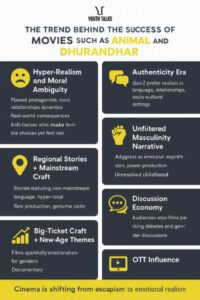
Gone are the days when the righteous hero in a spotless white shirt symbolised success. Younger viewers find such portrayals flat and unconvincing. They prefer stories rooted in emotional chaos, where characters are deeply flawed and relationships come with cracks.
Films like Animal work because they portray dysfunction with unsettling honesty — the obsessive protagonist, the complicated father–son dynamic, the raw emotional violence. Dhurandhar follows a similar path, drawing power from rural realism and hyper-local storytelling. These films don’t offer escape. They offer reflection.
International content has pushed this shift too. Shows like Narcos, Money Heist and Squid Game normalised darker, psychologically intense storytelling.
TheYouthTalks spoke with over 200 respondents. 62% of Gen Z prefers content that highlights real emotions and imperfect characters, mirroring what they experience in their own lives.
What defines the authenticity era of Gen Z?
This generation grew up in a digital environment where honesty — often brutal — is currency. From mental health confessions on Instagram to creators sharing unfiltered life updates, Gen Z is immersed in a culture of openness. Anything staged or artificially dramatic is dismissed quickly.
They relate more to:
- Realistic conflicts
- Flawed relationships
- Vulnerable emotional expression
- Socio-cultural authenticity
If cinema doesn’t feel emotionally true, it doesn’t stand a chance.

How does unfiltered masculinity fit the search for emotional honesty?
One of the most discussed shifts is the rise of unfiltered masculinity in cinema. Movies like Animal, Pushpa and Dhurandhar dive into the psychology of men who are far from perfect — men shaped by anger, trauma, ego and vulnerability.
This isn’t glorification. It’s representation.
Interestingly, this narrative appeals to both young men and women. Some identify with the emotional turmoil. Others engage critically with it. Either way, it fuels massive conversations. In the digital age, conversation equals cultural relevance.
Why is regional storytelling meeting mainstream craft?
One of the most refreshing parts of this shift is the rise of regional films. Dhurandhar is a powerful example — its hyper-local setting, dialect, non-filmic faces and raw production values feel deeply rooted. Gen Z views regional cinema as more honest, perhaps because it feels closer to lived reality than larger-than-life Bollywood spectacles.
Theatres are now showcasing films that once belonged only to local audiences. This blend of local narrative with high-quality filmmaking is a winning formula.
How has social media’s raw lens changed expectations?
Instagram Reels and YouTube Shorts have reshaped the visual vocabulary of young audiences. They’re used to seeing life unedited, emotional, sometimes chaotic. When on-screen content mirrors that aesthetic, it feels more relatable.
Handheld shots, unpolished lighting, spontaneous dialogue — these choices make films feel less like performances and more like life unfolding.
Then comes the discussion economy. A film thrives when it sparks debate. Animal succeeded not just at the box office but across feeds and comment sections. It became an event, a battleground of opinions. In Gen Z culture, a movie that gets everyone talking automatically wins.
What is the new cinematic reality?
If there is one defining trend behind the success of Animal, Dhurandhar and similar films, it’s this:
Cinema is shifting from escapism to emotional realism — and Gen Z is leading that change.
They want stories that echo their world: complicated relationships, psychological depth, moral grey zones, characters who make mistakes. Imperfect heroes are no longer a risk. They’re a requirement.
As Indian cinema enters this era, the question isn’t whether raw, realistic storytelling will continue. The real question is how much further filmmakers will push the boundaries of honesty. Gen Z has made its choice clear — they want cinema that feels alive, uncomfortable and true.
FAQs about Gen Z and realistic cinema
Why does Gen Z prefer realistic cinema?
Gen Z grew up in a digital culture of open confession and unfiltered content. They relate to flawed characters, realistic conflicts and vulnerable emotional expression, and reject anything that feels staged.
What percentage of Gen Z prefers realistic, imperfect characters?
In a TheYouthTalks survey of over 200 respondents, 62% of Gen Z said they prefer content that highlights real emotions and imperfect characters.
Why did Animal resonate with Gen Z audiences?
Animal portrays dysfunction with unsettling honesty — an obsessive protagonist, a complicated father–son dynamic, raw emotional violence — which mirrors the moral grey zones Gen Z looks for in stories.
What makes Dhurandhar part of the raw storytelling wave?
Dhurandhar draws power from rural realism and hyper-local storytelling — dialect, non-filmic faces and raw production values — which Gen Z reads as more honest than large-scale Bollywood spectacles.
Which international shows influenced this Indian cinema shift?
Shows like Narcos, Money Heist and Squid Game normalised darker, psychologically intense storytelling globally, paving the way for Indian audiences to embrace morally complex films at home.