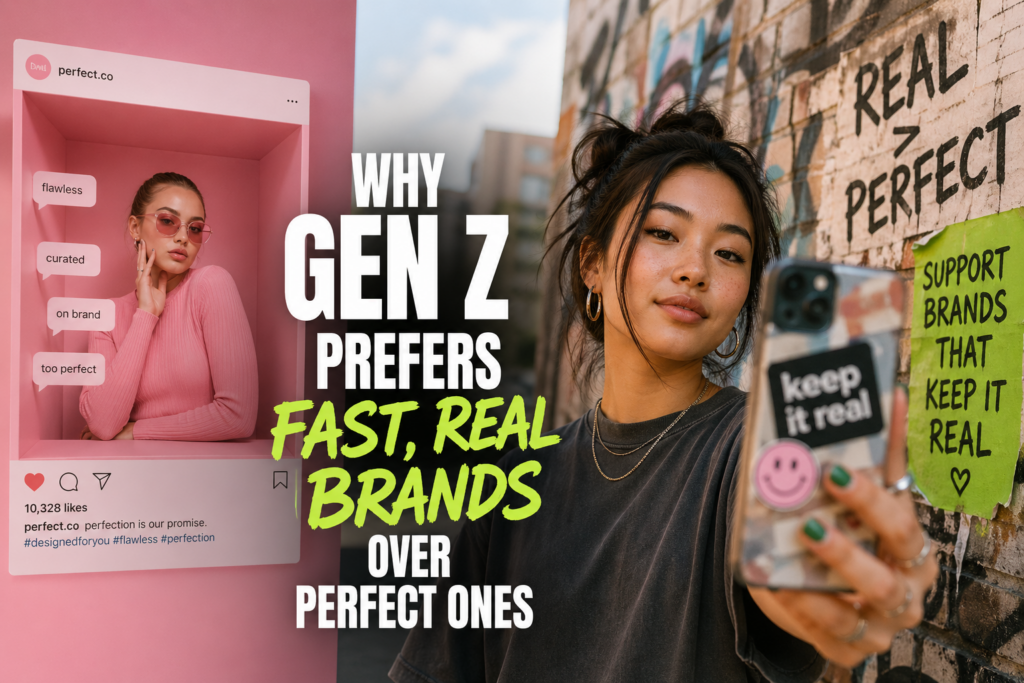
Short answer: Gen Z trusts brands that reply quickly and sound human, not ones with perfect-but-late copy. Salesforce reports that over 70% of consumers expect real-time responses, and that figure runs higher among younger audiences. Indian brands like Zomato and Swiggy have built loyalty by treating every DM as a brand-building moment, not a support ticket.
For decades, brands chased one thing. Perfection. Perfect campaigns, perfect copy, perfectly curated brand voices, every message polished within an inch of its life and every visual meticulously crafted by a team of three before a single response went live. And for a long stretch, that script worked.
Not anymore. Especially not with Gen Z, who grew up watching brand pages reply to memes at 2 a.m. and now treat anything slower as suspicious. The very perfection that once signalled professionalism feels distant today, almost like talking to a hold-music recording. In a world that moves in real time, polish often costs you the one thing that actually matters: responsiveness.
What’s wrong with the perfection playbook?
Perfection, by design, is slow. It needs approvals, iterations, alignment across legal and brand and social, and that level of caution strips the spontaneity out of anything it touches. What comes out the other side is clean, refined, and controlled. Also a bit dead.
Gen Z catches this instantly. They’ve been raised on instant, conversational, unfiltered communication. WhatsApp replies. Instagram DMs at midnight. Their baseline expectation is speed and authenticity, so when a brand answers three days late, or worse sounds like a press release, friction shows up.
The message may be perfect. But the experience feels impersonal, and that disconnect matters.
Why is responsiveness the new trust signal?
If there’s one trait Gen Z values more than perfection, it’s responsiveness. Not just replying. Replying quickly, relevantly, humanly. Responsiveness signals something deeper than efficiency, it communicates attention. It tells the consumer: “We see you. We’re listening. We care.” In a crowded feed, that feeling lands harder than any tagline.
Speed has become a trust signal
Trust used to grow out of reputation, consistency and product quality. Then speed walked into the room. A delayed response doesn’t read as careful anymore, it reads as indifferent. According to a Salesforce report, over 70% of consumers expect companies to respond to their inquiries in real time, and that figure climbs even higher among younger audiences. Speed isn’t a bonus now. It’s the floor.
Conversations shape perception
Brand perception isn’t built only through campaigns these days. It’s shaped in comment sections, DMs and replies. Every interaction becomes a micro-experience: a witty reply can spark affinity, a thoughtful response can build trust, a delayed or generic answer can quietly torch both. Gen Z doesn’t just consume content. They participate in it, and participation changes the rules.
Imperfection feels human
Here’s the paradox. A slightly imperfect but timely reply often feels more genuine than a delayed, polished one. Why? Because imperfection signals humanity. A quick message with personality, even if it’s not flawlessly worded, reads like a real person on the other end. And in an era of automation and templated everything, that human texture stands out.
Which Indian brands are getting this right?
Some Indian brands have read this shift unusually well. Take Zomato. Its social media presence isn’t a campaign engine, it’s a conversation. Witty replies, real-time engagement, the lot, and the personality feels alive rather than approved. Swiggy plays a similar game. Whether it’s resolving a complaint or jumping into a meme thread, the brand shows up consistently, and promptly.
These brands don’t talk at their audience. They talk with them. And that one preposition makes all the difference.
Why does a small reply define trust?
Picture this. You tag a brand in a complaint. One brand replies within two hours, acknowledges the issue, apologises sincerely and offers a solution. Another brand surfaces the next day with a generic template, formal language and the warmth of a parking ticket. Which one do you trust more?
Obvious, isn’t it.
Trust isn’t built in grand gestures, it’s built in small timely moments. The two-hour reply doesn’t even have to be perfect. It just has to land while the moment is still warm.
What’s the hidden cost of over-perfection?
Plenty of brands sacrifice responsiveness in their hunt for polish without realising it.
Over-approval processes. Multiple layers of sign-off slow everything down. By the time a response is ready, the moment has cooled.
Reliance on templates. Pre-written replies keep the tone consistent, sure, but they often lack empathy and relevance. Consumers can tell when they’re reading a script. They always can.
Treating conversations as support, not marketing. Many brands still see replies as a customer-service function, not a branding opportunity. But every interaction shapes perception, and a single response can influence not just the person involved but everyone watching.
What are the smart brands doing differently?
They empower teams to act fast
Instead of rigid hierarchies, smart brands give social and support teams the autonomy to respond in real time. Speed needs trust. Internally as much as externally.
They adopt a human tone
They drop corporate language and embrace conversational communication. Short sentences. Natural phrasing. Real emotion. Because people don’t talk like brands, and brands shouldn’t talk like manuals.
They treat every interaction as brand building
A reply is not just a reply, a comment is not just a comment. It’s an opportunity to reinforce identity, tone and trust, all at once.
A quick personal observation
I’ve watched this shift firsthand. Last month I pinged a small D2C brand on Instagram with a query, and frankly, I’d written off the whole thing, expecting maybe a reply the next day. Instead I got a response within minutes. It wasn’t perfect. It wasn’t overly polished. But it was helpful, friendly and immediate, and that changed my perception in seconds. Not just efficient. Attentive. That’s the power of responsiveness, it transforms perception in real time.
Why is the broadcast model dead?
Traditional marketing ran on broadcasting. Brands made messages, audiences consumed them, end of story. That model is outdated. Modern branding is interactive: conversations not campaigns, engagement not just reach, presence not just messaging. Responsiveness sits at the centre of this shift.
Real beats perfect.
Perfection is planned, controlled, structured, executed by committee. Responsiveness, on the other hand, is real, immediate and human. And in a world where consumers crave authenticity, real beats perfect every single time. Gen Z doesn’t expect brands to be flawless. They expect them to be present.
FAQs about Gen Z and responsive brands
Why does Gen Z trust responsive brands more than polished ones?
Gen Z grew up on instant, conversational platforms like WhatsApp and Instagram DMs, so they read speed and human tone as signals of care. A timely, slightly imperfect reply feels more genuine than a delayed, scripted one because imperfection signals a real person is on the other end.
What percentage of consumers expect real-time brand responses?
According to a Salesforce report, over 70% of consumers expect companies to respond to their inquiries in real time. That expectation runs even higher among younger audiences, which is why speed has become a baseline rather than a bonus.
Which Indian brands are known for fast, human social media replies?
Zomato and Swiggy are the standout examples. Both treat their social channels as conversations rather than broadcast feeds, replying to complaints, memes and casual mentions with personality and speed.
How can a brand become more responsive without losing brand voice?
Empower social and support teams to act in real time, drop corporate templates in favour of natural phrasing, and treat every reply as brand building. A consistent human tone matters more than a perfectly approved one.
Is replying fast more important than replying well?
Both matter, but speed has overtaken polish as the trust signal. A quick, friendly reply that solves the issue often outperforms a slow, formal one because it lands while the customer is still emotionally engaged.