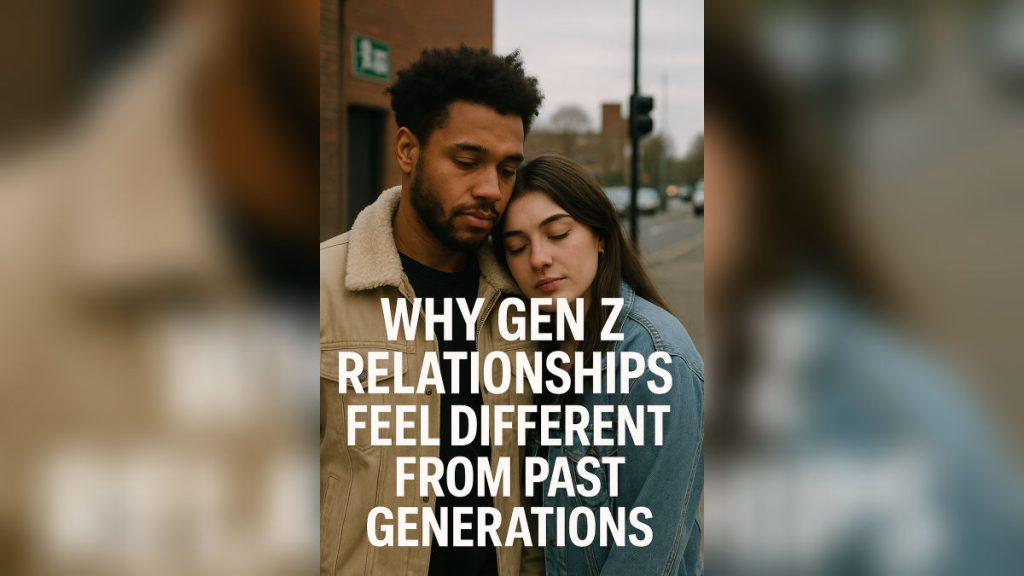
Short answer: Gen Z relationships feel different because the world they grew up in is different. Dating starts on apps like Bumble, Tinder and Hinge, intimacy lives on FaceTime and Snapchat, and labels like situationships or open relationships have replaced the old linear path. Therapy talk is normal, 74% want emotionally open partners, and over 70% see going to a therapist as strength.
Relationships are a universal part of being human. But the way each generation engages with love, dating and commitment usually mirrors the world it grew up in. For Gen Z (those born roughly between 1997 and 2012), romantic life looks and feels different from what their parents or even older siblings knew.
This isn’t a passing trend. It’s a cultural shift rooted in technology, changing values, and a deeper sense of emotional wellbeing. So what makes Gen Z love stories so distinct? Let’s take a closer look.
How does the digital world change how Gen Z dates?
Relationships start (and sometimes stay) online
For Gen Z, the line between digital and physical connection is thin. Sometimes it’s nonexistent. Earlier generations met partners through friends, school, or the local community; Gen Z often finds love through a swipe, a follow, or a meme reply. Dating apps like Bumble, Tinder and Hinge aren’t a last resort. They’re the default setting.
Virtual tools like FaceTime, Snapchat and Discord aren’t just convenience hacks, they’re a core part of how relationships get nurtured. We talk every night before bed, even if we’re apart,
says Neha, 21. It’s like our version of hanging out.
And digital-first relationships come with their own perks. Efficiency. Flexibility. Constant access. They also bring confusion when texts get misread or boundaries blur. Still, for this generation, digital intimacy is real intimacy.
Why does Gen Z choose authenticity over aesthetics?
No time for pretending
You’d think growing up on Instagram and YouTube would make Gen Z worship appearances. Ironically, that constant exposure to curated lives has bred a deep hunger for the opposite. In romantic relationships, this generation is far less interested in fairytale filters and far more focused on honest conversations, quirks and emotional depth.
The numbers back it up. According to a 2023 report from Tinder, 74% of Gen Z singles say they want a partner who is emotionally open and vulnerable. They’re not afraid to be weird, messy, or still figuring things out, and they want partners who meet them with the same realness.
From showing up to a date in thrifted clothes to talking about therapy on the third hangout, Gen Z’s version of romance is raw, honest, and grounded in self-expression. Refreshing, really.
How is Gen Z redefining commitment?
Not every love story needs a label
Maybe the most visible shift in Gen Z relationships is the fluid approach to commitment and structure. Older generations followed a linear path (dating, exclusivity, marriage), but Gen Z is carving out new paths. Think situationships, nanoships, and open relationships.
This doesn’t mean Gen Z doesn’t care about commitment. They want commitment on their own terms. They’re more likely to explore what feels right than follow societal scripts.
Take Aarav, 24, who describes his current relationship as
emotionally monogamous but open romantically.He says,It works because we talk about everything. It’s about trust, not tradition.
And it’s not only about exploring new formats. It’s about prioritising individual growth before locking into a lifelong bond. Many Gen Z individuals believe understanding themselves deeply is a precursor to understanding someone else, and that belief is shaping how they show up in love.
Why is mental health now part of the relationship?
Emotional intelligence is the new currency
Maybe more than any other generation, Gen Z is emotionally aware. And unafraid to talk about it. Conversations about anxiety, trauma and therapy are no longer private; they’re part of the everyday relationship landscape.
Where older generations might have hidden struggles to look strong,
Gen Z is more likely to say, I’m not okay, and I need you to understand that.
This openness extends to boundaries too.
We’re constantly checking in,says Simran, 20.Not in a toxic way, but in a ‘How are we feeling?’ kind of way.Emotional labour gets shared more equally, and mental wellbeing weighs heavier than performative gestures of love.
According to the American Psychological Association, over 70% of Gen Z believes that seeing a therapist is a sign of strength, not weakness. That sentiment translates into how they support their partners, and what they expect in return.
Why is Gen Z’s approach to love so pragmatic?
Compatibility over conformity
Gen Z grew up during deep uncertainty: climate change, political instability, economic anxiety, a global pandemic. Those forces have shaped a generation that approaches love with realism, even when it craves romance.
They’re more likely to weigh compatibility, shared values and mutual respect over status, wealth or appearances. Many consciously reject performative relationships, choosing emotional sustainability instead. Connections that can weather life’s ups and downs.
It’s not about lowering the bar, it’s about setting the right one.
This pragmatism also means Gen Z is slower to settle down. With housing unaffordable in many cities and job markets unpredictable, many choose to focus on education, careers or creative pursuits before committing to life partnerships. And that isn’t seen as failure, it’s seen as smart.
What new vocabulary has Gen Z added to dating?
Gen Z has introduced a new vocabulary around relationships. Polyamory, emotional exclusivity, ghosting, breadcrumbing, love bombing, and more. It reflects a generation reshaping how relationships function and how they’re understood.
Terms like safe space
and emotional bandwidth
aren’t just buzzwords. They’re legitimate parts of the Gen Z romantic lexicon. Identity is deeply entwined with how they love, and they’re unapologetically intentional about it.
For many, love isn’t about finding the one.
It’s about finding yourself in the process.
So is Gen Z really detached from love?
It’s easy for older generations to dismiss Gen Z as emotionally detached or commitment-phobic. But the reality is far more nuanced.
Gen Z isn’t running away from love, they’re running toward something better. Something deeper. Something more equitable. They’re redefining relationships not out of rebellion, but out of a sincere desire to do better, for themselves and for their partners.
So if Gen Z relationships look different, it’s because the world they grew up in is different. And maybe, just maybe, their version of love (with all its messiness, memes, mindfulness and meaning) is exactly what the future needs.
FAQs about Gen Z relationships
Why do Gen Z relationships feel different from past generations?
Gen Z grew up online, in a time of climate, political and economic uncertainty. So their relationships lean digital-first, prioritise mental health, and reject scripted milestones in favour of compatibility, vulnerability and shared values.
What is a situationship in Gen Z dating?
A situationship is a romantic connection without a defined label or set timeline. Gen Z uses it to explore intimacy and commitment on their own terms, often alongside related forms like nanoships or open relationships.
How does Gen Z use dating apps?
Dating apps like Bumble, Tinder and Hinge are the default starting point, not a backup. Gen Z layers them with FaceTime, Snapchat and Discord, treating digital intimacy as a real and valid part of how relationships are built and maintained.
Do Gen Z couples talk about therapy and mental health?
Yes. Therapy talk, anxiety, boundaries and emotional check-ins are part of everyday Gen Z relationships. Per the American Psychological Association, over 70% of Gen Z sees seeing a therapist as a sign of strength, not weakness.
Is Gen Z afraid of commitment?
Not really. Gen Z wants commitment, but on their own terms. With unaffordable housing and unstable job markets, many delay long-term partnerships to focus on careers, self-understanding and emotional readiness first.