Short answer: Gen Z isn’t anti-love. They’re cautious because they grew up watching commitment break, and they’ve got a paradox of choice via Tinder, Bumble and Hinge. The fix is self-awareness, slow building, and honest talk, not pressure to settle down.
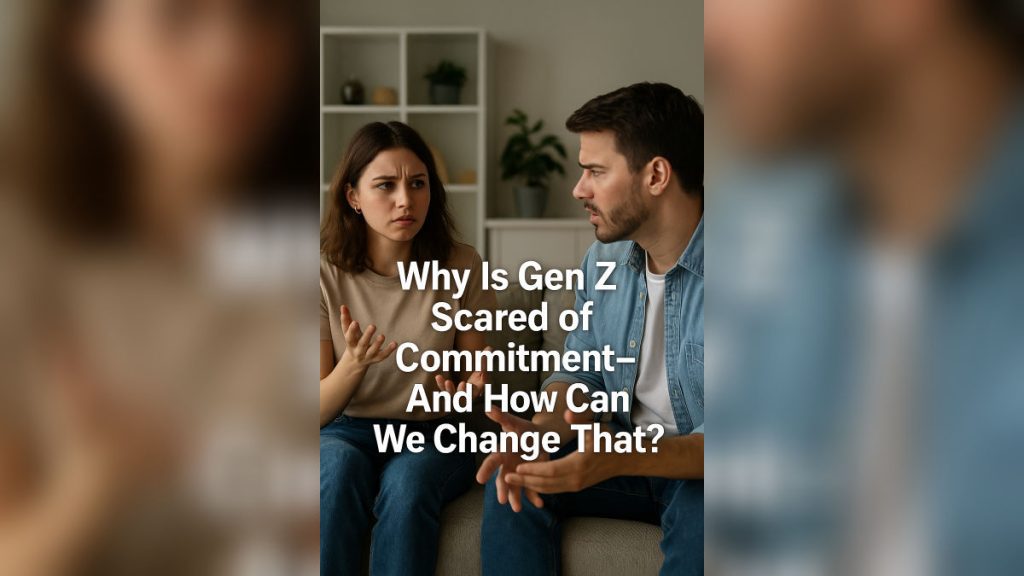
Commitment. For some it’s a promise. For a lot of Gen Zers, the word lands more like a warning label, a flashing red light in the maze of modern dating. They want meaningful connection. They also stall at the edge of it.
So what’s going on? And how do we shift the script without sounding like a 1990s wedding magazine? Let’s unpack the fear, dig into the roots, and reframe commitment through a kinder, more grounded lens.
Why is Gen Z hesitant to commit?
A generation shaped by uncertainty
Gen Z grew up watching permanence fall apart in real time. Parents divorcing. Celebrity breakups going viral before the wedding photos even left the cloud. They’ve seen love unravel more often than they’ve seen it last.
According to a Pew Research Center study, nearly 40% of Gen Z individuals say they’re unsure whether marriage is even a goal worth pursuing. For many, commitment carries the emotional weight of potential heartbreak, disappointment and failure, outcomes they’ve watched up close.
“I saw my sister go through a horrible breakup after five years,” says Ananya, a 23-year-old student in Delhi. “They were so in love. Now, I can’t help but wonder, what’s the point if it can all fall apart?”
The paradox of choice and the FOMO dilemma
In the age of Tinder, Bumble, Hinge and an ever-growing list of dating apps, Gen Z is swimming in options. On one hand it’s empowering, freedom of choice, exploration, accessibility. On the other, it breeds a quiet anxiety: what if there’s someone better out there?
And that’s the catch. The grass-is-greener mindset feeds short flings, swiping fatigue, and an aversion to long-term planning. FOMO becomes a real, daily barrier to emotional commitment.
Chasing stability before love
Many Gen Zers are hyper-focused on personal development. Education, careers, side hustles, passion projects, they’re building a life before bringing someone else into it. With rising costs, economic instability and brutal job competition, relationships can feel like a distraction, sometimes even a luxury.
“I want to be emotionally and financially stable before getting into anything serious,” shares Aarav, 24, from Bengaluru. “Commitment can wait.”
This isn’t selfishness. It’s survival. But it also means love often gets postponed until “everything is figured out” — which, realistically, may never fully happen.
The self-expression era
Another defining trait of Gen Z is the embrace of individuality and non-conformity. Old milestones, marriage, buying a home together, settling down, don’t carry the same weight. The focus has shifted to self-expression, fluidity and freedom.
Empowering, yes. But it can also feed a quiet fear that commitment might compromise identity or independence.
Digital communication vs real intimacy
Technology changed everything. It’s easier than ever to connect, but the connection often lacks depth. Messaging replaces meaningful conversation. Emojis stand in for emotional vulnerability. And while memes and “streaks” are fun, they rarely build true intimacy.
Without practice in tough conversations, misunderstandings or emotional honesty, Gen Z can struggle to build the kind of trust commitment needs.
How can Gen Z move past the fear of commitment?
Start with self-awareness
Fear of commitment doesn’t mean something’s broken. It means there’s something worth exploring. Is the fear rooted in past trauma? Unrealistic expectations? Lack of clarity about your own needs?
Self-reflection through journaling, meditation or therapy can help unpack these fears and bring more intention to relationships.
Emotional growth equals relationship readiness
You can’t love someone well if you’re at war with yourself. Investing in mental health and emotional resilience matters. Whether that’s counseling, self-help books, or guided therapy apps, emotional literacy builds deeper, healthier bonds.
As therapist Esther Perel puts it, “The quality of your relationships determines the quality of your life.”
Build before you bind
Commitment doesn’t have to be a leap of faith. Build a foundation first, mutual respect, aligned values, emotional compatibility, trust. It’s okay to take it slow. In fact, it’s necessary.
One 21-year-old in Pune (her words, not mine) shared, “My current relationship works because we didn’t jump into labels. We focused on getting to know each other first. That’s what made commitment feel safe, not scary.”
Reframe the narrative
Many Gen Zers see commitment as the end of freedom. But what if we flipped that? A healthy relationship can offer more freedom, the freedom to be yourself, grow alongside someone, feel secure without losing your individuality.
Drop the perfectionism. Every relationship has conflict. The goal isn’t flawless love. It’s growth, support, and shared meaning.
Talk it out
Gen Z values transparency, so bring that into the relationship. Have the hard talks. Discuss future plans, boundaries, emotional needs. Honesty doesn’t scare the right person, it builds trust.
Learn from others
Surround yourself with examples of healthy commitment, friends, mentors, family, even digital communities. Ask questions. Learn from their wins and losses. This helps demystify what commitment really looks like, not the Pinterest version.
Practice vulnerability
Being vulnerable isn’t weak. It’s brave. Share your fears, dreams and doubts with your partner — vulnerability is the glue that deepens connection. It’s okay to be scared. It’s okay to not have all the answers.
But opening your heart, even a little, is the only way to know what love could actually feel like.
Commitment doesn’t have to be a cage
For Gen Z, the challenge isn’t a lack of interest in relationships. It’s fear of the emotional cost. With self-work, honest communication, and a fresh way of looking at love, that fear can shift into curiosity, courage, and commitment by choice rather than obligation.
In a world of swipe culture and curated feeds, choosing to invest in someone emotionally is one of the most radical acts of modern love.
Final thoughts: redefining love, one choice at a time
Commitment isn’t about sacrificing your dreams, losing your freedom, or locking into an outdated blueprint. For Gen Z, it’s about co-creating something meaningful with empathy, awareness and mutual respect.
So if you’re scared of commitment, you’re not alone. And you’re not broken. You’re just being cautious with your heart in a world that doesn’t always handle hearts gently.
FAQs about Gen Z and commitment
Why does Gen Z avoid serious relationships?
Gen Z often delays serious relationships because of economic pressure, emotional caution from watching parents and celebrities split, and the paradox of choice from dating apps. According to Pew Research, nearly 40% are unsure if marriage is even a personal goal. The hesitation is more strategic than apathetic.
Is fear of commitment a real psychological issue?
Yes, but it’s rarely a clinical diagnosis. It usually shows up as a pattern of avoiding labels, ghosting after intimacy, or stalling on long-term plans. Therapists like Esther Perel link it to attachment patterns, past trauma, and modern overload of options. It’s workable, not permanent.
How can I tell if my partner is commitment-phobic?
Common signs include avoidance of defining the relationship, reluctance to introduce you to friends or family, vague future-talk, and emotional withdrawal after closeness. The key isn’t labelling them, it’s having a direct conversation about where you both stand.
Can a Gen Z relationship still lead to marriage?
Absolutely. Plenty of Gen Z couples build serious, long-term partnerships, they just tend to take it slower and prioritise emotional compatibility over traditional milestones. The shape looks different, the substance is the same.
What’s the healthiest way to talk about commitment early?
Skip the ultimatum. Try a calm, low-pressure check-in: what each of you wants in the next six to twelve months, what feels safe, what feels too fast. Use “I” statements. The goal is clarity, not a contract.