Short answer: Generation Alpha, born after 2010, are the first true AI natives and often treat chatbots like Alexa, ChatGPT and Khan Academy’s AI tutor as companions. A 2024 Digital Childhood Research Institute study found 38% of children under 14 believed their AI chatbots “really cared” about them, and a 2023 Pew Research report found 61% of Indian parents expect AI to play a major role in their child’s education, though only 29% feel equipped to guide safe use.
Why kids today are chatting with bots like old pals
Generation Alpha, those born after 2010, are the first true AI natives. These kids have never known a world without virtual assistants, instant answers and talking devices. Negotiating a later bedtime with Alexa or asking ChatGPT to help with homework feels as routine to them as brushing their teeth.
So what does this constant AI interaction do to their emotional world? What do they really think about AI friends and chatbots? The answers may surprise you.
1. Does AI feel like a friend to Gen Alpha?
For many Gen Alpha kids, AI chatbots aren’t just tools. They are companions. Platforms like Khan Academy’s AI tutor help them solve math problems or work through history in a more engaging way.
Even more fascinating? Some children describe talking to AI as a way to “think out loud.” Eleven-year-old Riya from Pune said, “I like chatting with my AI friend because it doesn’t judge me. I can ask anything, even silly stuff.”
There is comfort in that. AI doesn’t roll its eyes, interrupt or tell them to hurry up. In a world that often moves too fast for young minds, that patience can feel reassuring.
2. Are emotional bonds with AI real and risky?
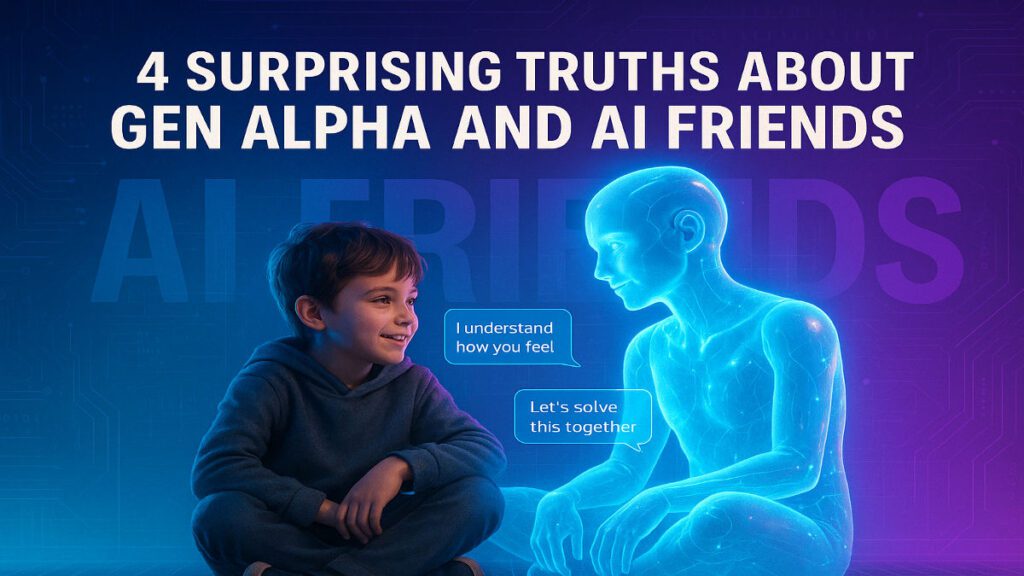
This is where it gets complicated. AI is designed to sound human, sometimes too human. It remembers preferences, mimics empathy and responds with phrases like “I understand how you feel.”
This can lead to what psychologists call simulated companionship. It feels like friendship, but without the mutual care and messy complexity of human relationships.
According to a 2024 study by the Digital Childhood Research Institute, 38% of children under 14 believed their AI chatbots “really cared” about them. That is both touching and troubling.
Over time, children may lean on AI for emotional comfort rather than developing emotional resilience or reaching out to real people.
3. Do Gen Alpha kids understand AI’s limits?
Gen Alpha is smart, but not immune to illusion. Many kids don’t fully grasp what AI is. They know it can “talk,” but may not see that it isn’t truly thinking or feeling.
That gap makes ethical education essential. Kids need to know that:
- AI doesn’t have emotions or intentions
- It can’t replace a friend, teacher or parent
- It learns from data, which includes what they say to it
Parental guidance matters here. As 2025 unfolds, many parents encourage AI use for learning but worry about privacy and how much personal data their kids are sharing.
One Mumbai parent shared, “My daughter chats with her AI tutor more than she talks to her cousin. I had to explain it’s not a real friend, it’s software.”
4. How do peers and parents shape the AI experience?
Children are shaped by the people around them, and AI interaction is no exception. If their classmates are using chatbots to write poems or solve puzzles, they will want in too.
Parents still hold the power to set boundaries and add context. The goal is balance: welcome useful innovation while keeping real-world connections strong.
According to a 2023 Pew Research report, 61% of Indian parents believe AI tools will play a major role in their child’s education, but only 29% feel equipped to guide safe usage. That gap needs urgent attention.
The takeaway: AI isn’t the enemy, but it’s not a substitute
Gen Alpha’s relationship with AI friends and chatbots is nuanced. They find AI helpful, often comforting and undeniably cool. But while AI can simulate friendship, it cannot match the depth, unpredictability and emotional intelligence of human relationships.
As 2025 progresses, it is time to teach kids not only how to use AI but how to understand it. They need to know where technology ends and real connection begins.
Because what makes us human isn’t only the ability to ask questions. It is the ability to truly listen, feel and care.
Let’s help Gen Alpha grow up tech-savvy and emotionally grounded. The future is here. Let’s raise kids who can thrive in it, with both heart and hard drives.
FAQs about Gen Alpha and AI friends
Why do Gen Alpha kids treat AI chatbots as friends?
AI chatbots respond instantly, don’t judge and remember preferences, which makes them feel safe and patient to children who have grown up with virtual assistants from infancy.
Is it safe for children to form emotional bonds with AI?
AI can offer helpful companionship, but leaning on it for emotional support has risks. A 2024 Digital Childhood Research Institute study found 38% of children under 14 believed their chatbots “really cared,” which can blur the line between software and real friendship.
Do kids understand that AI doesn’t have real feelings?
Many don’t. Children often know AI can “talk,” but may not realise it doesn’t think or feel. Clear conversations about how AI learns from data are essential.
How should parents guide their child’s AI use?
Parents should set boundaries, encourage real-world connections and explain AI’s limits. A 2023 Pew Research report showed only 29% of Indian parents feel equipped to guide safe AI use, making education a priority.
Which AI tools are popular with Gen Alpha?
Common tools include Alexa, ChatGPT and Khan Academy’s AI tutor, which kids use for homework help, study support and casual chats.