
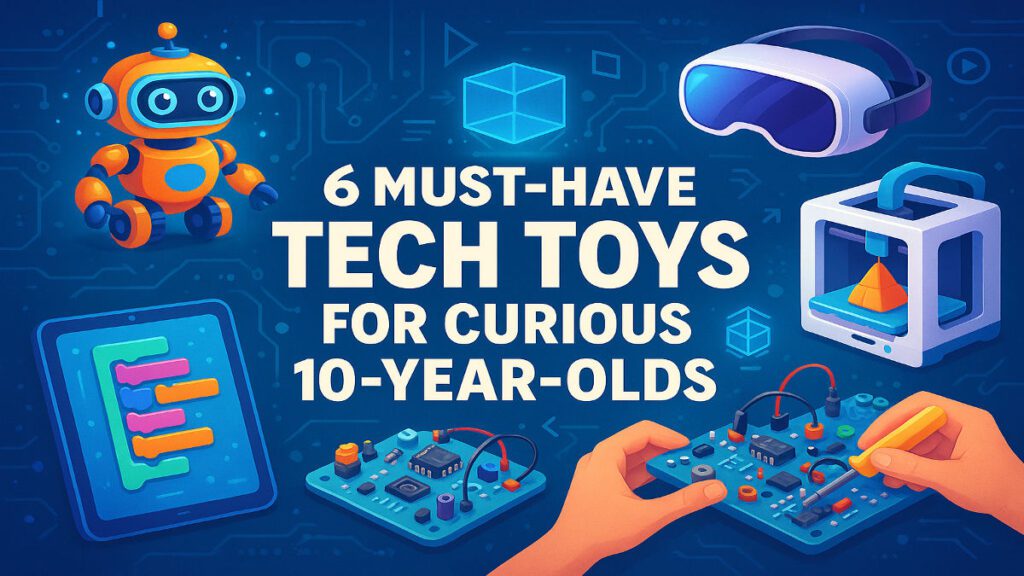
Short answer: The best tech toys for curious 10-year-olds in 2025 are robotics kits (Makeblock mBot, LEGO Mindstorms), coding games (Osmo, Scratch), 3D printing pens, DIY electronics kits (Snap Circuits, littleBits), and AR/VR tools like the Merge Cube. They mix play with STEM skills in engineering, coding and design.
It is 2025, and childhood curiosity has never been more tech-savvy. Today’s 10-year-olds, members of Generation Alpha, are growing up with screens, sensors and software woven into daily life.
The best tech toys push past passive screen time. They help kids explore, build and create, nurturing creativity and sparking interest in the logic behind the digital world. If you are a parent, teacher or doting relative shopping for the right gift, here are six picks that delight young inventors.
Which robotics kit is best for a 10-year-old?
Picture a child’s eyes lighting up as their handmade robot rolls across the floor. Robotics kits like the Makeblock mBot and LEGO Mindstorms Robot Inventor turn that moment into reality.
These kits teach foundational STEM concepts: engineering, coding and mechanical design. Children follow clear instructions to assemble parts, then bring their creations to life using beginner-friendly, block-based programming tools. My nephew built a robot that could avoid obstacles and dance to music; the pride on his face said it all.
“Robotics isn’t just about tech, it’s about empowering children to problem-solve and think like inventors,” says robotics educator Dr. Anita Rajan.
How do coding games make programming fun for kids?
Coding does not have to feel intimidating. Tools like Osmo Coding Awbie and the Scratch Coding Kit turn abstract ideas like loops and conditionals into interactive puzzles and adventures.
Osmo uses physical tiles that kids place in front of their device to control on-screen characters. Scratch, developed by MIT, gives children a kid-friendly digital canvas for storytelling and game creation.
Both platforms build computational thinking and logical reasoning for young minds that learn best through hands-on play.
Are 3D printing pens good for kids?
What if you could draw in the air? That is what 3D printing pens offer. These wand-like devices let kids sketch real three-dimensional objects by extruding warm plastic that quickly cools into solid shapes.
They suit artistic minds and young engineers, building spatial reasoning, design thinking and fine motor skills. A friend’s daughter used hers to create a miniature Eiffel Tower for a school project. It was wobbly but full of heart and ambition.
One caution: adult supervision is recommended, especially at the start, as the tips can get warm.
What do DIY electronics kits teach children?
Nothing beats the moment when a child makes their first light blink or buzzer buzz with a DIY kit. Snap Circuits and littleBits make the invisible world of electricity both safe and accessible.
With modular components that snap together like puzzle pieces, kids can build alarms, sound machines and small radios, with no soldering or prior knowledge needed. These kits reward experimentation and resilience, especially when a circuit does not work on the first try.
How do AR and VR kits help kids learn?
In 2025, virtual and augmented reality are powerful tools for immersive learning. Devices like the Merge Cube let kids hold a virtual planet, heart or dinosaur in their hands using a phone or tablet.
Entry-level VR headsets, often paired with smartphones, open up interactive games and simulations, from exploring underwater ecosystems to walking through historical cities. For kids who learn through visual and experiential engagement, these tools unlock entire worlds of knowledge.
How to choose the right tech toy for your child
Before you click Buy Now, keep these tips in mind:
- Match the toy to your child’s developmental level. Too complex and they will get frustrated; too easy and they will get bored.
- Look for educational value. The best toys combine entertainment with meaningful skill development.
- Safety first. Always check age ratings, and be around when electronics are involved.
- Durability matters. Kids are curious and sometimes clumsy. Pick toys that can survive a few drops and rough play.
Inspire, don’t just entertain
Today’s tech toys are stepping stones to curiosity, confidence and creativity. They teach kids that technology is not only something you use, it is something you can shape, control and invent.
So whether your 10-year-old dreams of building a robot, designing a video game or drawing a castle in the air with a 3D pen, give them the tools to explore. In the hands of a child, tech is not only smart, it is magical. Go spark that next Eureka moment.
FAQs about tech toys for 10-year-olds
What is the best first robotics kit for a 10-year-old?
The Makeblock mBot and LEGO Mindstorms Robot Inventor are strong starter picks. Both use block-based programming that kids can pick up without prior coding experience, and the builds teach engineering and mechanical design through play.
Is Scratch good for kids starting to code?
Yes. Scratch is developed by MIT and gives children a visual, kid-friendly canvas for storytelling and game creation. It builds logical reasoning through hands-on experimentation rather than typing complex syntax.
Are 3D printing pens safe for 10-year-olds?
They are safe with supervision. The tips can get warm, so an adult should be around, especially when a child first starts using one. After that, the pens are great for spatial reasoning and design thinking.
What does the Merge Cube do?
The Merge Cube lets kids hold virtual objects like a planet, heart or dinosaur in their hands using a phone or tablet. It turns AR content into a tactile learning experience that suits visual and experiential learners.
How do I choose a tech toy that matches my child’s level?
Check the age rating, then match the toy to your child’s current skills. A kit that is too complex leads to frustration, and one that is too easy loses their interest. Educational value and durability are the two biggest factors after that.