
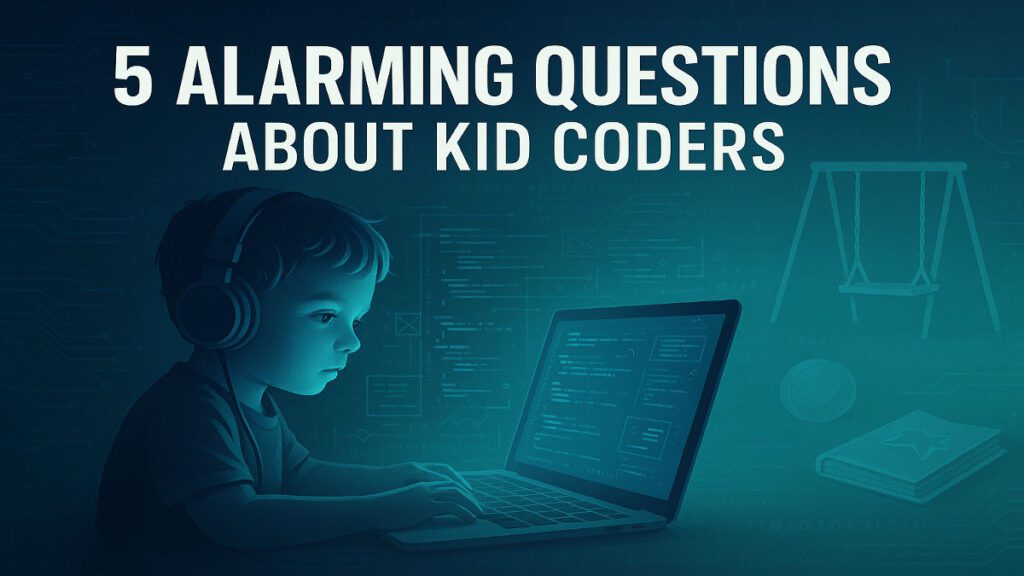
Short answer: Kid coders, some as young as five, are learning Python, Scratch and game development across India and abroad. Coding builds problem-solving and career-ready skills, but developmental psychologists warn that formal lessons before age seven, heavy screen time and parental pressure can cause burnout. The fix is age-appropriate tools, child-led pace and balance with play.
Coding is becoming the new alphabet of the digital age. From classrooms in Delhi to homes in California, children as young as five are learning to code before they master long division. These so-called kid coders are working with Python, Scratch and even simple game development. In 2025 one question keeps surfacing: are we pushing them too far, too fast?
Early coding education gets praised for building critical skills. A growing number of parents and experts also ask whether it costs children a balanced childhood. Here is the promise and the pressure behind the trend.
Why does coding build real-world skills so fast?
Coding teaches problem-solving, logical thinking and creativity. These are fundamentals for a 21st-century learner.
Instead of consuming content, kids become creators. Scratch lets them build animations and games. Minecraft teaches coding through play. Seeing their ideas come to life through code is motivating.
“When my daughter built a small quiz app using Scratch at age nine, the joy on her face was unforgettable,” shares Rohan, a father from Bangalore. “It wasn’t about the coding—it was about creating something from nothing.”
Coding often strengthens math and logic, making abstract ideas concrete. Some teachers report better academic performance in students who code regularly.
Is the career advantage real or hyped?
In a digital economy, parents want to give kids a head start. Jobs in AI, data science, robotics and cybersecurity are on the rise. Even careers outside tech now demand digital fluency.
That is why programs teach Python to kids as young as seven. Its clean syntax makes it a good gateway language. Early exposure, the thinking goes, will help children feel confident in tech-heavy workplaces later.
Here is where things get tricky. Career preparation should not overshadow childhood.
Are we jumping the gun on child development?
Developmental psychologists say formal coding lessons may not suit very young children, especially those under seven.
At that age, imaginative play, storytelling and hands-on exploration matter most for emotional and cognitive growth. Hours on a coding platform at the cost of physical play or social interaction can leave long-term developmental gaps.
A 2023 study by the Indian Pediatrics Journal warned that “early academic pressure—especially in screen-based formats—may impair fine motor development and socio-emotional skills in children under eight.”
Coding is powerful. Timing matters.
How does coding pressure lead to burnout?
Parental expectations can turn into pressure. Coding becomes another item on a growing list of after-school classes: chess, music, math, coding.
Some children thrive. Others withdraw. Over-scheduling can lead to stress, mental fatigue and burnout. It can also make children associate coding with anxiety instead of excitement.
Screen time adds to the problem. Coding demands long hours in front of screens, which affects sleep, eyesight, attention spans and mental health.
What is the right balance for young coders?
Experts suggest a balanced, age-appropriate path.
For younger children, skip syntax-heavy languages. Focus on sequencing, patterns and logic through visual tools and unplugged activities. Kodable and ScratchJr work well for this age group.
Keep coding child-led, not parent-imposed. If your child shows interest, nurture it. Do not make it a mandatory milestone. Blend screen-based learning with physical activity, arts, nature and storytelling.
“Our rule is simple,” says Amrita, a mother of two in Pune. “If coding starts to feel like a chore, we hit pause. Playtime, drawing, and bike rides come first.”
Empower, don’t overwhelm
The rise of kid coders is exciting. It points to a future where children are confident builders of technology, not passive users. Moderation and mindfulness still matter.
Teach them to code. Also teach them to create, imagine, explore and rest. In 2025, success is not measured by how early a child writes their first line of code. It is measured by how confidently and curiously they engage with the world.
Raise thinkers, not just programmers.
FAQs about kid coders
At what age should a child start coding?
Most developmental psychologists suggest formal coding lessons are not ideal before age seven. Younger children benefit more from visual, unplugged tools like ScratchJr and Kodable that build sequencing and logic without screen-heavy syntax.
Which is the best first coding language for kids?
Scratch is widely used for ages seven to ten because of its drag-and-drop blocks. Python is a strong next step from about age seven upward thanks to its clean syntax, which makes it a common gateway language in coding programs.
Can coding cause burnout in children?
Yes. When coding is added to an already packed schedule of after-school classes, kids can experience stress, fatigue and anxiety. Long hours on screens also affect sleep, eyesight and attention. Keeping coding child-led helps prevent burnout.
Does coding actually improve school performance?
Many educators report that regular coding practice strengthens math and logic skills and helps students grasp abstract concepts more easily. Some see improved academic performance in students who code consistently, though results vary by child.
How much screen time is safe for kid coders?
There is no single number, but balance matters. Blend screen-based coding with physical play, art, time outdoors and storytelling. A 2023 Indian Pediatrics Journal study linked heavy early screen exposure to impaired fine motor and socio-emotional skills in under-eights.